



Geometric Art Deco Timepiece
A geometric art deco timepiece combines sharp angles with industrial metals, offering a functional centrepiece that brings period precision into a modern room.
Geometric Art Deco Timepiece
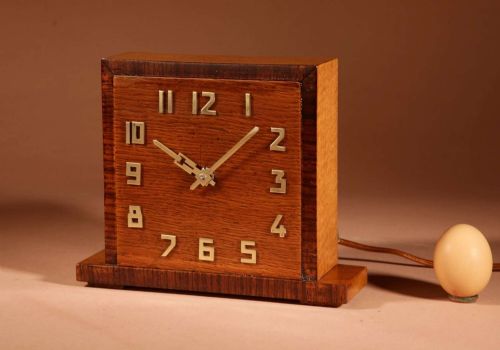
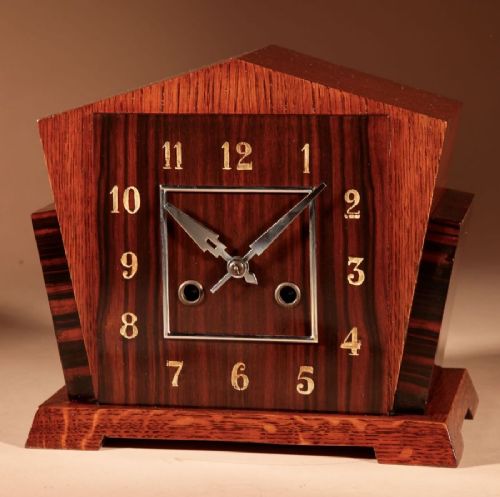
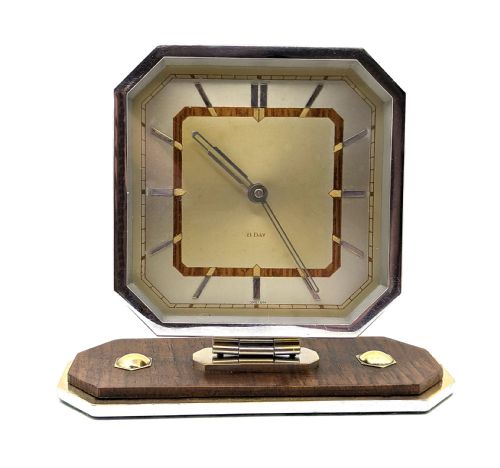
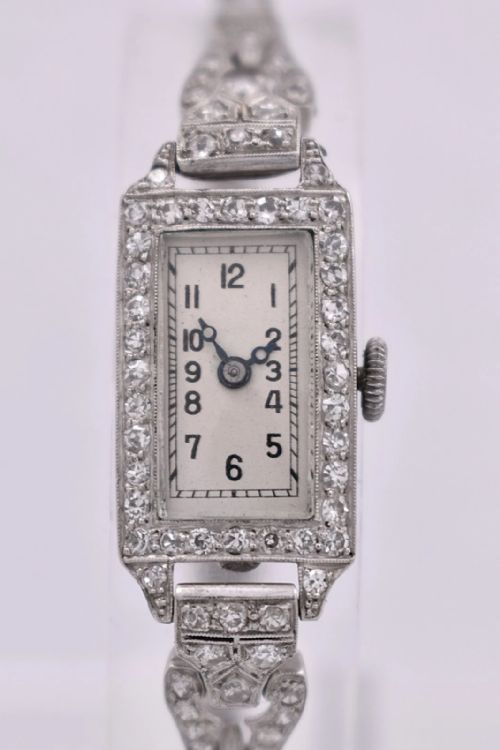
A geometric art deco timepiece encompasses items designed to tell time through the visual language of the early twentieth century, spanning mantel clocks, desk clocks, wall clocks, and wristwatches. The selection leans heavily towards mantel clocks and desk clocks produced across the 1920s, 1930s, and 1940s.
Makers shaped these objects using distinct regional influences, ranging from English and French workshops to the characteristic forms of the Amsterdam School. Forms vary from skyscraper desk clocks to two-tone wooden mantels and glass mirror designs.
Materials and construction
Makers utilised a combination of metals and woods, pairing chrome, brass, and copper with walnut, oak, macassar ebony, and coromandel. Glass and marble also appear extensively for dials and heavy architectural cases.
Precision movements sit behind the physical structures, including mechanical eight-day mechanisms, early electrical systems, and jewelled lever movements. Bakelite provides moulded detail on specific desk and wall models.
Listings feature items from the 1910s through the 1940s, executed in chrome, brass, glass, marble, oak, and walnut.
Judging quality
Quality rests in the precision of the geometric lines and the integrity of the materials, where solid hardwoods and heavy chrome plating distinguish the top tier from standard production. The integration of complex movements, such as carillon chimes or signed mechanisms, elevates a piece.
The harmony between the housing and the dial indicates superior design, particularly in pieces featuring mirror glass, enamel, or inlaid wood veneers.
Mappin and Webb·Bravingtons Ltd of London·Asprey·Blangy Clockmakers
The Geometric Art Deco Timepiece Glossary
- Amsterdam School
- A style of architecture and design originating in the Netherlands, known for rounded brickwork and expressive, dynamic timber forms.
- Bakelite
- An early form of synthetic plastic used for moulded clock cases and bezels during the period.
- Skyscraper
- A stepped, vertical architectural form translated into desk and mantel clock designs.
- Jewelled lever
- A precision escapement mechanism utilising synthetic gemstones to reduce friction in watch movements.
Geometric Art Deco Timepiece: Frequently Asked Questions
What periods do these clocks cover?
The pieces span the early twentieth century, with the majority originating in the 1920s and 1930s alongside examples from adjacent decades.
Design influences draw from broader international movements of that era.
How do desk clocks differ from mantel clocks?
Desk clocks are generally smaller, designed for portability on writing surfaces, and often feature eight-day chrome or metal construction.
Mantel clocks utilise heavier wood and marble cases intended to sit permanently on a fireplace shelf.
Are wristwatches included in this category?
Wristwatches and cocktail watches appear alongside larger timepieces, frequently rendered in platinum or white gold with diamond accents.
These smaller items share the same geometric aesthetic as the mantel and desk models.
What is an electrical clock?
Early electrical movements introduced alternative power methods to traditional mainsprings, reducing the need for frequent manual winding.
Systems like the Bulle mechanism represent this technical innovation.