

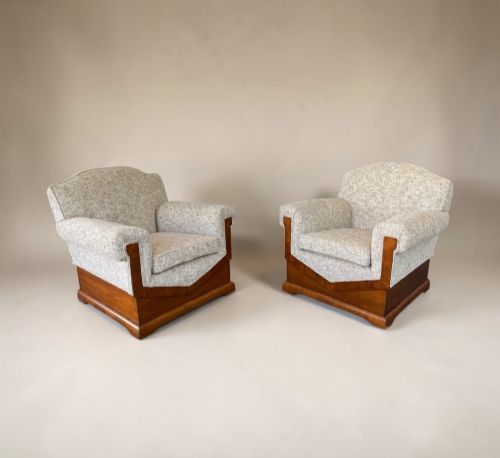


Geometric Art Deco Chairs
Geometric art deco chairs bring distinct 1930s character to a room through structured forms and rich wood grains.
Geometric Art Deco Chairs
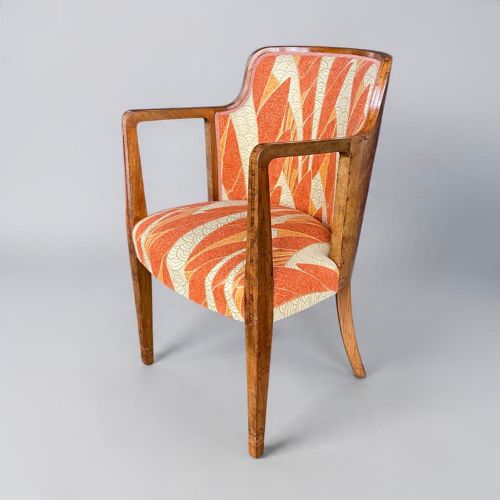
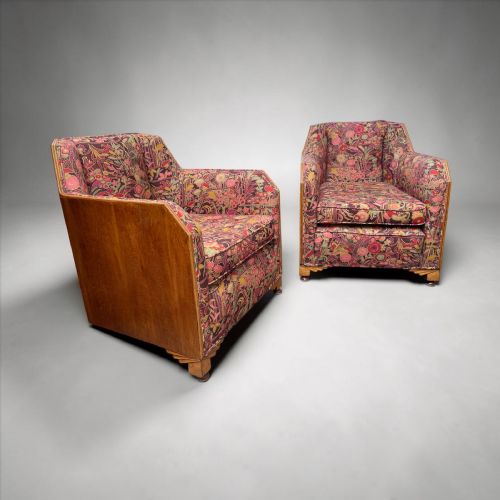
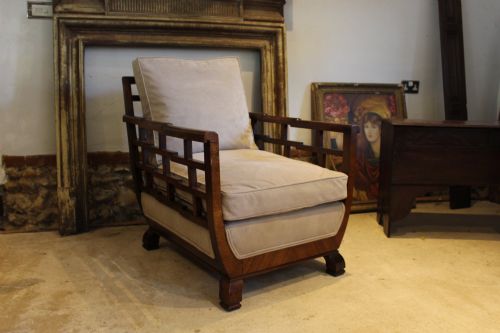
Geometric art deco chairs encompass seating from the 1930s defined by strong lines and striking profiles. Buyers browsing geometric art deco chairs most frequently encounter armchairs, side chairs, and lounge chairs originating from this period.
The selection includes matching pairs alongside individual seating options designed for various rooms. Alongside traditional armchairs, the category extends to specialised forms such as dressing stools and piano stools with integrated storage.
Originating in England, these pieces showcase the distinct aesthetic of the 1930s era. Their forms range from compact bedroom seating to substantial lounge chairs built for daily use.
How they were made
Cabinet makers utilised solid timber and walnut veneer to construct the rigid frames of these seats. Bleached walnut and standard walnut surfaces highlight the natural grain patterns characteristic of the period.
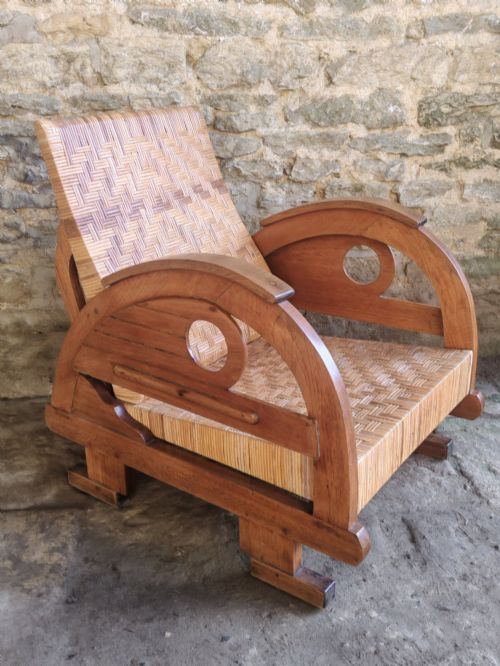
Upholstery techniques combined traditional padding with diverse coverings including fabric, leather, calf suede, and textile. Certain designs incorporate natural rattan panels into the structural framework to create textural contrast.
Geometric Art Deco Chairs Retail Price Guide 2026
Typical asking prices for geometric art deco chairs among the pieces listed under this phrase on Sellingantiques today, from the lower quarter to the upper quarter. They describe what is for sale here now, not the wider market.
Some chairs double as places to hide sheet music inside piano stools.
What varies in quality
The standard of timber selection and veneer matching dictates the visual impact of each frame. Superior examples display carefully aligned grain patterns across the walnut surfaces.
The choice of covering material and the precision of the upholstery work establish the refinement of the finished piece. Premium tactile materials like calf suede elevate the seating experience compared to standard textiles.
Hille
The Geometric Art Deco Chairs Glossary
- Art Deco
- A design style prominent in the 1930s characterised by geometric shapes and stylised forms. It rejected Victorian ornamentation in favour of streamlined modernity.
- Walnut
- A dense timber widely utilised for furniture frames and decorative veneers during the period. Its rich brown tones and varied grain made it a favourite for high-end pieces.
- Veneer
- A thin layer of superior wood applied over a secondary timber base. This technique allowed makers to display dramatic grain patterns across flat surfaces.
- Suede
- Leather with a napped finish offering a soft texture for upholstery. Calf suede provides a particularly fine grain for seating.
- Rattan
- A naturally occurring palm material woven into panels for structural and decorative elements. It adds lightness and breathability to chair backs and sides.
Geometric Art Deco Chairs: Frequently Asked Questions
What defines geometric art deco chairs?
These seats are defined by their 1930s origin, rectilinear forms, and structured silhouettes. They utilise materials like walnut and diverse upholstery to create a distinct visual presence.
They reflect the modernist design priorities of the era through unpretentious geometry and functional forms.
Where were these chairs made?
The pieces originate from England, reflecting British manufacturing standards and cabinet-making traditions of the 1930s.
Workshops and firms such as Hille produced notable seating during this period.
What materials appear on these chairs?
Construction relies primarily on timber and walnut, frequently finished as veneer or bleached walnut. Upholstery materials span fabric, leather, calf suede, textile, and woven rattan.
These elements combine to create durable frames paired with tactile seating surfaces.
How do I choose between different chair types?
Selection depends on the intended room and function, ranging from large lounge armchairs to compact side and bedroom chairs. Piano stools and dressing stools provide specialised alternatives with practical storage functions.
Matching pairs are also available for balanced room layouts.