



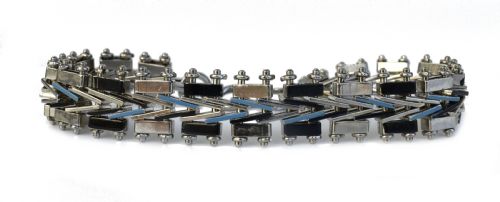


Geometric Art Deco Bangle
A geometric art deco bangle brings wristwear architectural precision and striking linear contrast from the early twentieth century.
Geometric Art Deco Bangle
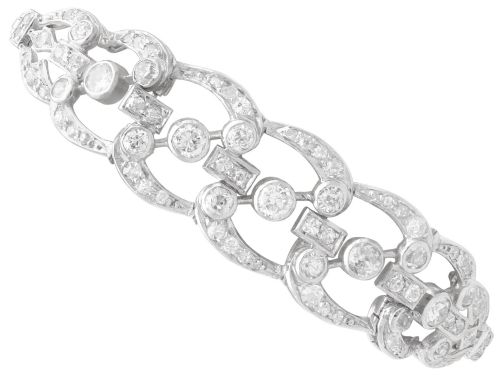
When you search for a geometric art deco bangle, you are looking at modernist wristwear defined by clean lines, symmetry, and architectural motifs. The pieces available here span bracelets and bangles created primarily during the nineteen twenties and nineteen thirties, alongside select later examples.
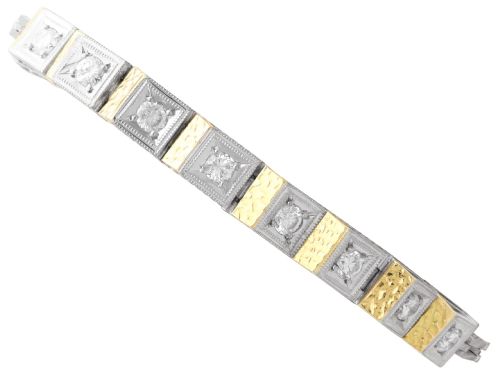
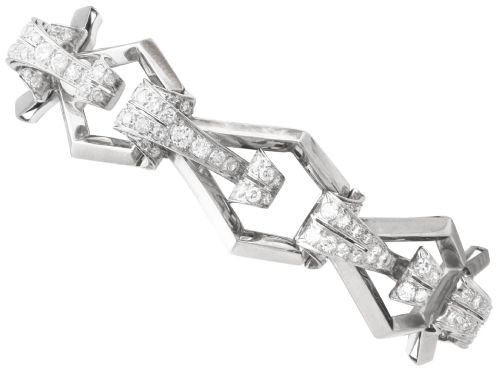
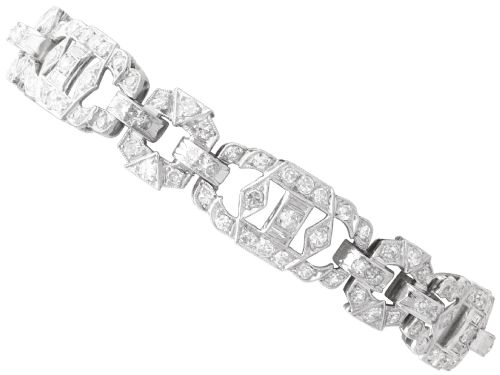
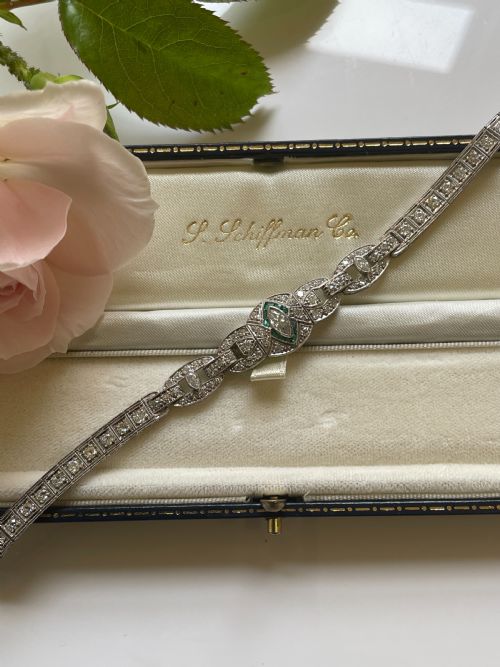
You will most commonly meet platinum and diamond creations alongside striking chromium and enamel designs. These works translate the industrial energy of the era into wearable ornaments shaped by chevrons, linear patterns, and repeating geometric blocks.
How they were made
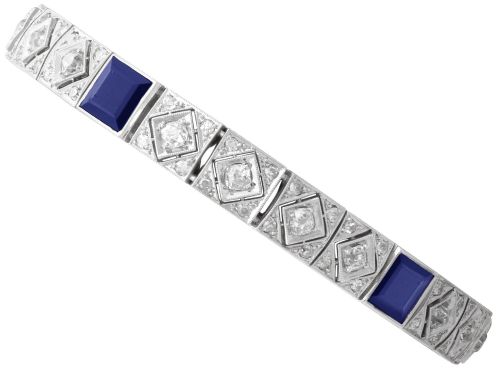
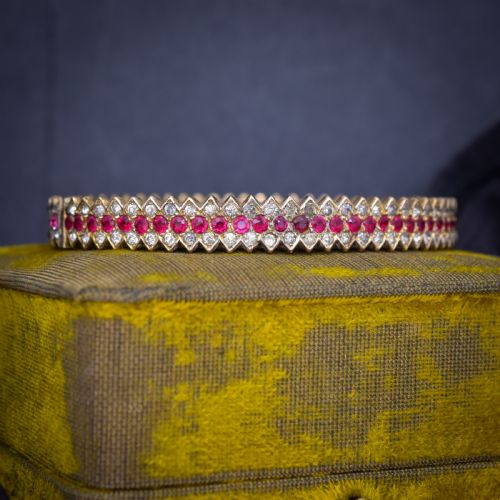
Master jewellers utilised durable platinum and white gold as foundations to securely set substantial clusters of diamonds alongside emeralds, sapphires, and paste glass. These precious metals permitted intricate openwork and channel settings that maximised stone brilliance.
Industrial materials entered high-end and accessible workshops alike, combining chrome and base metals with vibrant enamel work. This technique achieved bold colour blocking and metallic contrast characteristic of machine-age design.
The selection spans creations from nineteen ten through to the nineteen fifties, with a strong concentration in the interwar decades.
What varies in quality
The standard of a piece rests upon the precision of its stone cutting and the complexity of its metalwork. Fine examples display seamless geometric integration where every diamond, emerald, or enamel panel aligns with mathematical exactness.
Execution ranges from opulent platinum and multi-carat diamond centrepieces down to inventive industrial metal and paste glass compositions. Superior craftsmanship reveals itself in crisp hinges, secure box clasps, and the crispness of the engraved or enamelled motifs.
Jakob Bengel
The Geometric Art Deco Bangle Glossary
- Art Deco
- A design style dominant in the nineteen twenties and nineteen thirties characterised by sleek geometric shapes, stylised motifs, and modern industrial materials. It marked a sharp departure from the flowing organic curves of the preceding Edwardian and Art Nouveau periods.
- Chevron
- A V-shaped pattern or motif frequently utilised in jewellery design to create dynamic directional movement. This chevron arrangement forms the backbone of many linear modernist compositions.
- Paste glass
- Hand-cut and polished glass used as a brilliant substitute for gemstones in historic jewellery. Skilled artisans faceted paste to capture light similarly to diamonds or coloured stones.
- Platinum
- A dense, ductile, and strong precious metal prized for its silvery-white lustre and ability to hold fine gemstone settings securely. Its strength allowed jewellers to create delicate wirework and minimal metal visibility around stones.
- Marcasite
- Small faceted pieces of pyrite set into silver or metal mounts to provide a dark, metallic sparkle. It was often paired with enamel and chalcedony during the interwar years.
Geometric Art Deco Bangle: Frequently Asked Questions
How do I style a geometric art deco bangle?
Wear a single platinum and diamond piece as a statement statement against evening wear, or layer industrial chrome and enamel designs with minimalist modern attire to highlight their linear contrast.
The strong architectural lines of these bracelets complement tailored silhouettes and clean tailoring particularly well.
Are these bracelets solid platinum or gold?
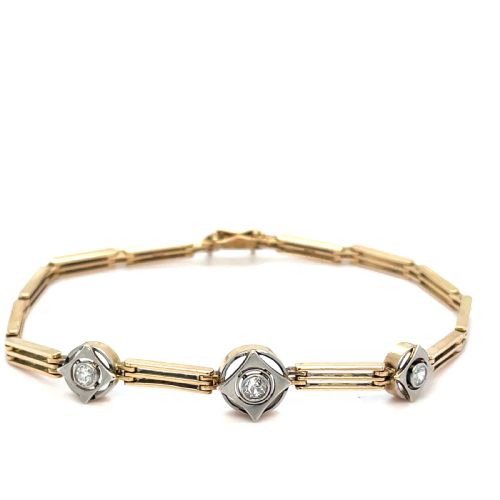
The high-end pieces utilise solid platinum or yellow, rose, and white gold as structural mountings for gemstones. Other examples employ chrome, gilt metal, or silver as base materials paired with enamel and glass.
Examining the metal hallmarks and weight assists in identifying the specific composition of each item.
How can I date an art deco bracelet?
Dating relies on stylistic markers such as the presence of platinum and diamond clusters typically associated with the nineteen twenties, or industrial chrome and enamel characteristic of the nineteen thirties.
Maker attributions and specific construction techniques also provide clear indicators of production era.