


Gentlemans Club Seating
Gentlemans club seating brings together robust leather and rich timber to create focal points designed for enduring comfort.
Gentlemans Club Seating
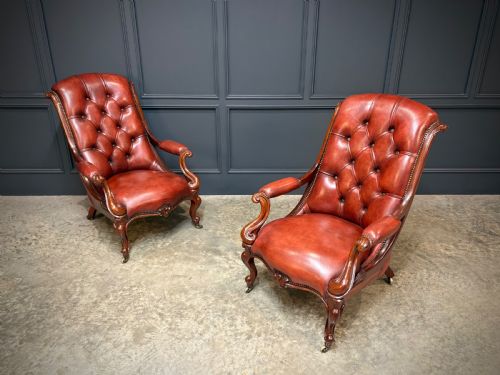
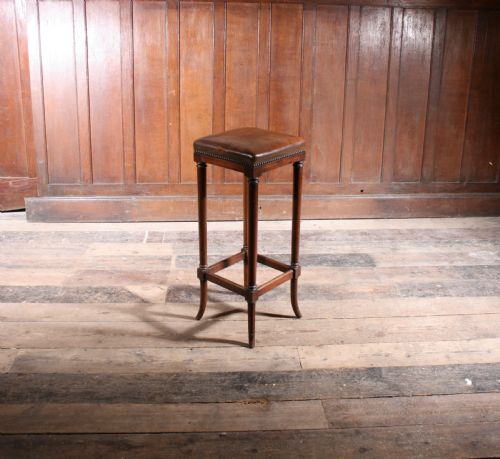
Gentlemans club seating encompasses heavy armchairs, library chairs, and sofas alongside steel and brass club fenders originating from the nineteenth and early twentieth centuries. These pieces emerge in styles ranging from Victorian and Gothic Revival to Art Deco, reflecting decades of domestic and institutional use.
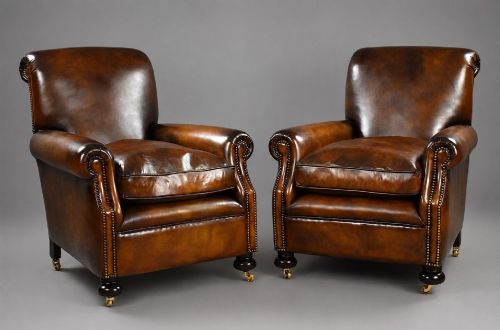
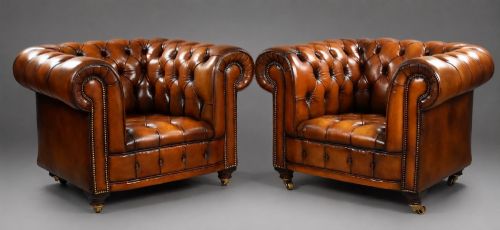
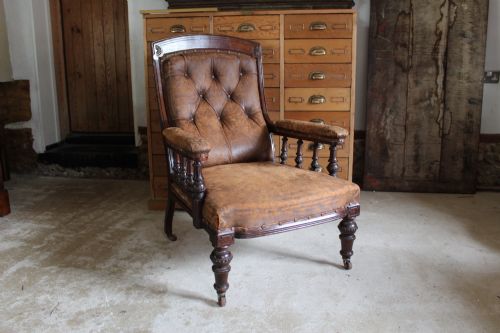
Armchairs dominate the selection, frequently paired for fireside placement or study settings. Buyers encounter buttoned leather library chairs alongside carved mahogany, oak, and walnut frames built for substantial presence.
Sofas appear in two-seat and moustache back configurations, upholstered in hand dyed brown leather. Club fenders complete the seating category by offering padded metal and wood hearth perches.
Materials and construction
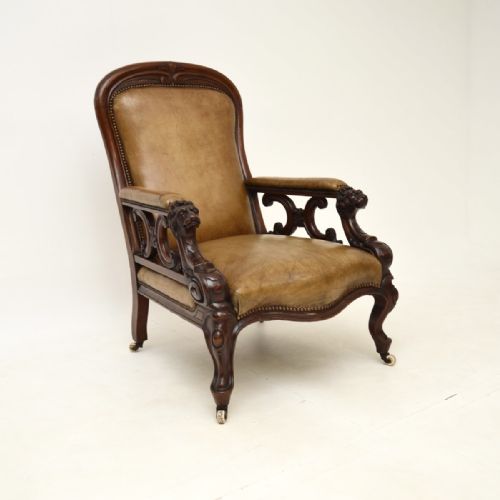
Makers utilised resilient hardwoods including mahogany, walnut, oak, and general hardwood to construct load bearing frames. Carved floral details, lion motifs, and structural supports demonstrate traditional joinery techniques.
Leather provides the primary upholstery material, often hand dyed or buttoned across backs and seats. Metal elements such as brass, cast steel, and iron reinforce club fenders and structural components.
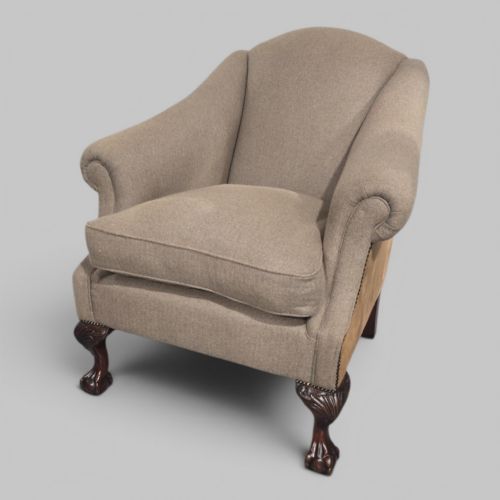
One extraordinary Victorian armchair is upholstered entirely in a tweed jacket, blending formal seating with tailoring.
Judging execution
The distinction between tiers rests on the depth of hand carving within the wooden framework and the integrity of the leather upholstery. Superior examples display crisp floral or figural motifs carved directly into dense mahogany, oak, or walnut rather than superficial ornamentation.
Upholstery execution separates ordinary pieces from exceptional ones through precise buttoning and the patination of the leather over decades. The harmony between structural timber framing and the fitted leather defines the overall success of the piece.
The Gentlemans Club Seating Glossary
- Club fender
- A low fireside seat featuring a metal or wooden frame with padded leather corners. These structures allowed sitters to warm themselves near an open hearth.
- Moustache back
- A sofa or armchair backrest shaped with characteristic double curves resembling facial hair. This upholstery style defines certain nineteenth century seating designs.
- Buttoned leather
- An upholstery technique where leather is pulled deep into the padding and secured with buttons to create a geometric diamond pattern. This method adds structural tension and visual texture.
- Library chair
- A heavy, supportive armchair designed for prolonged reading in private studies or institutional reading rooms. They typically combine sturdy timber frames with leather upholstery.
Gentlemans Club Seating: Frequently Asked Questions
What is gentlemans club seating?
This category includes heavy armchairs, library chairs, sofas, and hearth fenders built from leather and timber. They originate primarily from the nineteenth and early twentieth centuries.
Such furnishings were designed for private libraries, smoking rooms, and social clubs, prioritising deep seating and durable materials.
How do I care for antique leather?
Keep leather seating away from direct heat sources and strong sunlight to prevent drying and cracking. Regular dusting helps maintain the surface finish.
Conditioning treatments applied sparingly can preserve the suppleness of nineteenth and twentieth century hides without altering their patination.
Where were club fenders used?
Club fenders were placed around open hearths in large drawing rooms and gentlemen's clubs. The padded corners provided comfortable seating directly beside the fire.
The metal and oak frames also served to keep stray embers contained while offering a stable perimeter for the hearth.
How do I identify Victorian styles?
Victorian seating often exhibits substantial carved wooden frames in mahogany, oak, or walnut alongside deep buttoned leather. Stylistic revivals such as Gothic and Rococo influence the decorative motifs.
Look for hand carved floral elements, exposed structural timber, and robust proportions typical of nineteenth century manufacturing.