



Gemstone Cluster Brooch
A gemstone cluster brooch brings together coloured stones and diamonds in compact arrangements that pin neatly to a lapel.
Gemstone Cluster Brooch
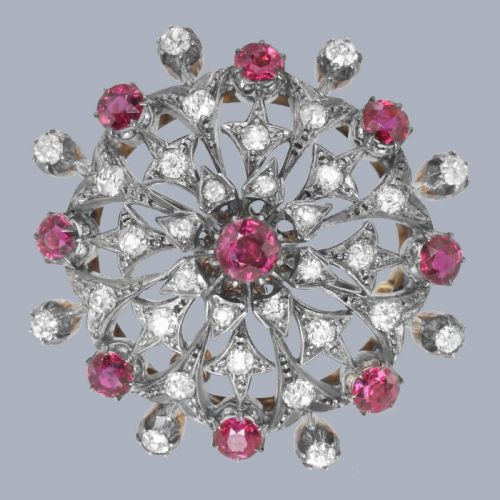
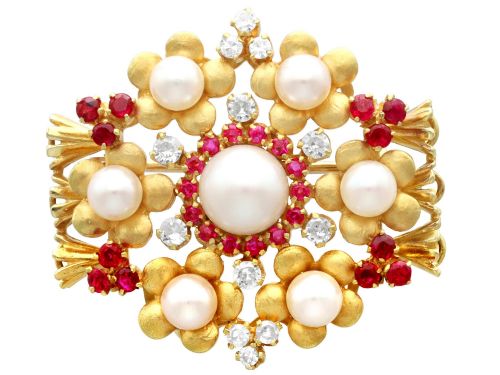
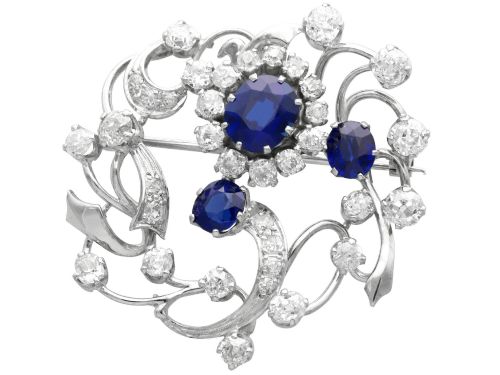
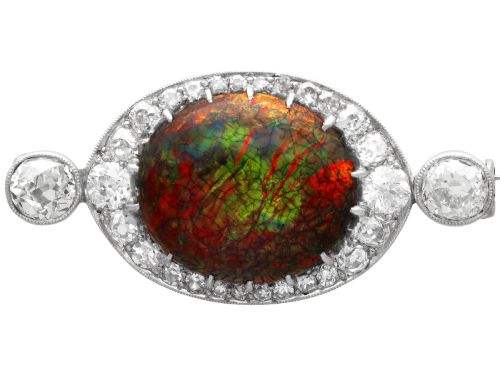
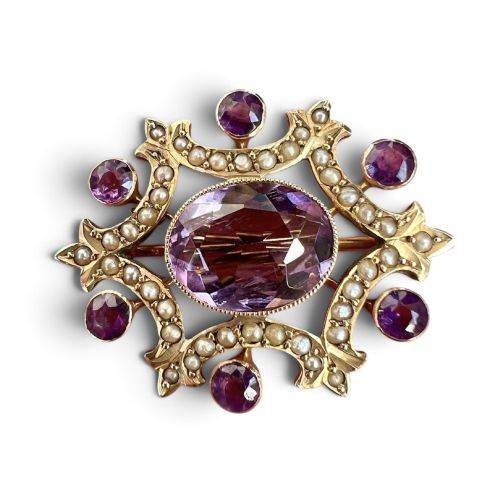
A gemstone cluster brooch gathers multiple stones into tight floral, target or geometric patterns designed to catch the light from every angle. You will frequently encounter Victorian and Edwardian examples featuring central amethysts, rubies, sapphires or peridots ringed by smaller pearls or diamonds.
Many surviving pieces double as pendants, offering versatile mountings that transition easily from a coat fastening to a neck chain. These dual-purpose designs reflect a practical Victorian and Edwardian approach to fine jewellery, where high-value stones served multiple social functions.
Cluster configurations range from late nineteenth-century foliate motifs to mid-century modernist silver settings. The core identity of a gemstone cluster brooch remains its concentrated mass of contrasting colour and sparkle, set firmly against a precious metal ground.
Materials and construction methods
Goldsmiths worked primarily in yellow gold, silver-gilt, platinum and white gold to construct the settings for these multi-stone arrangements. Early pieces often mounted silver directly onto gold backings to enhance the brilliance of diamonds and rubies.
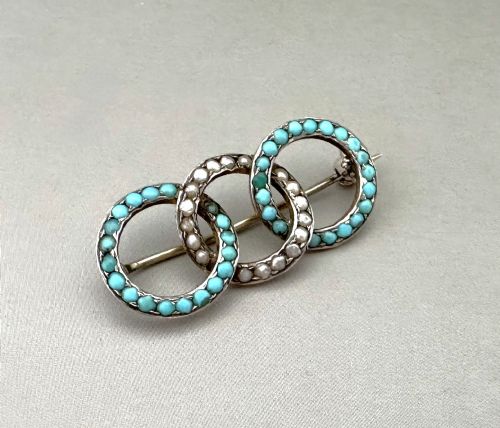
Stones were secured using delicate claw settings, closed-back foils in earlier periods, or precise pave techniques that placed small diamonds tightly together. Seed pearls and turquoise beads were threaded or pinned onto foundational wire frames to create contrasting borders around central coloured gems.
Gemstone Cluster Brooch Retail Price Guide 2026
Typical asking prices for gemstone cluster brooch among the pieces listed under this phrase on Sellingantiques today, from the lower quarter to the upper quarter. They describe what is for sale here now, not the wider market.
Listings feature yellow gold, platinum, silver, and white gold combined with amethysts, rubies, sapphires, garnets, peridots, opals, turquoise, and pearls across Victorian and Edwardian periods.
Distinctions in execution and stone selection
Quality rests heavily on the natural saturation and clarity of the central stones, whether deep blue sapphires, vibrant rubies or bright peridots. Finer pieces demonstrate careful matching in size and colour among the surrounding seed pearls and accent diamonds.
The precision of the metalwork defines the superior end of the range, visible in clean trellis frameworks and secure, even claw work that holds each gem firmly. Maker provenance, original fitted cases and certified untreated stones further elevate specific examples above standard production.
G. Colani
The Gemstone Cluster Brooch Glossary
- Cluster brooch
- A pin featuring a central gemstone surrounded by a border of smaller stones. This format maximises visual impact by concentrating colour and light.
- Seed pearl
- A very small, naturally formed saltwater pearl used extensively for delicate borders. They require careful handling to preserve their organic lustre.
- Trellis brooch
- An openwork design resembling a lattice frame. This structure allows light to pass through the stones from behind.
- Pendant brooch
- A convertible piece fitted with a hidden loop or bail alongside a pin fastening. It allows the wearer to switch between pinning the jewel and hanging it from a chain.
- Target brooch
- A concentric circular design resembling a target. These typically feature a dark central stone encircled by contrasting rings of lighter gems.
Gemstone Cluster Brooch: Frequently Asked Questions
How do I wear a gemstone cluster brooch safely?
Pin the brooch to sturdy fabrics like wool or heavy silk that can support the weight of the gold and stones without sagging. Avoid delicate modern knits where the pin stem might catch or distort the threads.
Ensure the safety catch is fully engaged before stepping out. For convertible pieces, remove any hanging chain when wearing the item as a pin to prevent snagging.
Were these pieces used as pendants originally?
Many Victorian and Edwardian examples were built with hinged loops or removable bails alongside the pin mechanism. This dual utility allowed owners to display the same cluster jewellery on clothing by day and on a neck chain by night.
Examine the reverse of the piece to locate folding loops or suspension rings. Their presence confirms the original maker intended versatile wear.
How do I distinguish Edwardian pieces from Victorian ones?
Edwardian cluster brooches frequently utilise platinum or white gold settings with diamonds, aquamarines and peridots arranged in light, airy motifs. Victorian versions lean towards heavier yellow gold mountings paired with deep amethysts, garnets and natural rubies.
Look at the overall weight and metal colour. The shift toward platinum in the early twentieth century allowed for finer, lace-like metalwork that differs visibly from nineteenth-century solid gold casting.
What is a target brooch?
A target brooch is a specific cluster design featuring concentric rings of contrasting gemstones around a distinct centre. Victorian and Edwardian jewellers used this geometric layout to create striking visual depth.
Amethysts paired with seed pearls or dark garnets commonly form these circular patterns. The concentric arrangement draws the eye directly into the saturated core of the jewel.