

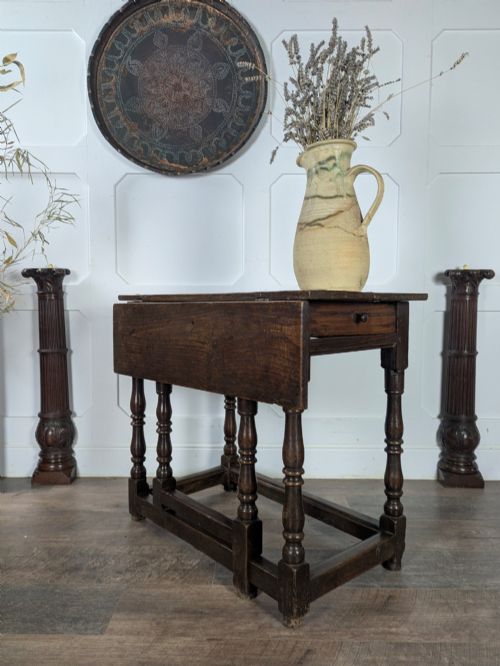
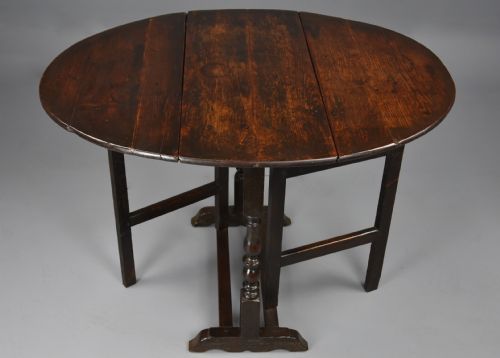
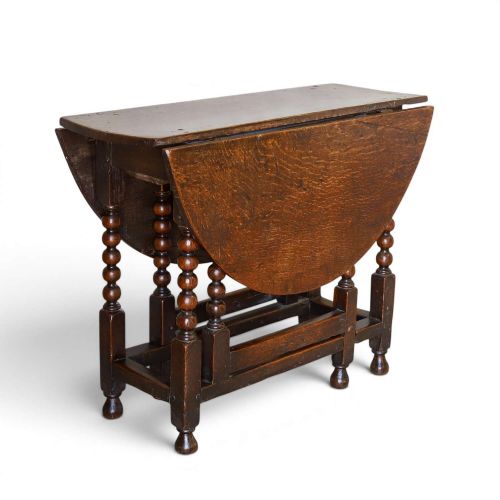
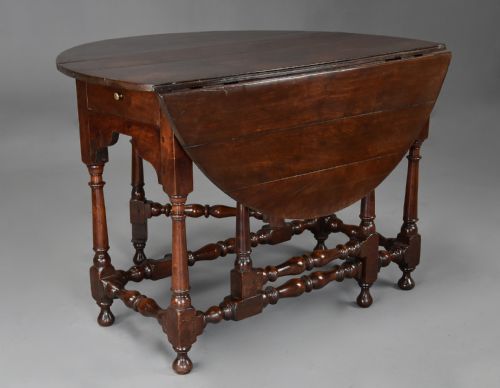
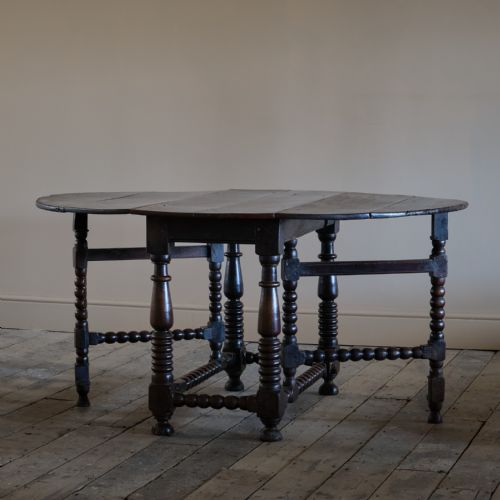
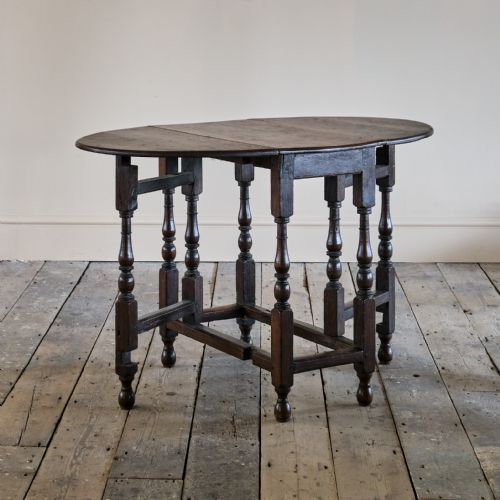

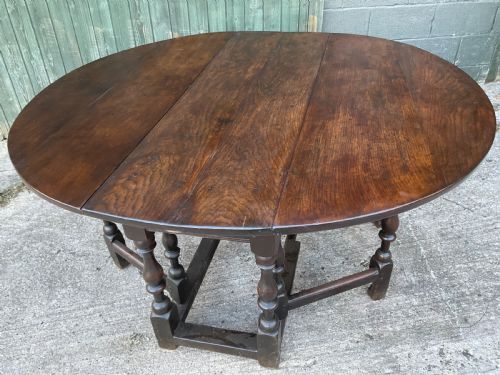
Gate Leg Dining Table
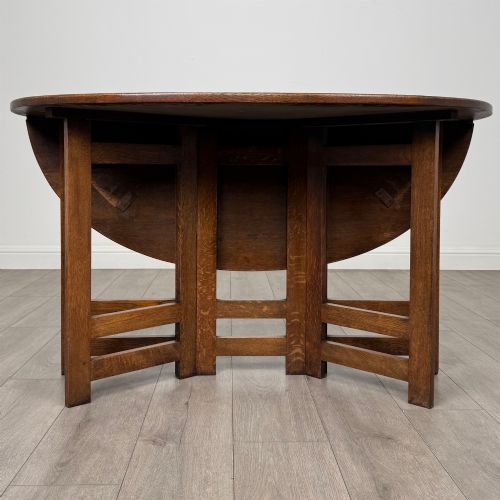
A gate leg dining table offers folding leaves supported by pivoting legs, providing generous seating space that folds away neatly when not in use.
Gate Leg Dining Table
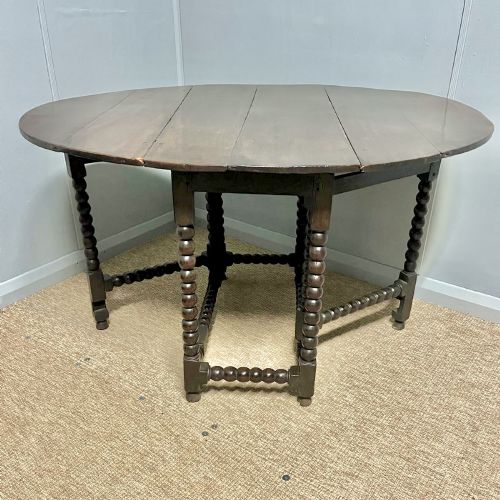
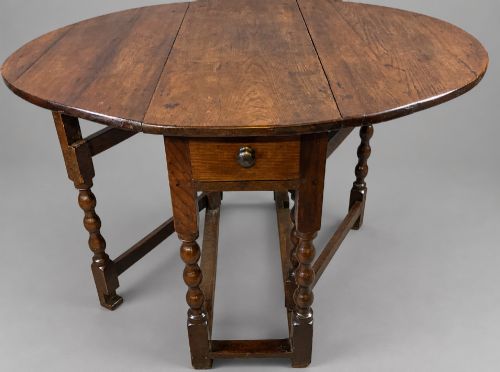
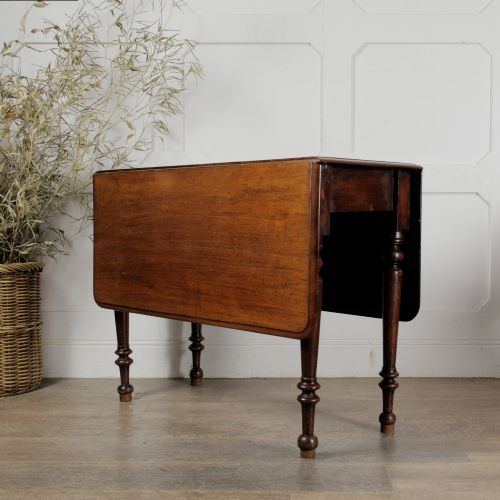
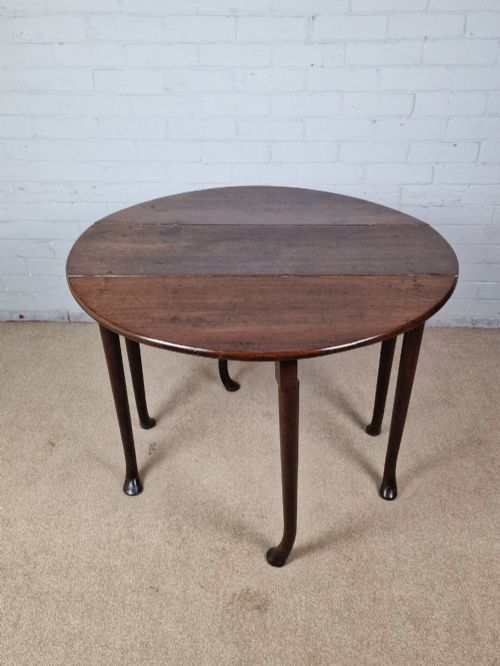
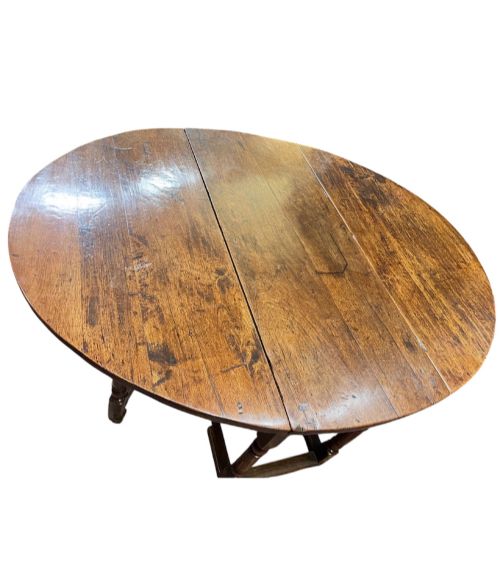
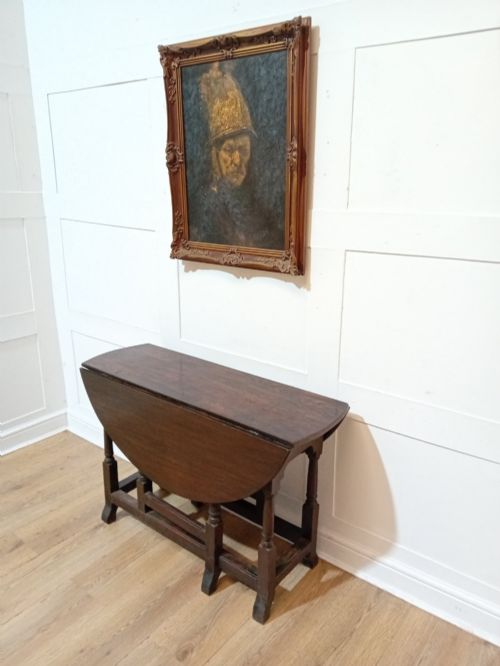
A gate leg dining table serves as a flexible surface designed for social dining and daily use, expanding through hinged flaps supported by pivoting legs. Buyers seeking a gate leg dining table typically encounter sturdy oak and rich walnut examples spanning from the seventeenth century through the Georgian and Victorian eras. These pieces range from compact domestic tables to large dining surfaces suitable for multiple guests.
Most entries on this page originate from the seventeenth, eighteenth, and nineteenth centuries, alongside later revivals from the Edwardian period and the twentieth century. Oak remains the predominant timber, though walnut and mahogany examples appear with frequency. Buyers evaluate these tables for their practical proportions, historic timber, and the reliable operation of their folding frames.
Materials and Construction
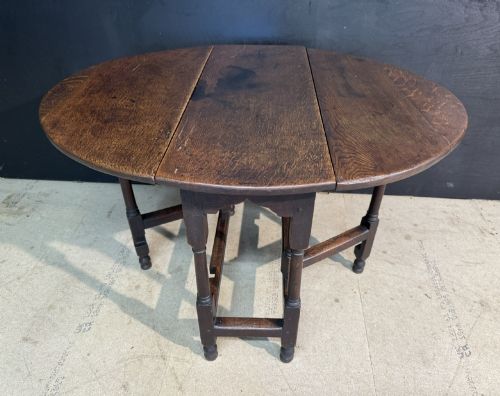
Cabinet makers utilised solid timbers, primarily oak and walnut, joined with traditional framing techniques to bear the weight of the folding leaves. The pivoting leg mechanism requires robust pivot joints and sturdy stretchers near the floor to maintain stability when the leaves are open.
Turned wooden components define the upright supports, featuring distinctive bobbin, baluster, or spider turnings characteristic of the seventeenth and nineteenth centuries. Metal hardware is typically limited to simple iron or brass hinges securing the drop leaves to the fixed top.
Gate Leg Dining Table Retail Price Guide 2026
Typical asking prices for gate leg dining table among the pieces listed under this phrase on Sellingantiques today, from the lower quarter to the upper quarter. They describe what is for sale here now, not the wider market.
Listings feature oak, walnut, and mahogany timbers across centuries ranging from the seventeenth through the Edwardian era.
Judging Quality and Distinction
Quality rests upon the integrity of the timber, the smoothness of the gate action, and the depth of the surface finish. Superior examples display mature patination built through centuries of use, retaining their original tops and unwarped leaves.
The refinement of the leg turnings and the tightness of the frame joinery distinguish finer workshop output from simpler vernacular pieces. Tables that retain their original hinges and balanced proportions command greater appreciation among collectors.
The Gate Leg Dining Table Glossary
- Drop leaf
- A table featuring a fixed centre section with hinged flaps on either side that rise to expand the surface area. These flaps are supported by hinged brackets or swinging legs.
- Bobbin turned
- A style of woodturning characterised by a series of rounded, spool-like shapes carved along the length of a table leg. This decorative feature is frequently seen on seventeenth-century and nineteenth-century revival pieces.
- Patina
- The deep, lustrous surface sheen developed on timber over decades and centuries of handling, exposure to light, and polishing. It serves as an indicator of age and careful preservation.
- Stretcher
- A horizontal wooden rail connecting the lower legs of a table to provide structural rigidity and prevent the frame from wobbling. These rails often show wear patterns near the floor.
- Baluster post
- A vertical column support shaped with a swelling contour, commonly found on seventeenth-century dining furniture. It provides both structural strength and visual weight to the base.
Gate Leg Dining Table: Frequently Asked Questions
How do I operate a gate leg dining table?
Lift the hinged drop leaf upwards until it is level with the fixed centre top of the table. Reach underneath and swing the pivoting leg outwards from the central frame until it locks into position beneath the edge of the leaf.
To close the table, swing the pivoting leg back inward toward the centre base. Lower the drop leaf gently so it hangs vertically at the side of the frame.
Were these tables used for dining?
Historic households utilised these folding tables as versatile furniture that could be moved against a wall when not in use. Their expandable leaves provided ample surface area for family meals and supper gatherings.
As domestic spaces evolved, smaller versions were adapted for card games or occasional tea service. Larger formats remained central to dining rooms across the seventeenth and eighteenth centuries.
How do I tell seventeenth-century tables from later revivals?
Early pieces display authentic hand-tool marks, pegged mortise and tenon joints, and native English oak that has darkened significantly with age. The wear around the feet and stretchers reflects centuries of domestic use.
Later revivals from the Victorian and Edwardian eras often utilise machine-cut elements, standardised fixings, and timber finishes applied to mimic earlier styles. Examining the underside and the joinery reveals the true age of the construction.
What is the best way to care for an antique oak surface?
Maintain the timber by applying natural beeswax sparingly and buffing it with a soft cloth to nourish the wood and preserve the patina. Avoid placing tables near direct heat sources or strong sunlight, which can dry out and split historic boards.
Use coasters and placemats to protect the surface from moisture and heat rings. Clean spills immediately with a dry or barely damp cloth without harsh chemical sprays.