




Garnet Pearl Necklace
A garnet pearl necklace brings together deep red stones and luminous pearls, offering a traditional combination of colour and texture found across multiple historic periods.
Garnet Pearl Necklace
A garnet pearl necklace brings together deep red stones and luminous pearls in various historic configurations. These pieces range from pendant drops to multi-strand designs fastened with decorative clasps.
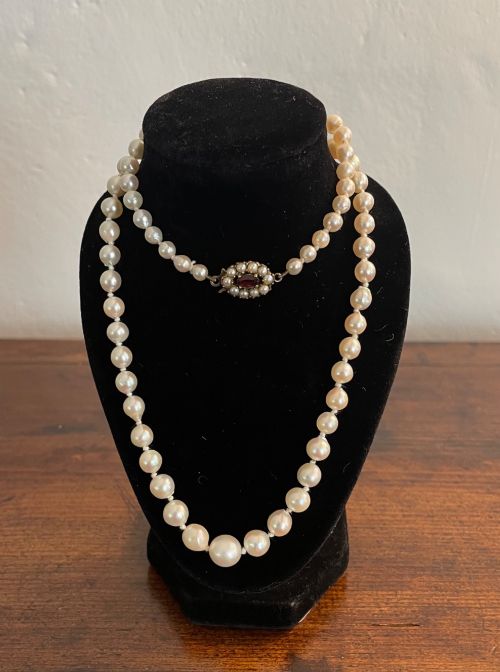
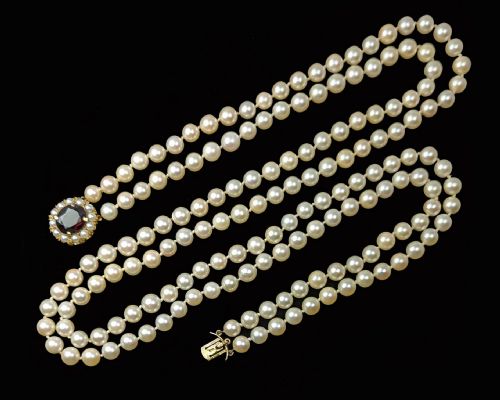
The version most commonly met on this page is the mid-century cultured pearl necklace featuring a 9ct gold clasp set with garnets. These items combine the soft lustre of pearls with the rich red hue of the gemstones.
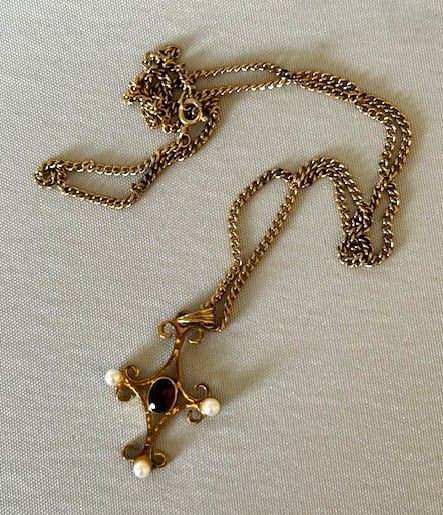
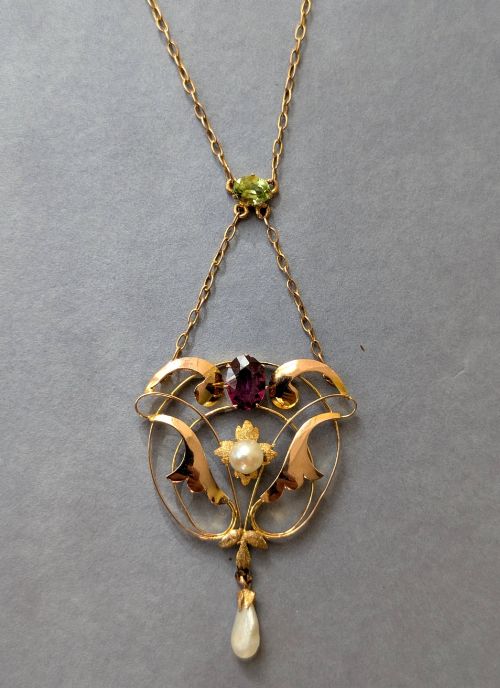
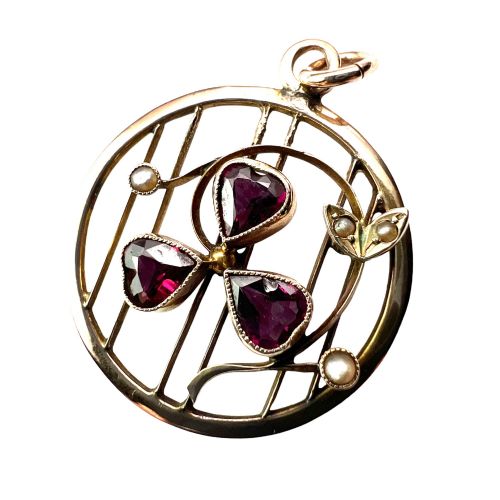
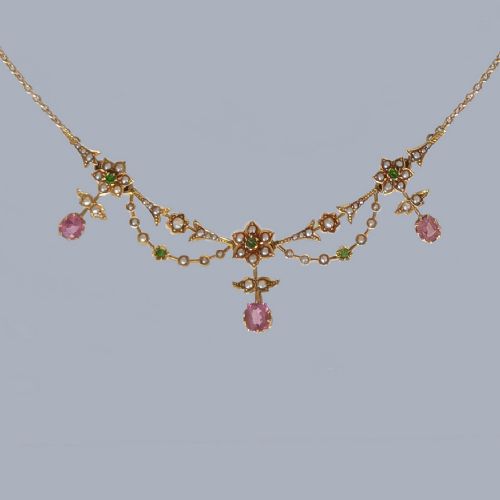
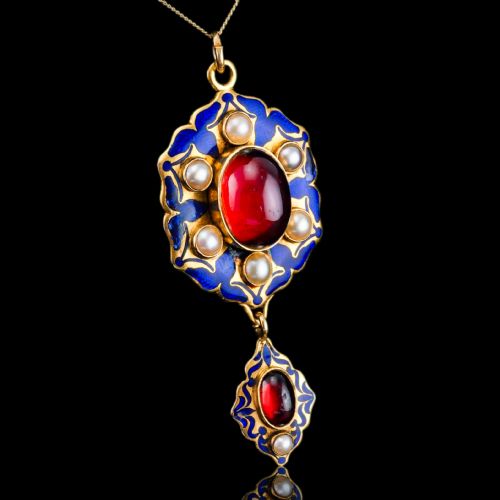
Other examples include Edwardian fringe necklaces, Victorian lavalieres, and Holbeinesque pendants incorporating seed pearls and pink sapphires. Each period brings distinct mounting styles and gold purities to the design.
How they were made
Gold work spans 9ct and 18ct yellow gold, alongside silver settings found in nineteenth-century examples. Metal components are shaped to hold stones securely while complementing the arrangement of the pearls.
Garnets appear as cabochons, faceted stones, and demantoid varieties, paired with natural seed pearls and cultured pearls. These materials are worked into clasps, fringe drops, and central pendant clusters.
Garnet Pearl Necklace Retail Price Guide 2026
Typical asking prices for garnet pearl necklace among the pieces listed under this phrase on Sellingantiques today, from the lower quarter to the upper quarter. They describe what is for sale here now, not the wider market.
Clasps designed to be seen rather than hidden mean you can wear the fastener proudly at the collarbone.
What varies in quality
The distinction between tiers rests on the uniformity of the pearls and the depth of colour in the garnets. Finer items display matching pearl lustre and clean stone settings without excess metal work.
Design complexity also separates standard clasps from intricate Edwardian fringe or Victorian Holbeinesque assemblies. Superior pieces utilise higher gold purities and balanced gemstone arrangements.
The Garnet Pearl Necklace Glossary
- Seed Pearl
- A very small natural pearl, often round or slightly irregular, used extensively in Victorian and Edwardian cluster and fringe jewellery. These tiny pearls create delicate textural patterns.
- Garnet
- A silicate mineral group providing deep red stones used historically in antique and vintage cluster clasps and pendants. They offer a durable alternative to softer red gems.
- Lavaliere
- A pendant necklace featuring a central drop suspended from a chain, popular during the Edwardian period and early twentieth century. This form often incorporates dangling stones and pearls.
- Holbeinesque
- A revival style of nineteenth-century jewellery inspired by sixteenth-century designs, featuring elaborate enamelling, gemstones, and hanging pearl drops. These pieces display architectural metalwork.
- Fringe Necklace
- A necklace design where multiple small drops or pendants hang along the front section of the chain. This layout showcases stones and pearls in a graduated fringe.
Garnet Pearl Necklace: Frequently Asked Questions
How do I date a garnet pearl necklace?
Dating relies on the construction methods, gold purity marks, and overall style visible in the mounting. Victorian and Edwardian examples often feature intricate gold work, whereas mid-century pieces commonly pair cultured pearls with simple stone-set clasps.
Examining the clasp or the reverse of a pendant can reveal hallmarks or maker details that narrow down the decade of production. Stylistic cues like fringe drops or Holbeinesque motifs further indicate the specific era.
Are cultured pearls original to vintage necklaces?
Cultured pearls appear frequently in mid-century necklaces listed here, reflecting the manufacturing standards of the nineteen-fifties and sixties. Many double-strand pieces combine these pearls with gold garnet clasps.
Some older necklaces have undergone professional restringing over time to maintain the integrity of the silk thread. This routine maintenance preserves the wearable condition of the piece without altering its original components.
How should I care for historic pearl necklaces?
Pearl necklaces require gentle handling because pearls are relatively soft and vulnerable to household chemicals, cosmetics, and perfumes. Wiping them with a soft cloth after wearing helps maintain their natural lustre.
Periodic professional restringing is recommended for multi-strand necklaces to prevent strand breakage. Storing them flat in a lined box prevents scratching against other items.