


Gallery Rim Side Table
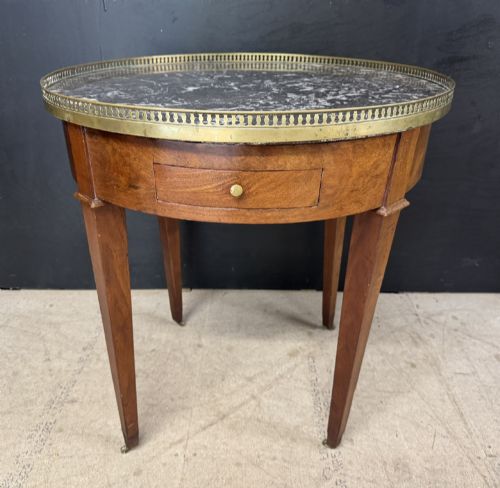
These gallery rim side table pieces offer raised edges to keep your items secure, combining practical utility with refined period craftsmanship.
Gallery Rim Side Table
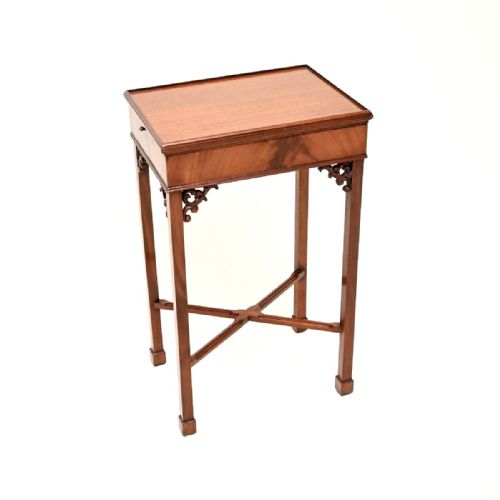
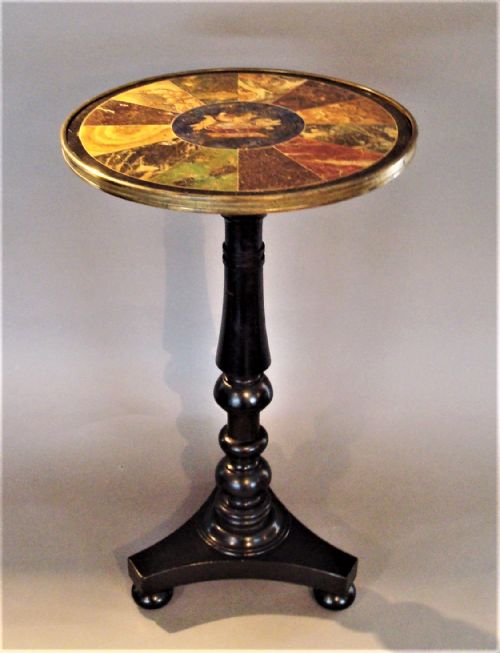
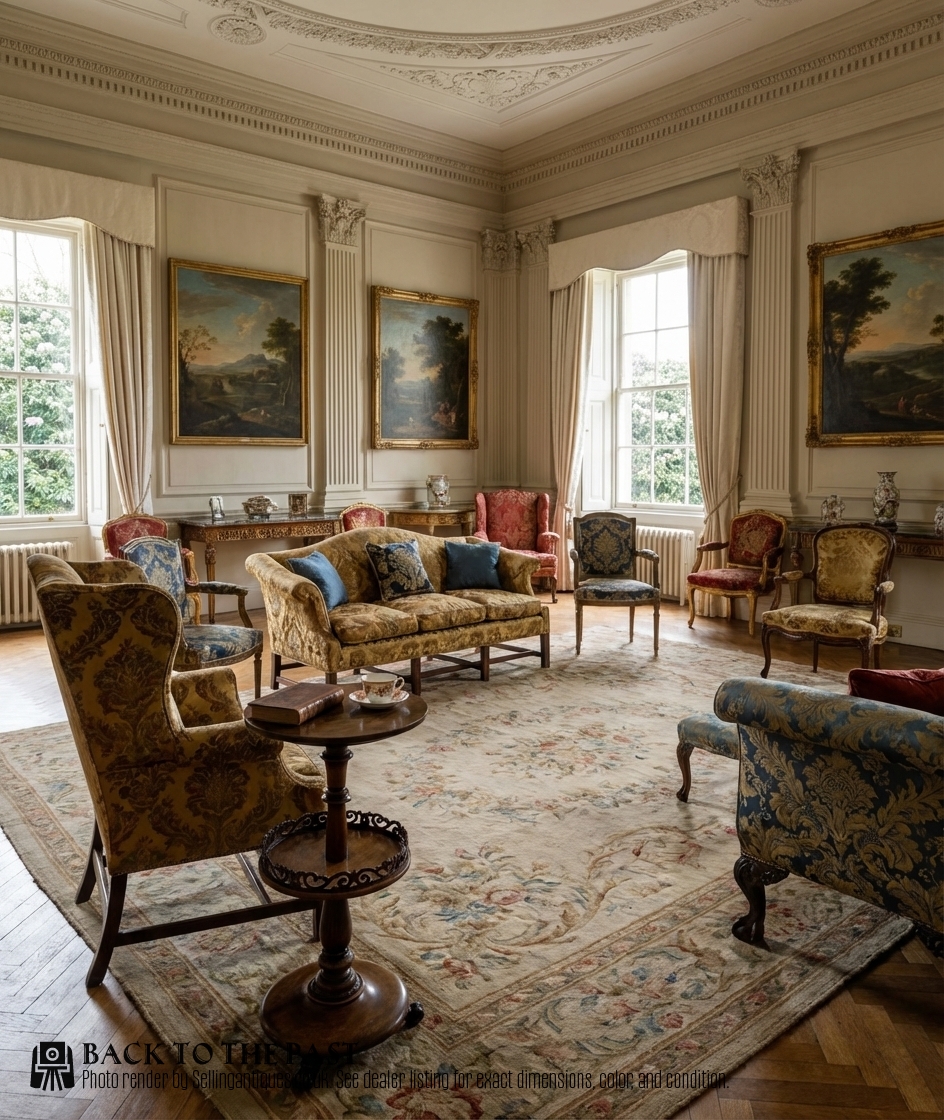
When you search for a gallery rim side table, you encounter compact occasional furniture designed with a raised perimeter to stop objects sliding off the surface. The examples found here span diverse forms from compact kettle stands to multi-tiered dumb waiters and circular occasional tables.
You are most likely to meet mahogany and walnut pieces dating from the Georgian era through to the early twentieth century. These furnishings served varied domestic duties in period interiors, functioning as small serving stands, plant pedestals, or bedside tables.
The construction typically incorporates circular or oval tops enclosed by delicate railings or brass galleries. Makers adapted these practical designs across French and English aesthetic traditions, producing items suited for intimate corners and beside seating.
How they were made
Cabinet makers utilised dense hardwoods like mahogany, walnut, and rosewood for the structural integrity of these tables. Marquetry inlay and ebonised wood details frequently enhanced the aesthetic appeal of French revival pieces.
Metalwork played a defining role, with cast brass utilised for decorative galleries and protective rims. Marble inserts provided durable, cool-surfaced tabletops on specific continental models.
Decanter tables feature sunken wells designed to keep your claret upright during enthusiastic nineteenth-century dinner parties.
What varies in quality
Quality depends upon the crispness of the timber grain and the precision of the joinery connecting the legs to the tabletop. Superior pieces display harmonious proportions and finely cast metal galleries that fit securely around the perimeter.
The refinement of decorative elements, such as detailed marquetry inlay or neatly turned supports, distinguishes the finer examples from standard utilitarian workshops.
The Gallery Rim Side Table Glossary
- Gallery
- A raised rim or miniature balustrade encircling the edge of a tabletop. It is designed to prevent small items from rolling off.
- Marquetry
- Decorative patterns formed by fitting together thin veneers of wood and other materials onto a structural surface. This technique creates elaborate pictorial designs on tabletop surfaces.
- Gueridon
- A small ornamental stand or table, originating in France during the seventeenth century. These are frequently round and supported by a central column or three legs.
- Dumb waiter
- A piece of freestanding tiered furniture used for holding food or tableware without servants present. These often feature rotating or stacked circular trays.
- Occasional table
- A small, versatile table intended for light, intermittent use rather than central dining. They appear in various shapes throughout nineteenth-century interiors.
Gallery Rim Side Table: Frequently Asked Questions
Where were these tables used?
These tables were placed beside seating areas, in hallways, or near beds to hold small personal belongings. Their compact footprints allowed them to fit easily into corners or tight spaces.
In larger reception rooms, specific variations acted as plant stands, kettle supports, or serving surfaces for tea service.
How do I date a piece?
Dating relies on identifying the underlying wood species, cabinet-making techniques, and stylistic influences. Georgian items often feature solid mahogany construction with understated lines.
Later Victorian and Edwardian examples frequently incorporate revival styles, brass galleries, or intricate marquetry veneers. Examining the construction of the joints beneath the tabletop provides further chronological clues.
Are these tables sturdy?
Their structural stability depends on the design and the tightness of the leg joints. Three-legged pedestal forms require flat placement to prevent wobbling, while four-legged side tables offer greater stability.
Regular careful handling preserves the delicate brass galleries and slender upright supports from loosening over time.