


Gallery Back Sideboard
A gallery back sideboard offers a raised rear upstand to protect dining room walls and frame your display.
Gallery Back Sideboard
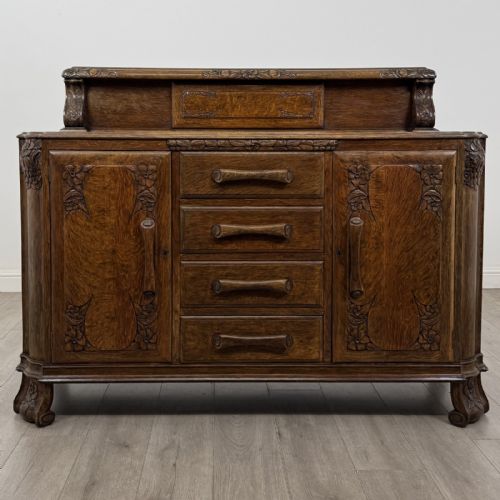
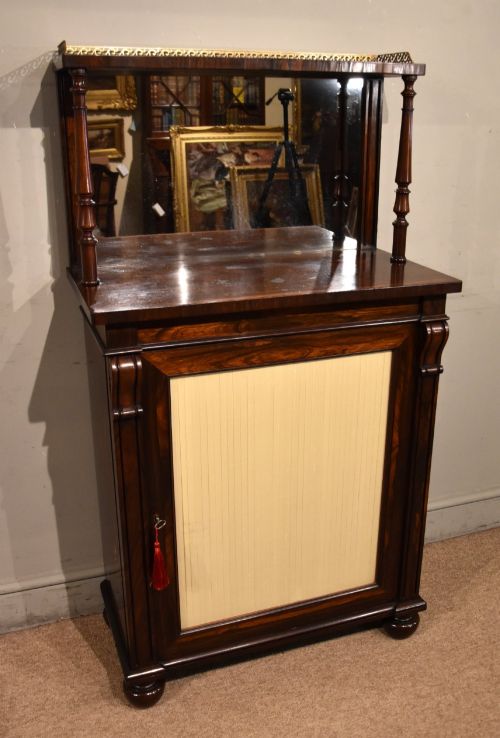
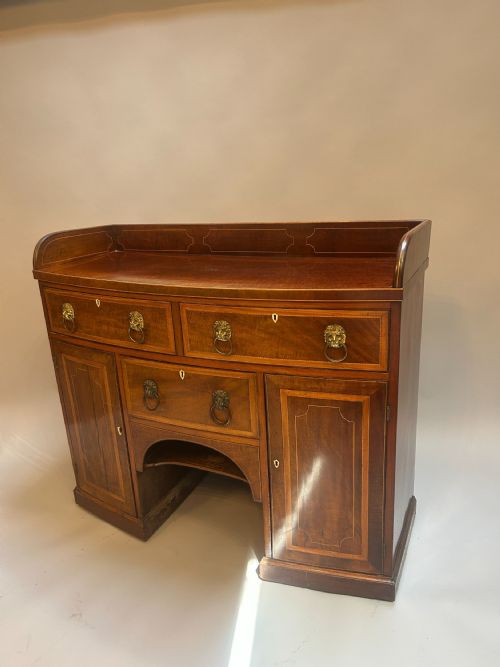
A gallery back sideboard combines a functional serving surface with an integrated rear upstand or shelf structure, creating a defined focal point for a dining room or hall. These pieces emerge across Georgian, Regency, and Victorian periods, often taking the form of chiffoniers, serving tables, or traditional sideboards.
You will most frequently meet mahogany and rosewood examples from the nineteenth century on this page, alongside occasional painted pine pieces and oak arts and crafts designs. The raised back ranges from simple three-quarter surrounds to tiered shelving and intricate carved galleries with brass fittings.
Materials and construction
Makers utilised solid timbers alongside flame mahogany veneer to achieve rich surface grain across the main bodies and doors. Secondary woods like pine appear in regional pieces, while brass hardware, mirror glass, and boxwood inlay provide structural support and decorative contrast.
Joinery methods reflect the period of manufacture, from dovetailed drawer construction in Georgian workshops to sturdy Victorian framing designed to support heavy china and serving dishes.
A brass gallery rail keeps the butter knives from staging a midnight escape.
Distinguishing quality
Quality rests in the selection of figured timber, the crispness of carved or turned details on the gallery upstand, and the integrity of the underlying joinery. Superior examples maintain original hardware and proportional balance between the lower cabinet and the upper shelving tier.
Gillows·Liberty of London
The Gallery Back Sideboard Glossary
- Gallery
- A raised wooden or metal framework running along the back or sides of a surface to prevent items from sliding off. It often incorporates tiers of shelving or spindle work.
- Chiffonier
- A low sideboard or cabinet developed in the early nineteenth century, typically featuring a shelved gallery back and enclosed lower cupboards.
- Flame mahogany
- A veneer cut from the fork of the mahogany tree where the branch meets the trunk, producing a distinctive leaping flame pattern across large drawer fronts and doors.
- Upstand
- The vertical wooden panel rising from the rear edge of a sideboard or table top to protect the wall from marks.
- Padauk
- A dense tropical timber valued for its deep reddish colour and used in carved nineteenth-century furniture.
Gallery Back Sideboard: Frequently Asked Questions
What is a gallery back sideboard?
A gallery back sideboard is a dining room storage piece featuring a raised decorative or functional upstand along the rear edge of the top surface.
This raised section often incorporates shelves or brass rails designed to display plates or prevent items from falling.
How do I date a sideboard?
Dating relies on observing the prevailing style, timber choices, and construction methods characteristic of periods like the Georgian era or Victorian times.
Examining secondary woods inside drawers and the specific design of the gallery back provides further clues to the decade of manufacture.
Were these used in dining rooms?
These pieces served primarily in dining rooms and halls to store serving dishes, cutlery, and linens while displaying silver or ceramics.
Some variants included specialised writing drawers or enclosed cupboards for household administration.
How do I care for mahogany?
Mahogany surfaces benefit from occasional treatment with appropriate natural waxes to maintain the deep lustre of the timber grain.
Keep these items away from direct heat sources and strong sunlight to prevent the wood from drying out or fading over time.