

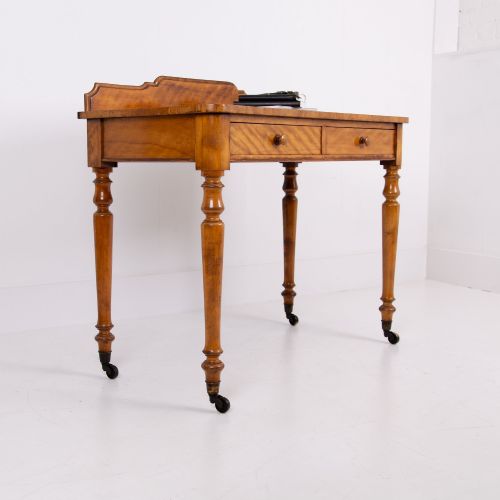
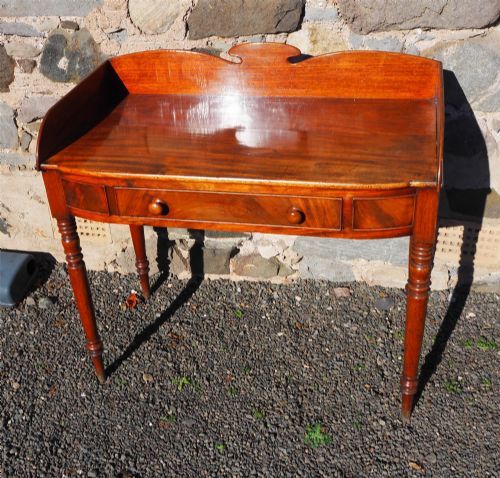
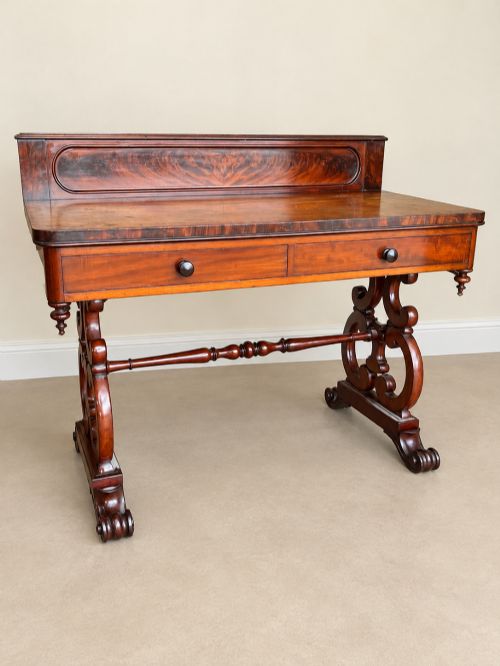
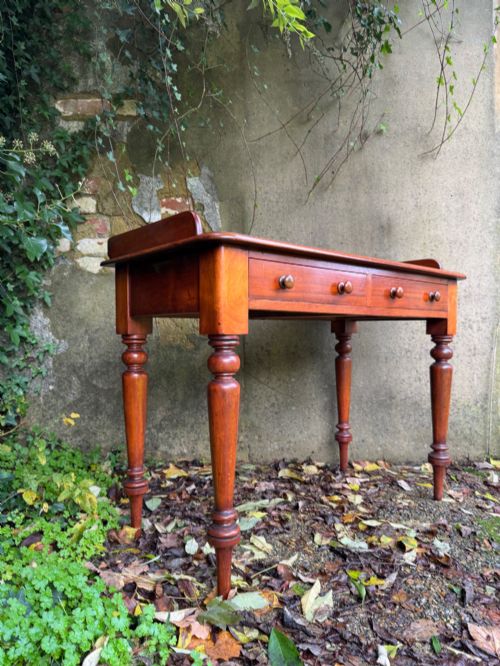
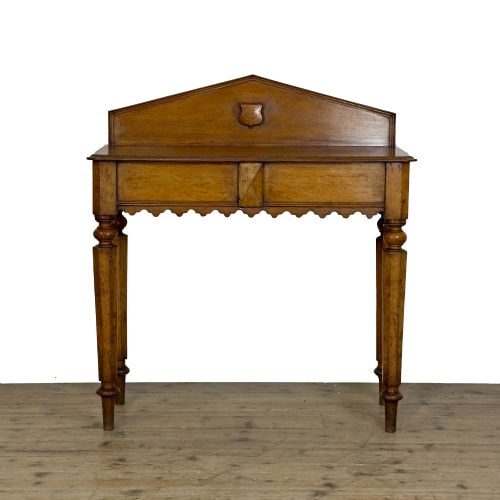
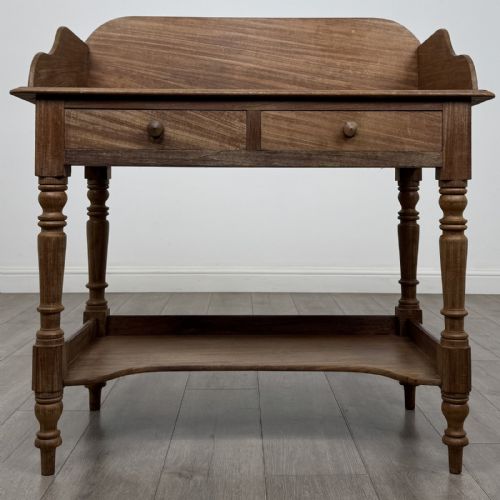
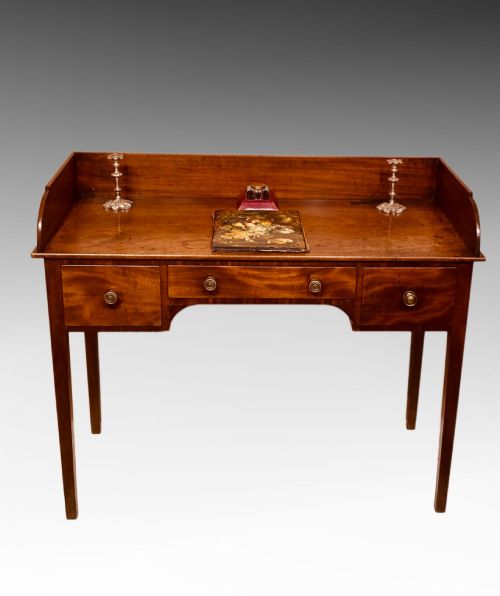
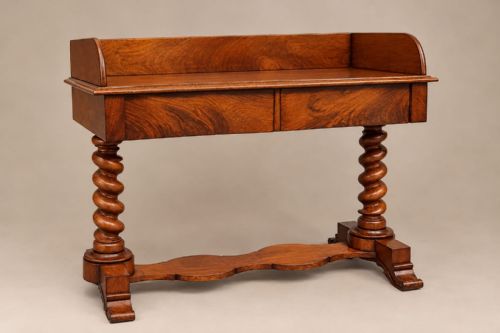
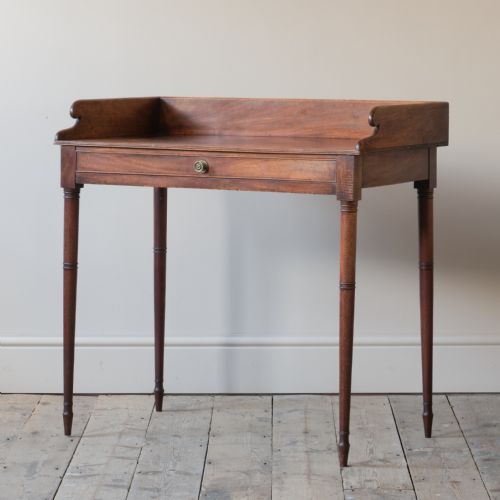
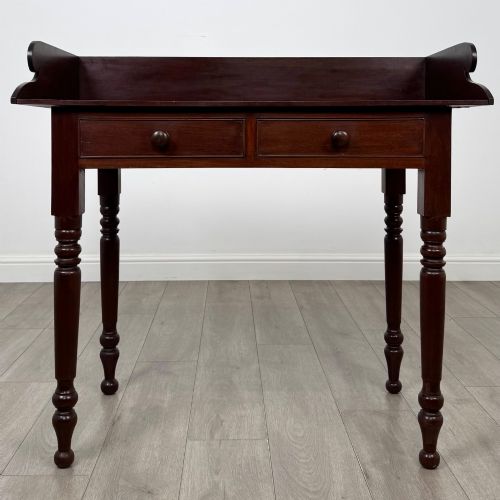
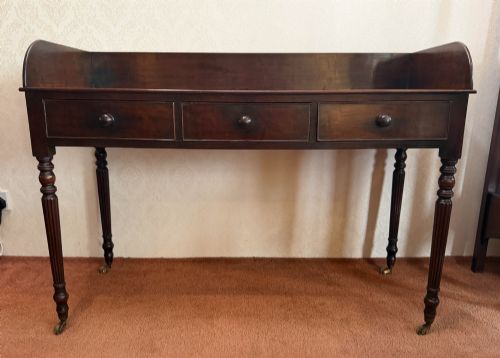
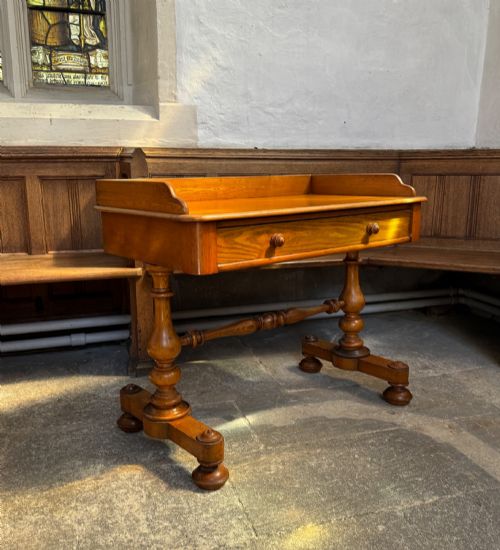
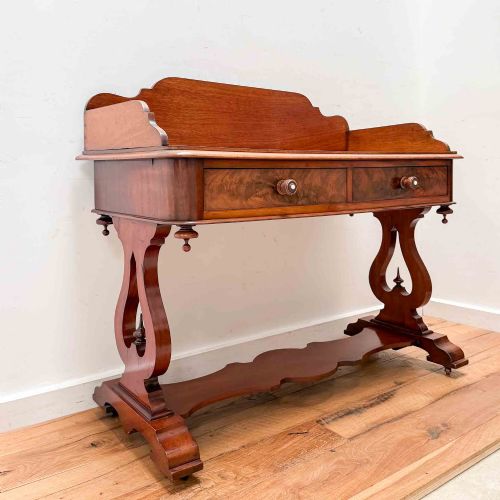

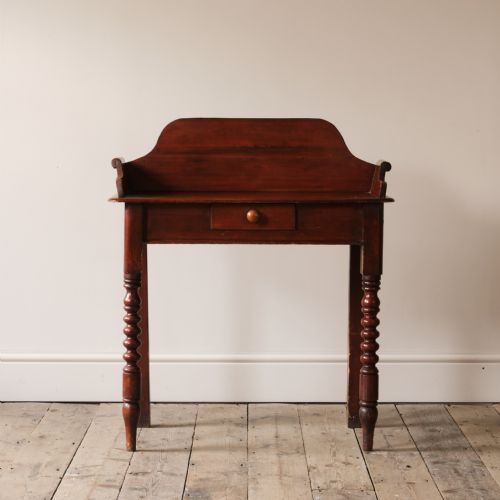
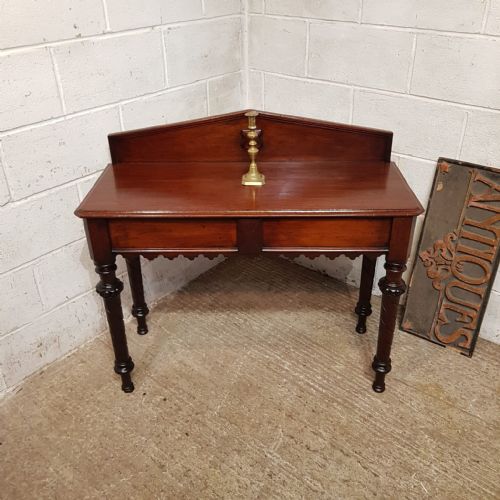
Gallery Back Hall Table
A gallery back hall table offers a practical surface with an integrated upstand, bringing period character and utility to an entryway.
Gallery Back Hall Table
A gallery back hall table combines a sturdy surface for everyday use with an elevated rear barrier designed to protect walls and keep items from sliding off. When searching for a gallery back hall table, buyers encounter forms adapted from side tables, console tables, and washstands.
The pieces on this page span the Georgian, Regency, William IV, and Victorian periods, stretching from eighteen hundred to the late nineteenth century. Common object types serving this function include side tables, writing tables, and washstands featuring timber upstands or tile backs.
Mahogany predominates among the materials, alongside pine, pitch pine, oak, flame mahogany veneer, and painted wood. Styles range from plain country pieces to Gothic Revival designs and Regency console tables.
How they were made
Cabinetmakers utilised solid timbers such as mahogany, oak, and pine, frequently applying flame mahogany veneer to primary surfaces for visual depth. Drawer construction often employed traditional jointing techniques to ensure durability during daily use.
Upstands and gallery backs were fitted securely to the rear of the table top, sometimes incorporating painted faux marble or decorative tiles as seen on Victorian washstands. Finishes ranged from original grain paint to polished mahogany surfaces highlighting the natural grain.
Gallery Back Hall Table Retail Price Guide 2026
Typical asking prices for gallery back hall table among the pieces listed under this phrase on Sellingantiques today, from the lower quarter to the upper quarter. They describe what is for sale here now, not the wider market.
Some nineteenth-century washstands escaped the bedroom entirely to guard hallway walls with their splash-proof tile backs.
What varies in quality
Quality rests in the selection of timber and the crispness of the construction, from dense flame mahogany veneer to straightforward solid pine. Cabinetmakers who spent greater time on proportion and joinery produced pieces that retained their structural integrity.
The finish and surface preservation dictate the visual strength of the piece, with patina and original grain treatments marking the distinction between standard utilitarian furniture and superior examples.
The Gallery Back Hall Table Glossary
- Gallery back
- A raised wooden or tiled upstand along the rear edge of a table surface. This feature prevents items from falling behind the furniture and protects the wall.
- Flame mahogany veneer
- A thin slice of mahogany timber cut from the fork of the tree to create a distinctive flickering flame pattern. Cabinetmakers applied this to prominent surfaces for decorative effect.
- Console table
- A table designed to stand against a wall, frequently supported by brackets or legs at the front. These pieces served decorative and functional roles in formal halls.
- Washstand
- A freestanding piece of furniture equipped with a surface for a basin and pitcher, often featuring a high back to protect walls from splashes. Many survive as versatile hall or side tables.
- Gothic Revival
- An architectural and decorative style drawing inspiration from medieval forms. Pieces in this manner display pointed arches, heavy moulding, and structural vigour.
Gallery Back Hall Table: Frequently Asked Questions
What is a gallery back hall table?
A gallery back hall table is a piece of furniture designed for narrow spaces like hallways, featuring a raised barrier along the back edge. These tables function as convenient drop zones for keys and correspondence while protecting the wall.
They derive from various nineteenth-century forms including side tables, writing desks, and washstands that share the characteristic upright rear border.
How do I date a mahogany hall table?
Dating relies on examining the timber selection, construction methods, and stylistic cues present in the design. Georgian and Regency examples typically exhibit restrained classical lines, whereas Victorian pieces often display heavier proportions.
Secondary woods, drawer linings, and the presence of flame mahogany veneer or specific revival motifs help narrow the manufacturing period.
What woods were used for these tables?
Mahogany is the predominant timber found in these listings, valued for its rich colour and stability. Cabinetmakers also employed oak, pine, pitch pine, and rosewood depending on the regional workshop and period.
Flame mahogany veneer frequently appears on the primary display surfaces of finer Regency and Victorian examples to add decorative grain movement.