

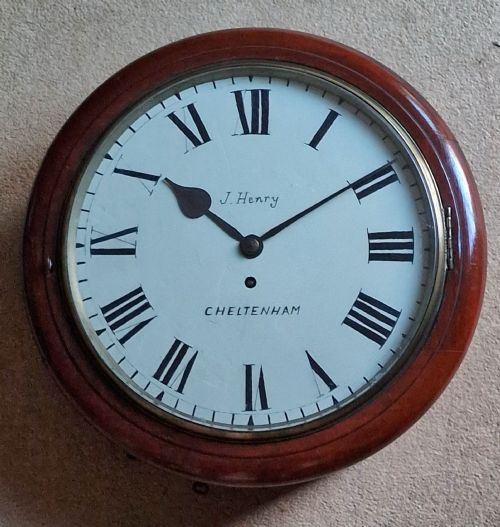
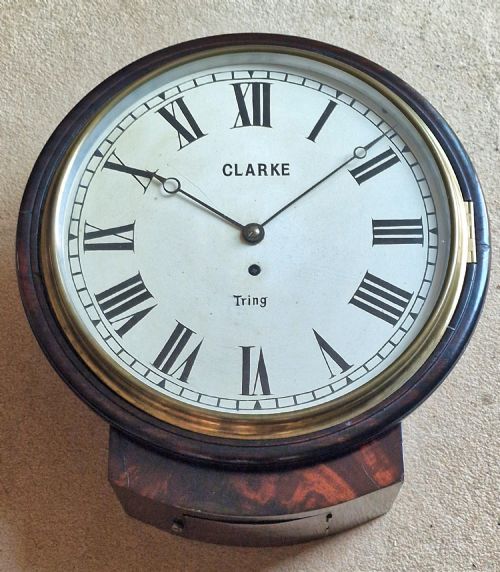
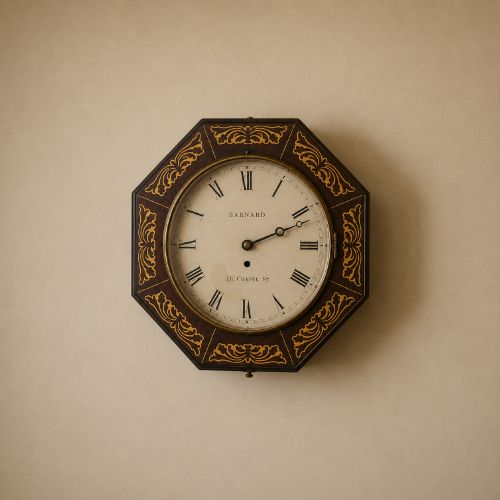
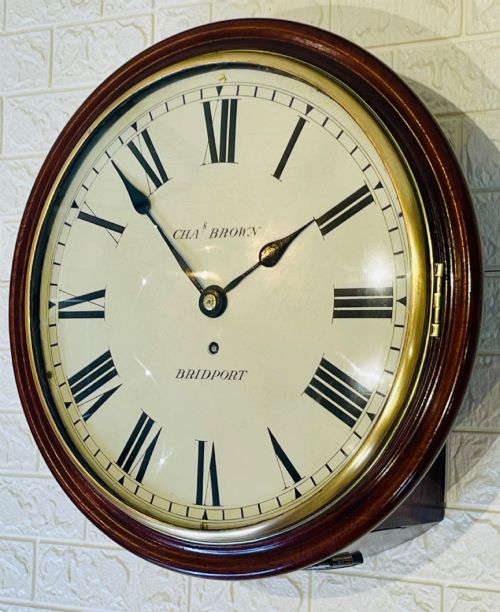
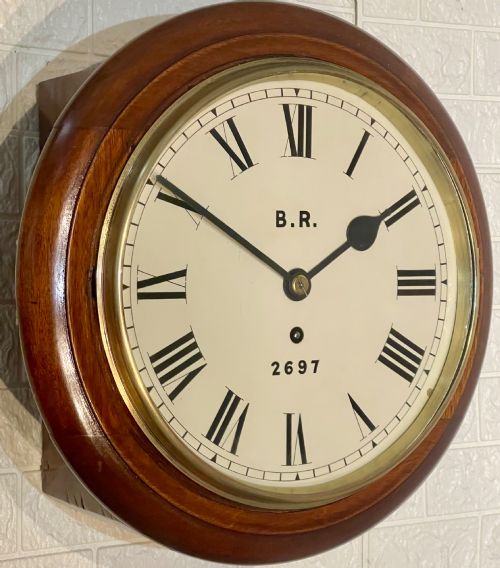
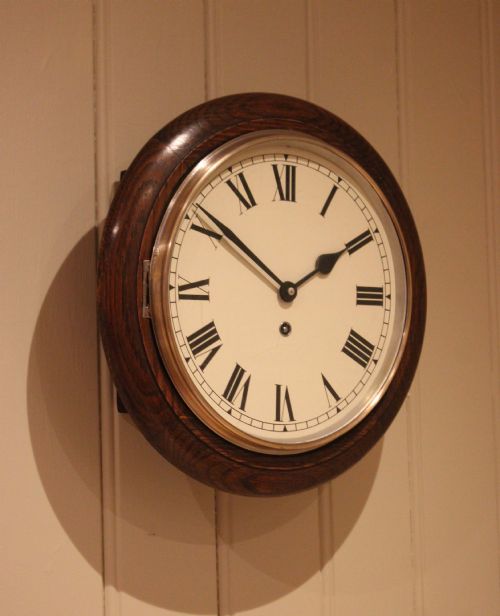
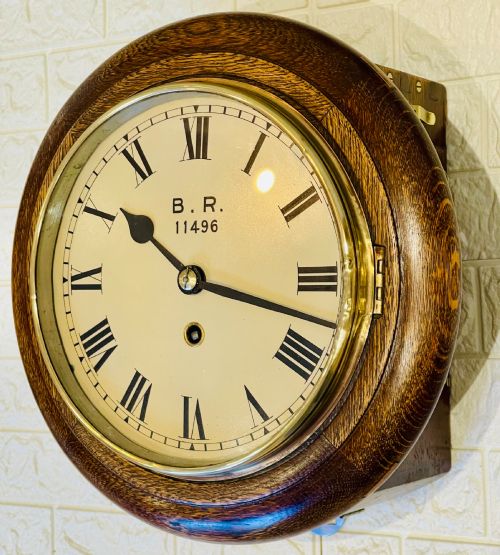
Fusee Dial Wall Clock
A fusee dial wall clock brings together practical timekeeping and precise mechanical movement in a dependable wall-mounted form.
Fusee Dial Wall Clock
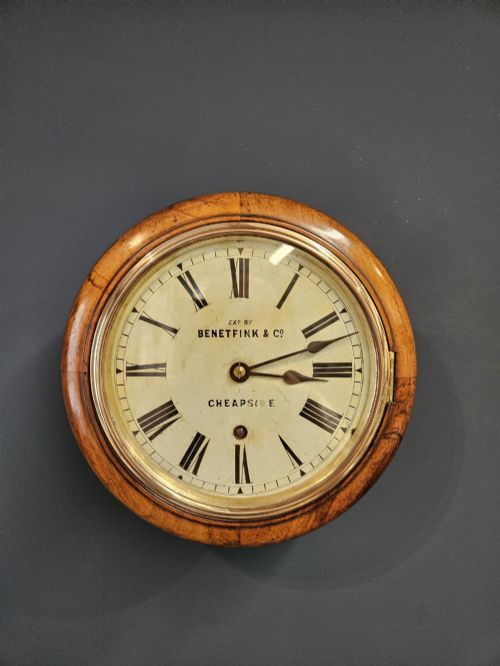
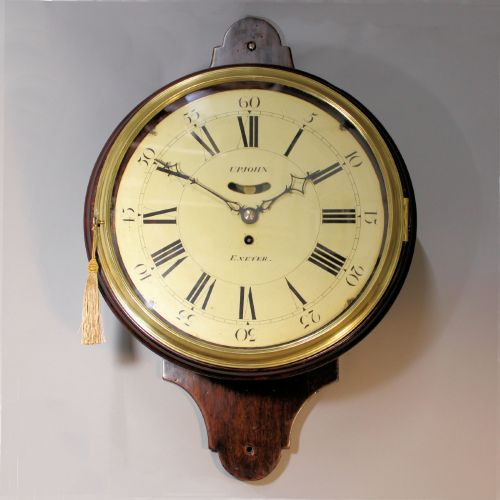
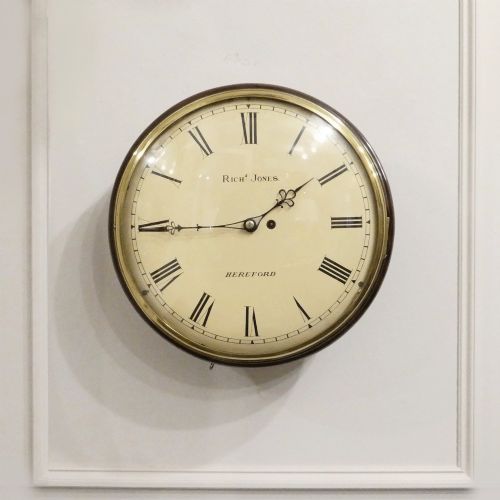
A fusee dial wall clock is a timepiece designed to hang on a wall, most frequently found originating from the Georgian, Regency, and Victorian periods.
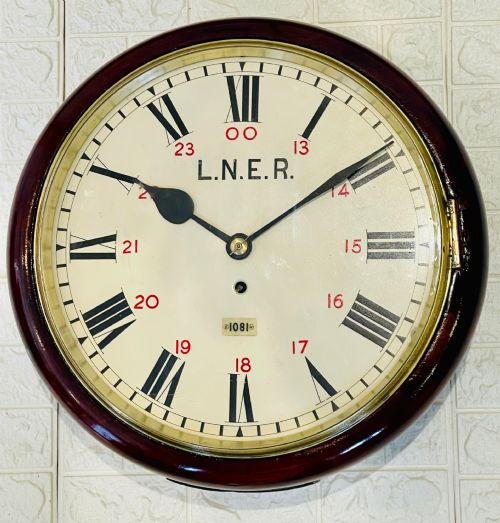
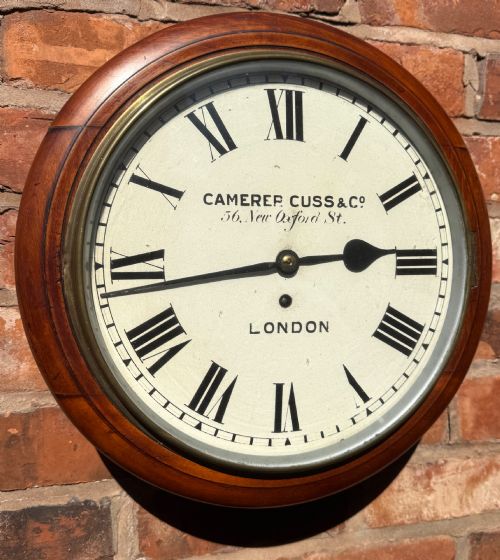
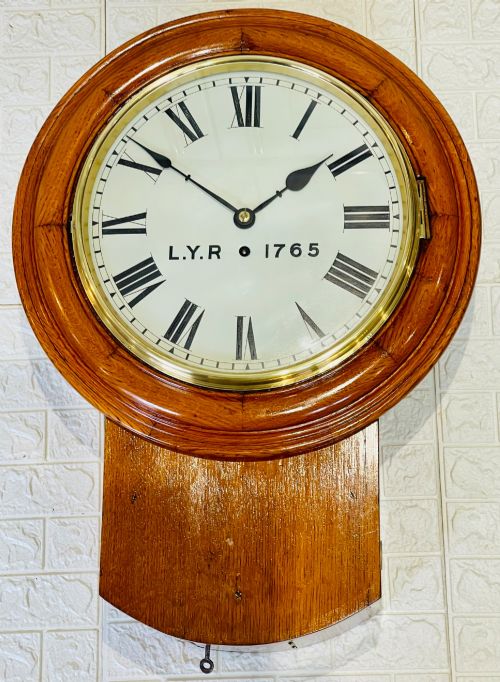
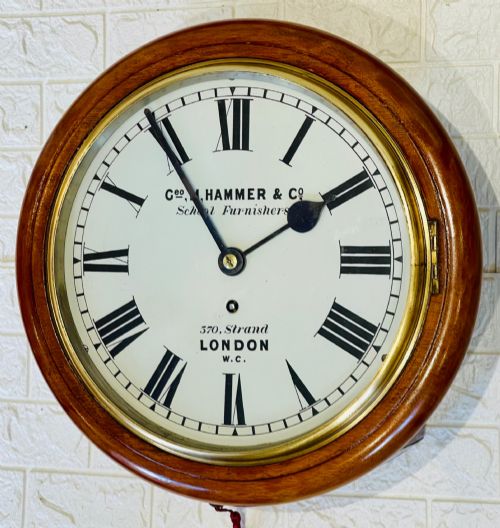
The selections span domestic parlour clocks, large station pieces bearing railway company initials, and government or military timepieces.
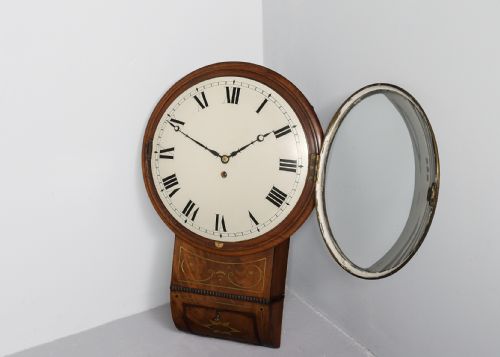
Circular wooden or painted metal dials dominate the form, occasionally accompanied by a drop-dial trunk below to house the pendulum.
How They Were Made
Cases are constructed from timbers such as mahogany, oak, rosewood, and beech, sometimes detailed with brass inlay or mother of pearl.
The movement relies on a chain-driven fusee mechanism, which uses a cone-shaped pulley to equalise the pull of the mainspring as it unwinds.
Listings feature mahogany, oak, rosewood, and painted metal cases housing single and twin fusee movements.
What Varies in Quality
Quality shows in the crispness of the timber framing, the precision of the dial lettering, and the reputation of the maker inscribed upon the face.
Examples produced by established London firms or notable provincial clockmakers display finer cabinetwork and more refined mechanical finishing.
Camerer Cuss And Co·D And J Wellby·John Walker·Henry Harris·James Duncan
The Fusee Dial Wall Clock Glossary
- Fusee
- A conical pulley used in clock movements to maintain even power delivery as the mainspring runs down. It connects to the barrel via a fine chain or cord.
- Drop dial
- A clock case featuring a circular dial at the top and an extended wooden box below to accommodate the pendulum swing. This style became common in public buildings and railways.
- Bezel
- The ring, often brass or wood, that holds the glass protecting the clock face. It typically opens on a hinge to allow hand-setting.
- Convex dial
- A clock face that curves outward toward the viewer. This design reduces glare from windows and gas lighting.
- Chain-driven
- A mechanism utilising a fine metal link chain rather than gut or wire to connect the fusee to the spring barrel.
Fusee Dial Wall Clock: Frequently Asked Questions
How do I wind a fusee dial wall clock?
Winding requires inserting the key into the dial aperture and turning it gently until resistance is felt. Care must be taken not to overwind the chain.
Most single-chain examples require attention at weekly intervals to maintain accurate timekeeping.
Why do some clocks have railway company names?
Railway companies issued precise timepieces to stations, offices, and line junctions to coordinate schedules safely. Makers marked these dials with initials such as GWR or LNER.
These utilitarian pieces were built for absolute reliability under heavy daily use.
What is the purpose of the drop-dial case?
The lower trunk protects the pendulum and allows room for its swing beneath the dial. This layout balanced a compact face with the length needed for a steady beat.
It became a standard format for offices, schools, and transit hubs.
How can I tell a Regency clock from a Victorian one?
Regency pieces often display refined mahogany cases with sharp brass inlay and convex wooden dials. Victorian versions frequently scale up in size, especially for railway or institutional settings, utilising sturdier oak or mahogany frames.
Lettering styles and case proportions also shift between the early nineteenth century and the later Victorian decades.