
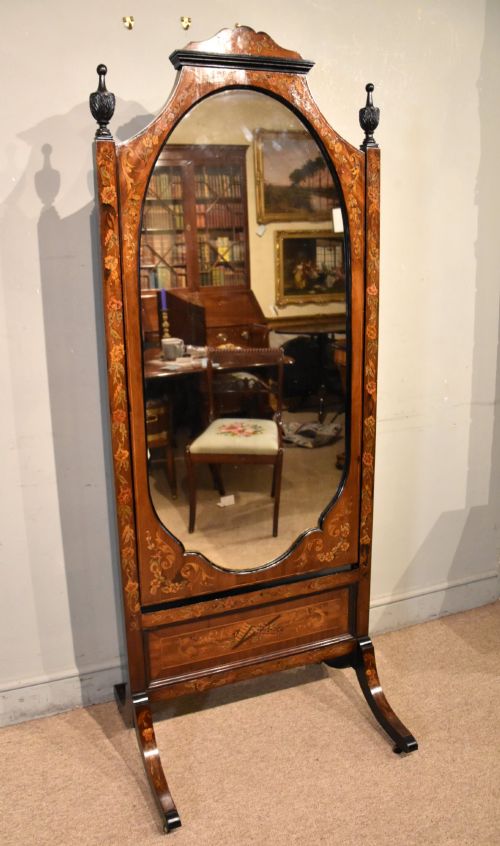
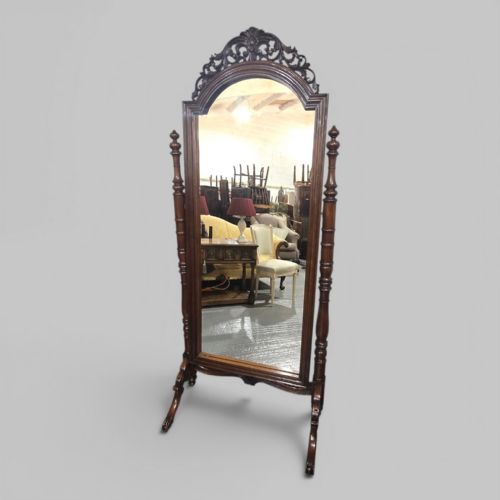
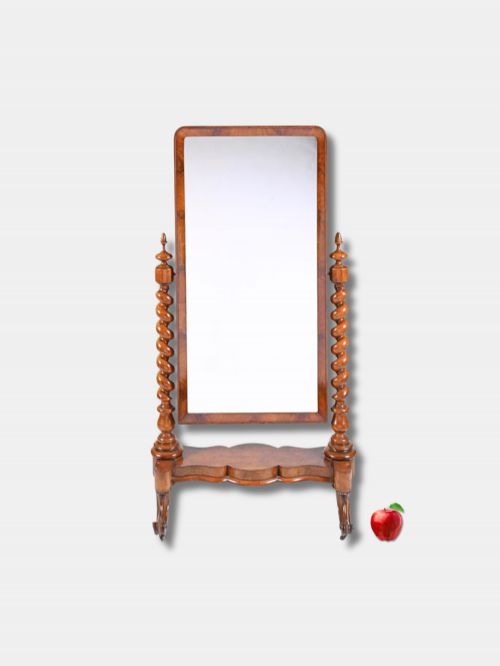
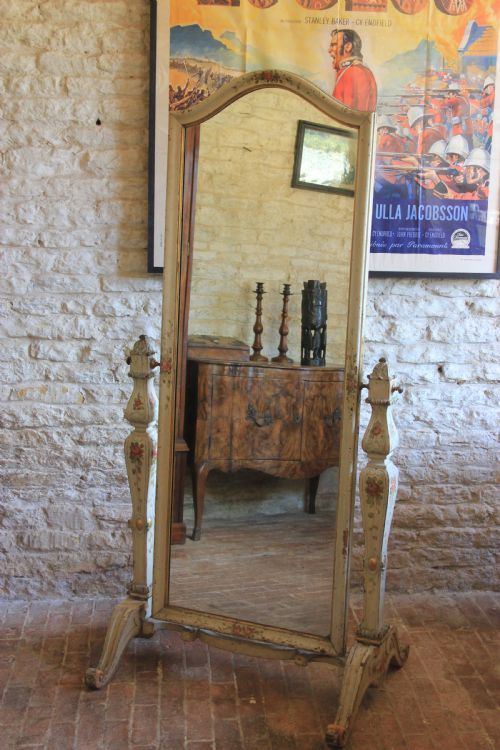
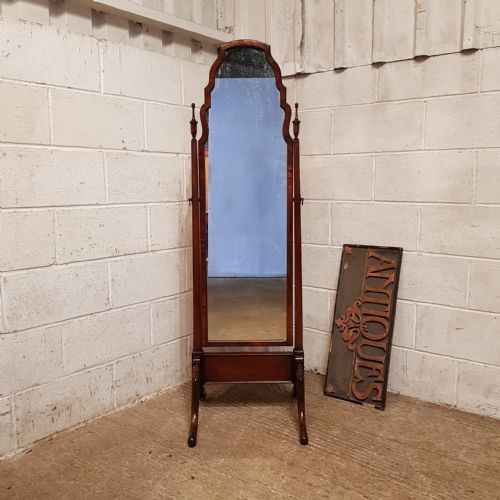


Full Length Free Standing Mirror
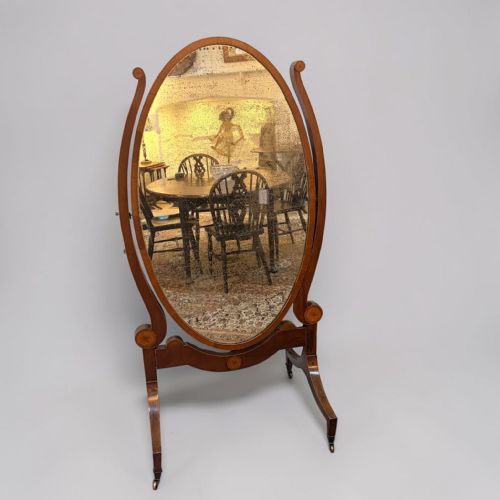
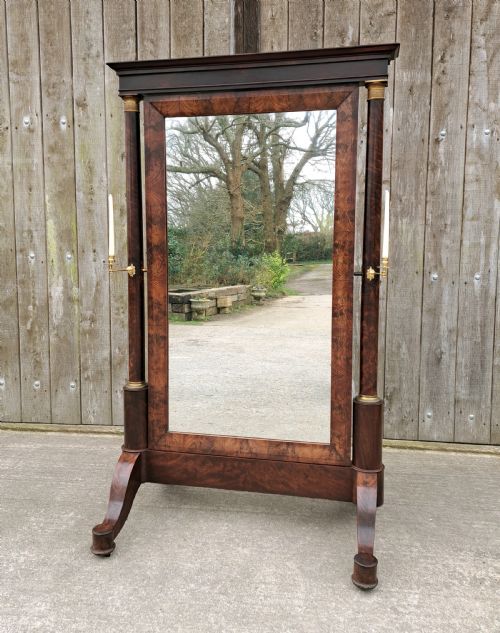
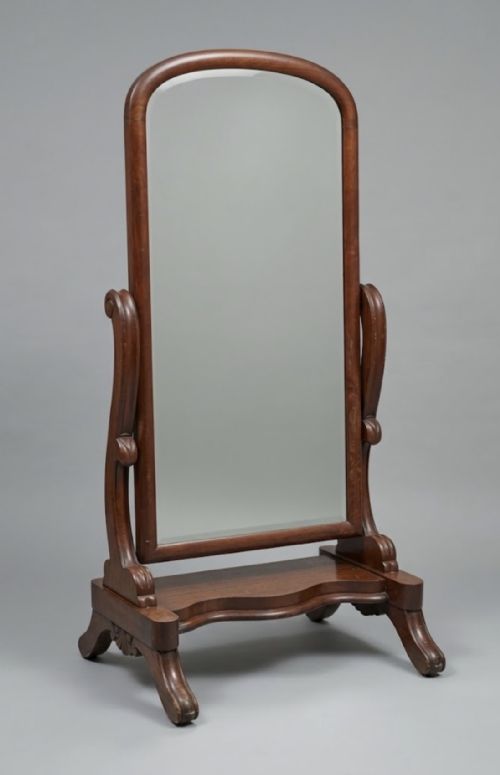
A full length free standing mirror gives a room both light and proportion, and the nineteenth-century mahogany cheval is the form you meet most often.
Full Length Free Standing Mirror
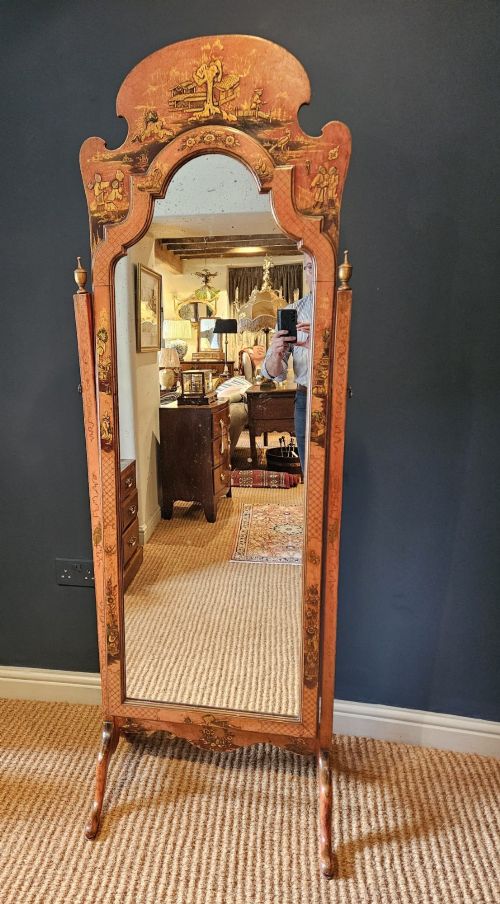
A full length free standing mirror offers a practical view of attire while anchoring a bedroom or dressing room with architectural presence. The pieces catalogued here span from the eighteenth century through the art deco era, encompassing distinct periods of design.
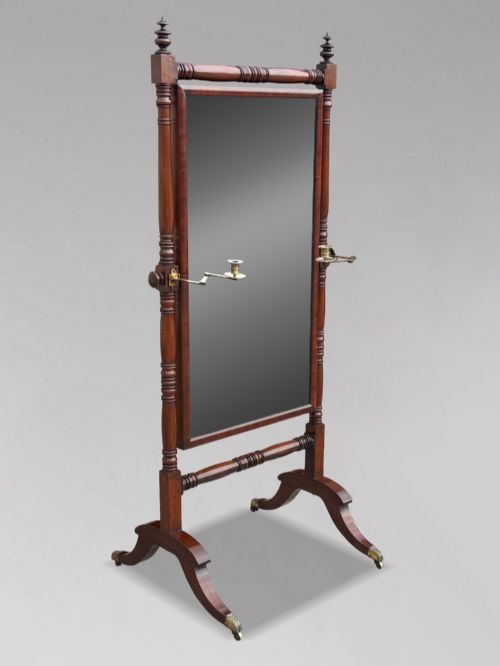
The nineteenth-century examples dominate the selection, with Victorian and Regency interpretations appearing most frequently. These designs typically feature a pivoting plate suspended within a sturdy wooden frame and supporting pillars.
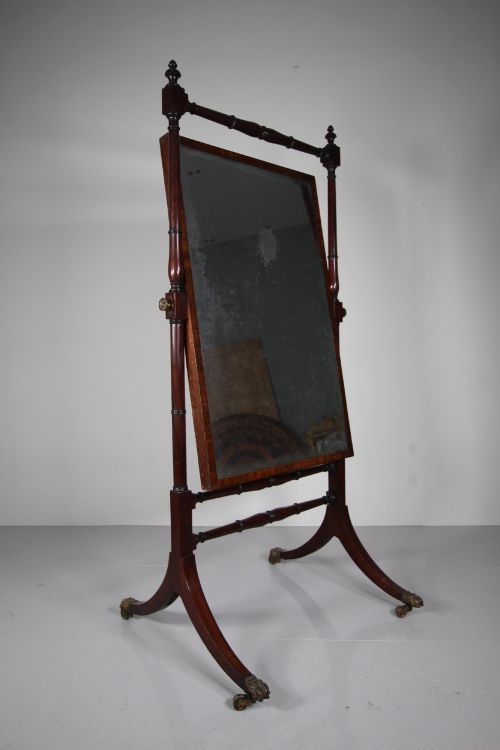
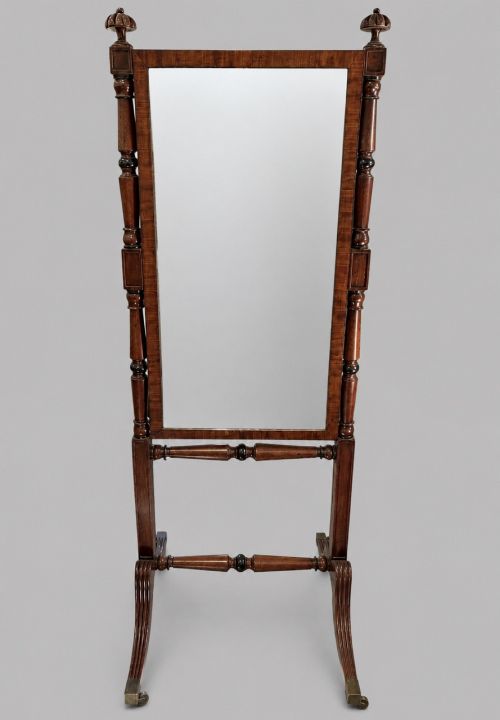
The form evolved from simple dressing glasses into substantial furniture items capable of standing independently in a room. Buyers encounter various woods and decorative styles, from restrained Georgian lines to elaborate barley twist supports.
Judging quality and proportion
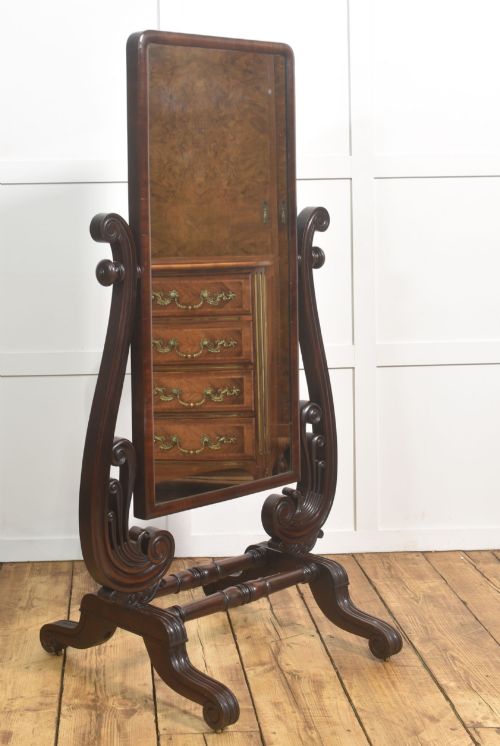
The distinction between standard examples and exhibition quality pieces lies in the crispness of the carving, the selection of figured wood veneers, and the structural integrity of the pivoting frame. Superior pieces demonstrate careful timber selection, such as burr walnut or well-matched mahogany grains.
Proportion and scale dictate the visual weight of the mirror within a room, with larger Regency and Victorian interpretations offering a commanding presence. The refinement of the brass mounts and the stability of the floor supports further distinguish finer workshops.
The selection includes pieces from the eighteenth century through the art deco period, highlighting Victorian and Regency designs.
Gillows·Versace
The Full Length Free Standing Mirror Glossary
- Cheval mirror
- A large, free-standing mirror designed to pivot vertically within a frame, allowing a full-length view. The name derives from the French word for horse, referencing the four-legged support trestles.
- Barley twist
- A type of turning shaped like a spiral rope, popular on Victorian furniture supports. This decorative woodworking technique adds texture to the upright pillars.
- Marquetry
- The art of applying pieces of veneer to a structure to form decorative patterns. Craftsmen utilised various coloured woods to create pictorial designs on the frame.
- Gilt
- A thin layer of gold applied to wood surfaces for decorative enhancement. This finish appears on period pieces to catch and reflect light.
- Satinwood
- A durable, yellowish timber prized for its lustrous sheen and smooth grain. It frequently appears in inlaid decorative borders on nineteenth-century pieces.
Full Length Free Standing Mirror: Frequently Asked Questions
Where should I place a cheval mirror?
These mirrors suit bedrooms, dressing rooms, and wide hallways where natural light can be captured and reflected across the space.
Because they stand independently without wall fixings, you can reposition them easily to optimize the room layout and lighting angles.
How do I date a freestanding mirror?
Examine the timber species, the turning style of the supports, and the construction methods used in the frame and base. Regency and Georgian pieces display distinct classical proportions, whereas Victorian examples often feature heavier mahogany or turned barley twist pillars.
Later art deco and nineteen-twenties pieces introduce walnut veneers and streamlined geometric frames that differ from nineteenth-century ornamentation.
What is the difference between a cheval and a dressing mirror?
A cheval mirror stands directly on the floor at full length, designed for viewing an entire outfit.
A dressing mirror is smaller and intended to sit atop a chest of drawers or a dressing table.
How do the tilting mechanisms work?
The glass frame hangs between two upright posts using metal pivot screws or pins inserted into brass mounts. Tightening these fittings holds the mirror plate at the desired viewing angle.
Original brass hardware indicates period authenticity, while replacement screws are common on older pieces.