



Fruit Study Artwork
Fruit study artwork brings rich natural colour to a room through traditional still life paintings on canvas and paper.
Fruit Study Artwork
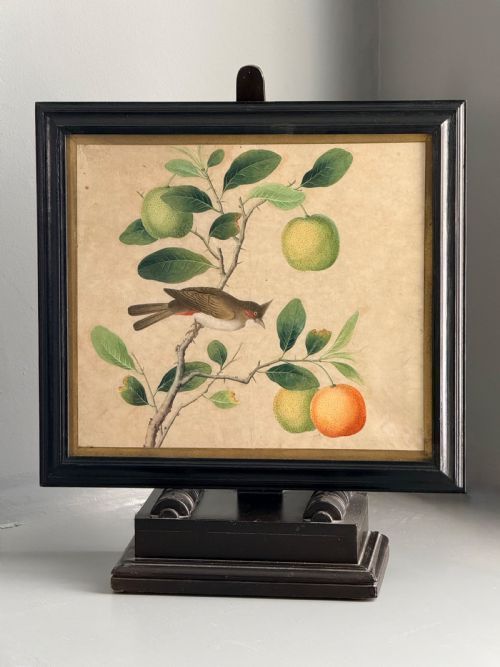
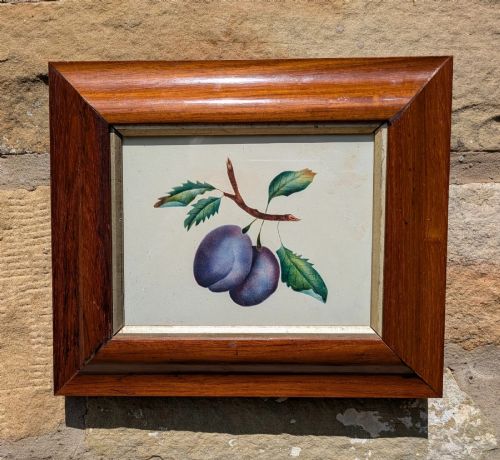
Fruit study artwork comprises traditional paintings and watercolours depicting natural subjects such as apples, grapes, plums, and basket arrangements. These pieces range from eighteenth century gouache on pith paper to Victorian watercolours in rosewood frames and mid-century European oil paintings.
The versions most commonly met on this page include nineteenth century oil paintings on canvas set in gilt frames, alongside botanical watercolours. Traditional styles dominate, though Spanish school and mid-century European interpretations also appear among the selections.
Subjects frequently centre on simple compositions of fruit, jugs, and baskets rendered with detailed brushwork. These artworks serve as classic wall decoration for dining spaces and studies, carrying centuries of artistic interest in natural forms.
How they were made
Artists painted these works using oil paint on canvas or watercolour and gouache on paper and pith paper. Canvases are typically stretched over wooden frames, while watercolours are housed behind glass often within giltwood or rosewood frames.
Brushwork varies from the fine botanical precision seen in nineteenth century watercolours to the bolder application of paint found in mid-century European and Spanish school oil studies.
Fruit Study Artwork Retail Price Guide 2026
Typical asking prices for fruit study artwork among the pieces listed under this phrase on Sellingantiques today, from the lower quarter to the upper quarter. They describe what is for sale here now, not the wider market.
Frames recorded across the selections include traditional giltwood, gilt finishes, and dark rosewood timber.
What varies in quality
Quality rests upon the skill of the artist in capturing the texture, light, and natural volume of the fruit and foliage. Finer works display careful tonal gradation and convincing depth within the arrangement of apples, grapes, and baskets.
The integrity of the original framing, whether giltwood, gilt, or rosewood, contributes significantly to the overall preservation and visual weight of the piece.
Thomas Hooper·John Robertson Reid·John Sherrin·T.Vincent
The Fruit Study Artwork Glossary
- Gouache
- An opaque water-based paint that dries to a matte finish, frequently utilised on paper or pith paper for botanical and fruit studies.
- Pith paper
- A delicate traditional Asian material made from plant pith, used as a painting surface for detailed nineteenth century works.
- Giltwood
- Wood carved and coated with gold leaf or a gold-coloured finish, commonly used for traditional picture frames.
- Still life
- An artwork depicting mostly inanimate subject matter, typically commonplace objects including fruit, baskets, and vessels.
Fruit Study Artwork: Frequently Asked Questions
How do I hang a heavy oil painting?
Ensure your wall fixings are securely anchored into solid masonry or studwork to support the weight of the canvas and its wooden or gilt frame.
Use heavy-duty picture wire attached firmly to the frame's D-rings, keeping the hanging height at eye level for optimal viewing.
Where should I display botanical watercolours?
Keep watercolours away from direct sunlight to prevent the fading of delicate pigments on paper and the yellowing of aged mounts.
Interior walls with stable ambient temperatures in hallways, studies, or dining rooms provide ideal conditions for paper-based artworks.
How do I clean an old oil painting?
Dust the surface gently with a soft, dry artist's brush to remove loose particles without disturbing the aged paint layer.
Avoid using water, household cleaners, or chemical solvents on the canvas or frame, as these can cause permanent damage to the finish.
What framing is traditional for these?
Nineteenth-century oils typically sit within ornate giltwood or gesso frames that add depth and contrast to the dark tones of the canvas.
Watercolours often feature simpler timber surrounds, such as rosewood or gilt frames, complemented by card mounts under glass.