


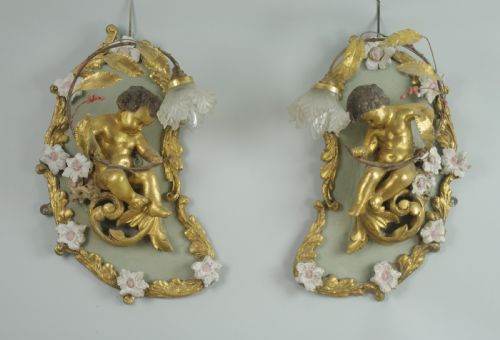


Frosted Glass Shade Pair
A frosted glass shade pair brings diffused, softening light to a room, coming in forms from Victorian brass table lamps to Art Deco wall lights.
Frosted Glass Shade Pair
When you search for a frosted glass shade pair, you look at matched sets of lighting fixtures designed to hold and soften illumination. The evidence shows these pieces appearing primarily as wall lights, table lamps, and pendant lights across several decades.
The versions you are most likely to meet on this page span the Victorian era, the Edwardian period, and the 1930s. They combine glass components with metal mounts, bringing period character to domestic interiors.
How they were made
Makers formed the shades using frosted glass to cut glare and cast an even glow. They mounted these glass elements onto robust frames fashioned from brass, chrome, and other metals.
Additional materials such as giltwood, porcelain, and early plastics like Bakelite and Catalin appear in the mounts and switches of the 1930s examples.
Frosted Glass Shade Pair Retail Price Guide 2026
Typical asking prices for frosted glass shade pair among the pieces listed under this phrase on Sellingantiques today, from the lower quarter to the upper quarter. They describe what is for sale here now, not the wider market.
The listings show pieces spanning from the 1880 Victorian era through the Edwardian period to the Art Deco designs of 1930.
What varies in quality
The distinction between the top of the range and the ordinary lies in the integration of the metalwork with the glass shades. Superior examples feature cast brass or chrome work with crisp detailing that complements the texture of the frosted glass.
Quality also rests in the matching of the pair, where period consistency in the glass treatment and the metal finish determines the cohesiveness of the set.
The Frosted Glass Shade Pair Glossary
- Frosted glass
- Glass treated to scatter light and create a translucent appearance. This technique softens the glare from internal bulbs.
- Wall light
- A lighting fixture fixed directly to a vertical surface. Many examples in the evidence take this form, including flame sconces.
- Brass
- A yellow alloy of copper and zinc used extensively for lamp bases and wall mounts. It provides a durable structure for period lighting.
- Art Deco
- A design style from the 1930s characterised by clean lines and modern materials. Pieces from this period often incorporate chrome and Bakelite.
Frosted Glass Shade Pair: Frequently Asked Questions
What is a frosted glass shade pair?
A frosted glass shade pair consists of two matching lighting fixtures featuring translucent glass diffusers. They are designed to provide balanced, soft illumination across a room.
These sets appear in various configurations including wall lights, table lamps, and pendant fittings from the nineteenth and twentieth centuries.
How do I date a pair?
Dating relies on the materials and stylistic markers present in the mounts and shades. Victorian and nineteenth century pieces often feature heavy brass or gilt putti figures.
Nineteen thirties examples typically display Art Deco geometry, utilising chrome, Catalin, and Bakelite alongside flame-shaped glass.
How do I live with them?
Living with these pairs involves integrating period lighting into modern electrical setups. They work well in hallways, living rooms, and studies where softened light is desired.
Care should be taken with vintage metal and wiring to ensure safe daily operation.