




Front Door Knocker
When you handle a front door knocker, you hold the weight of an entrance that marks a house out before anyone crosses the threshold.
Front Door Knocker
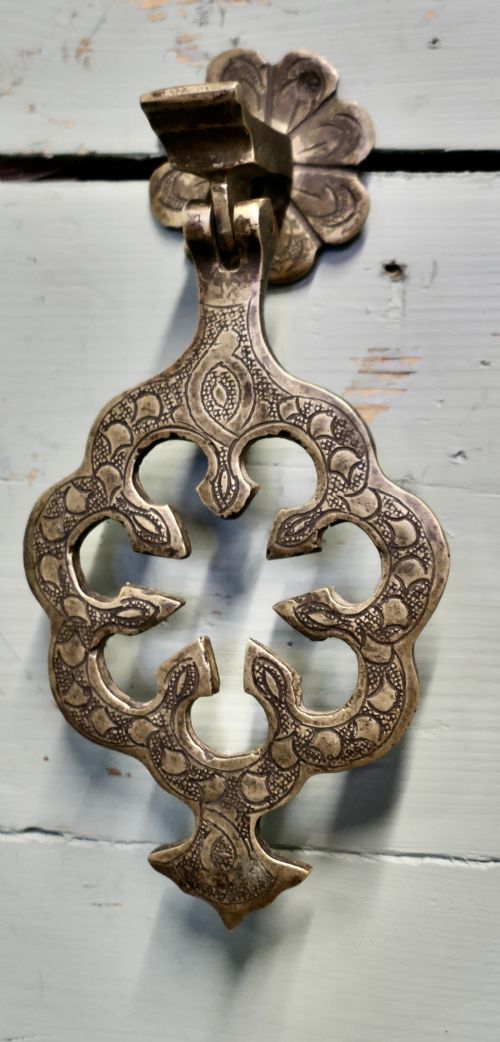
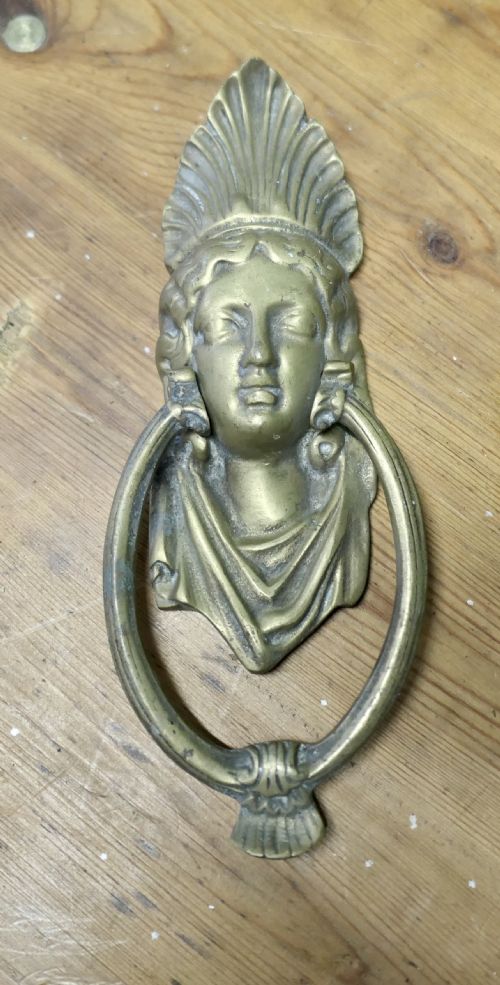
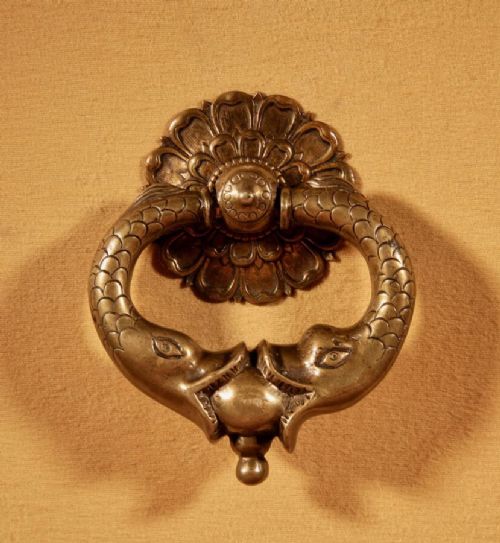
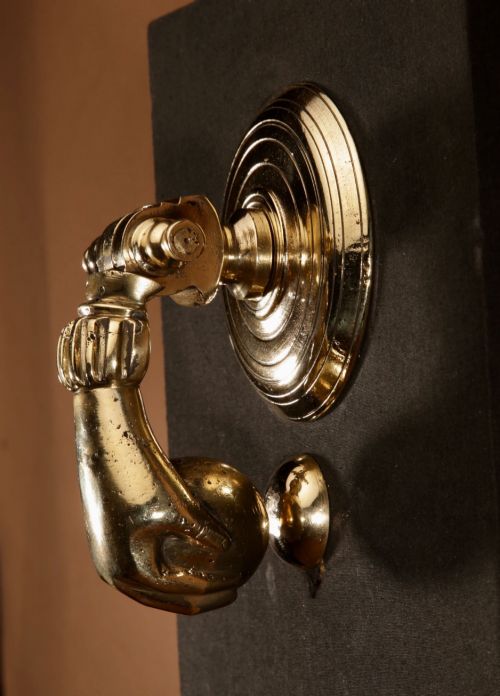
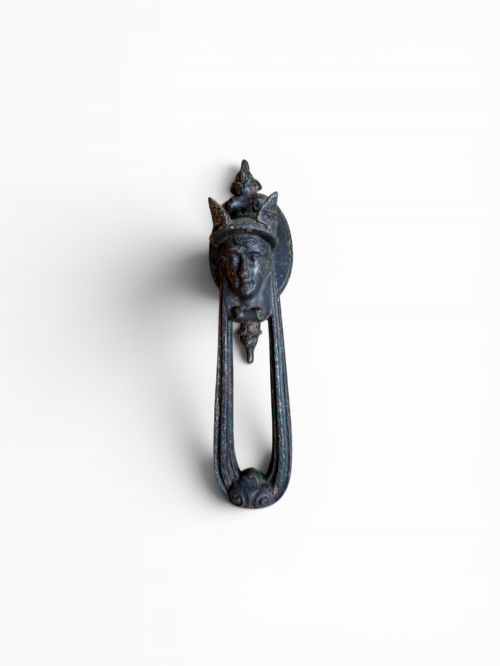
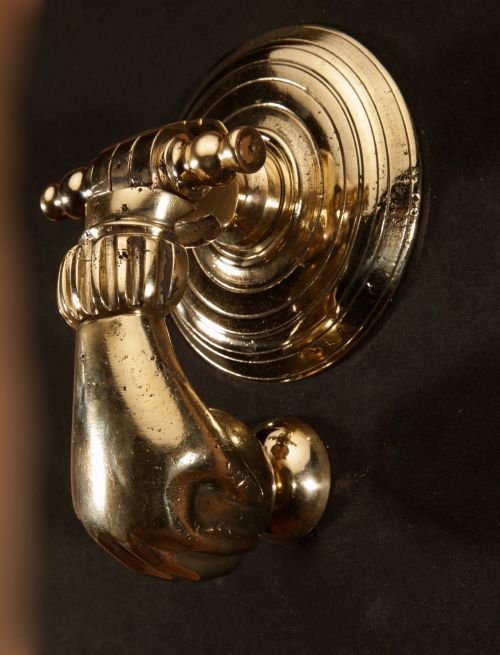
A front door knocker forms the heavy hardware of an entrance, combining utility with decorative sculpture to announce a visitor. The examples gathered here range across centuries of architectural hardware, from simple geometric forms to figurative brass and iron castings.
You are most likely to meet Victorian brass and cast iron versions on this page, often cast as lions, dolphins, hands or classical masks. Earlier examples stretch back into the eighteenth century with continental bronzes, while later pieces touch the twentieth century with solid brass doctor-knockers and anchors.
How they were made
Foundry work dictates the form of these pieces, utilising molten metals poured into sand moulds or lost-wax processes. Brass, bronze and cast iron predominate, yielding crisp relief work and heavy swinging mechanisms designed to endure centuries of weather.
Finishes range from the natural dullness of aged cast iron to polished bronze and heavy gauge brass. Many retain their original striking plates, mounting pins or integrated letterboxes cast as single architectural units.
Listings feature brass, bronze and cast iron across periods spanning the eighteenth, nineteenth and twentieth centuries.
What varies in quality
Weight and gauge determine the substance of the metal itself, distinguishing solid brass and substantial bronze from lighter alloys. Complete examples retaining their original mounting plates and striking pins hold greater integrity than those divorced from their hardware.
Kenrick & Sons
The Front Door Knocker Glossary
- Striking plate
- The metal pad fixed to the door face where the knocker falls, protecting the timber from repeated impacts.
- Doctors knocker
- A distinct pattern featuring a pivoted hammer on a vertical spindle, traditionally used so medical practitioners could be summoned silently or audibly by weight.
- Caryatid
- A sculpted female figure serving as an architectural support, frequently cast into Victorian brackets and mounts.
- Cast brass
- Molten alloy poured into a mould rather than beaten from sheet metal, allowing for high relief ornament.
Front Door Knocker: Frequently Asked Questions
How do I fix a heavy door knocker safely?
Most heavy knockers use threaded bolts passing straight through the timber of the door, secured with nuts on the interior side. This prevents the frequent impact of the hammer from loosening the fixings over time.
Ensure you measure the thickness of your door before installation, as antique spindles and bolts occasionally require adjustment to fit modern timber depths without binding.
Can I polish solid brass knockers?
Polishing depends entirely on whether you prefer the dark, stable patina accumulated over decades or a bright, reflective finish. Many collectors leave the surface untouched to preserve the natural oxidation of the metal.
If you choose to polish, use a non-abrasive cream and a soft cloth to avoid softening the sharp edges of the casting detail over repeated cleanings.
How do I date a cast iron knocker?
Dating relies on the style of the casting, the nature of the iron surface, and the fixing method. Nineteenth-century examples often display sharper sand-cast textures and specific regional motifs like Gothic revival strapwork or classical caryatids.
Compare the bolt configuration and the wear patterns on the striking surface to establish whether the hardware matches the expected architectural period of your entrance.
What is a doctors knocker used for?
A doctors knocker operates with a hinged vertical rod where the bottom lifts to strike the plate, differing from the traditional drop-ring or pivoted hammer. This form allowed professionals to be identified easily by visitors seeking urgent assistance.
Today, they remain popular for their balanced proportions and distinctive mechanical action on front doors of various architectural styles.