
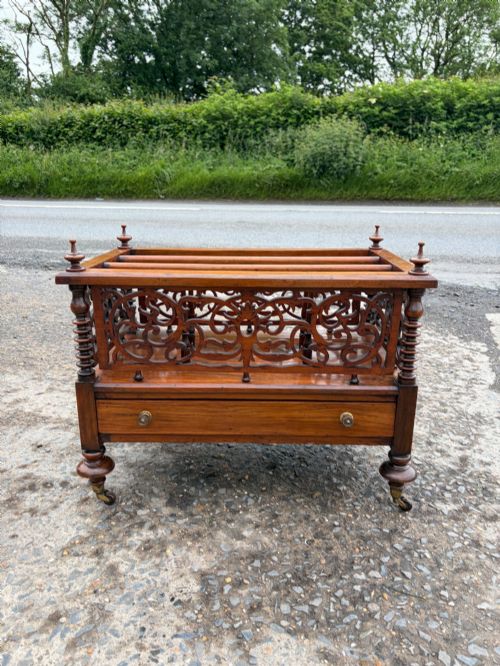


Fretwork Magazine Stand
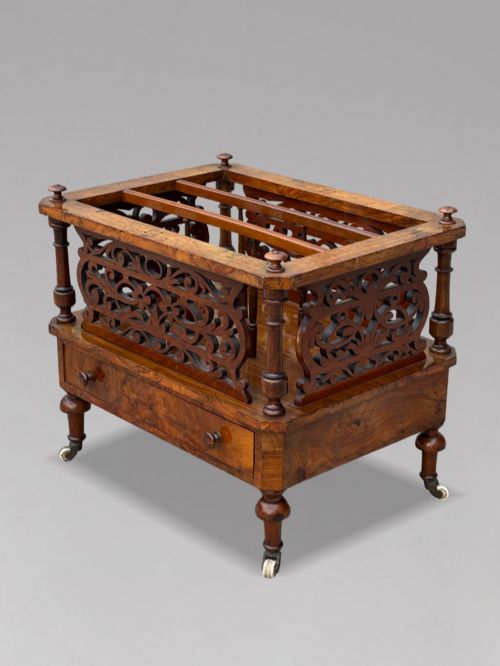
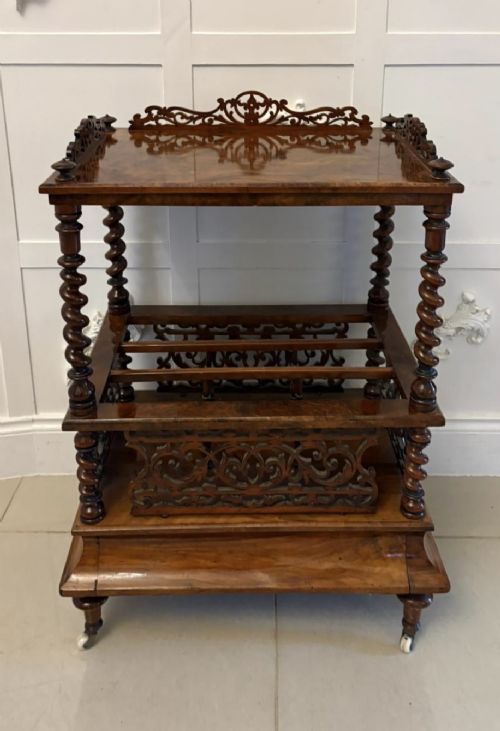
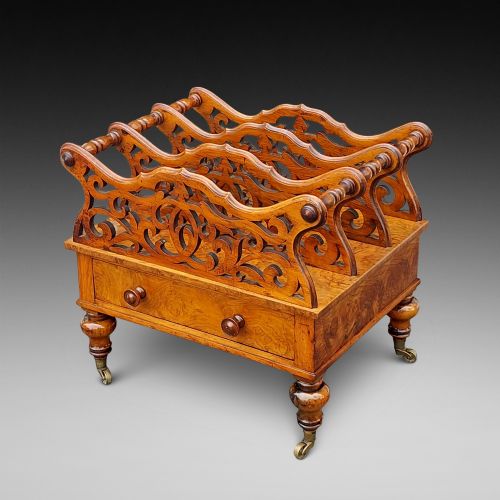
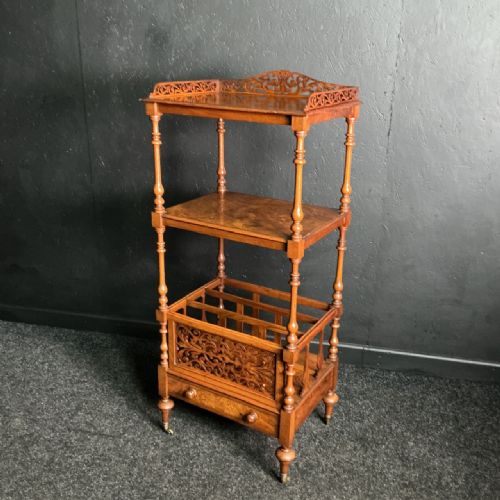
These fretwork magazine stand pieces are nineteenth-century canterburys and whatnots crafted for holding periodicals and sheet music with decorative pierced woodwork.
Fretwork Magazine Stand
When you search for a fretwork magazine stand, you encounter nineteenth-century canterburys, whatnots, and occasional tables designed for domestic sitting rooms. These pieces predominantly date from the Victorian era, spanning the mid to late nineteenth century.
The form typically combines divided sections for holding papers, magazines, and music sheets with lower drawers or open display tiers. You meet them in various formats, including freestanding rectangular racks, oval lamp tables, and multi-tiered whatnots.
Most examples originate from British cabinet makers of the period, though American gothic revival variants also appear in rosewood. Walnut and burr walnut dominate the selection, accompanied by rosewood, mahogany, and satinwood.
Materials and construction
Cabinet makers utilised richly figured timbers such as burr walnut, rosewood, and mahogany for the primary structure. These woods were often selected for their prominent grain patterns and polished to a deep lustre.
Fretwork and pierced scroll divisions define the characteristic appearance of these stands, requiring precise hand-sawing techniques. Brass elements, ceramic castors, and inlaid details frequently complement the timber framework.
Victorian households needed specialised furniture simply because keeping up with the daily news generated an unprecedented amount of scattered paper.
Judging quality in these pieces
The choice of timber underpins the distinction between standard items and superior examples, with heavily figured burr walnut commanding particular attention. The intricacy and crispness of the pierced fretwork divisions further separate finer items from simpler production.
Structural complexity also dictates the tier of a piece, particularly where multi-level whatnots combine lower drawers, turned supports, and inlaid surfaces. The preservation of original castors, brass hardware, and interior drawer construction indicates higher workshop standards.
The Fretwork Magazine Stand Glossary
- Whatnot
- An open set of multi-tiered shelves used for displaying ornaments and holding books or papers. These items date primarily from the Victorian period.
- Burr walnut
- Timber sliced from walnut tree growths, prized for its swirling, highly decorative grain patterns. Cabinet makers used veneers of this material on prominent exterior surfaces.
- Fretwork
- Ornamental perforated woodwork created by cutting intricate patterns through a thin board. This technique provides the signature decorative divisions on these stands.
- Gothic Revival
- A nineteenth-century architectural and decorative style drawing inspiration from medieval forms. Pieces in this style often incorporate pointed arches and heavy geometric motifs.
Fretwork Magazine Stand: Frequently Asked Questions
What is a fretwork magazine stand?
These pieces are nineteenth-century canterburys and whatnots designed with pierced wooden divisions to hold periodicals, books, and music sheets. They function as both storage furniture and decorative occasional tables in sitting rooms.
Cabinets of this form emerged during the Victorian period, utilising rich timbers like walnut and rosewood. Their defining feature is the open fretwork or scrollwork that forms the upright partitions.
How were these stands used originally?
Victorians placed these items beside seating areas to keep sheet music, newspapers, and magazines neatly organised and accessible. The lower tiers and drawers provided extra space for small domestic items.
Over time, the primary function shifted from music storage to holding contemporary periodicals and general reading material. They also served as display surfaces for small lamps and decorative objects.
Where should I place one at home?
These stands suit living rooms and studies, fitting easily beside armchairs, sofas, or empty wall spaces. Their compact footprints allow them to function effectively as lamp tables while offering practical storage.
The open pierced design ensures the furniture remains visually light within a room, rather than appearing bulky. They pair well with traditional and eclectic interior schemes alike.
How do I identify a Victorian piece?
Victorian stands are identifiable through their characteristic timber choices, particularly burr walnut, rosewood, and mahogany. Construction methods such as hand-cut dovetails in drawers and turned wooden supports point directly to nineteenth-century production.
Stylistic markers like Gothic Revival motifs or delicate inlaid decorative work further anchor these items to the mid-to-late 1800s. Brass castors and ceramic fittings are also typical of the era.