



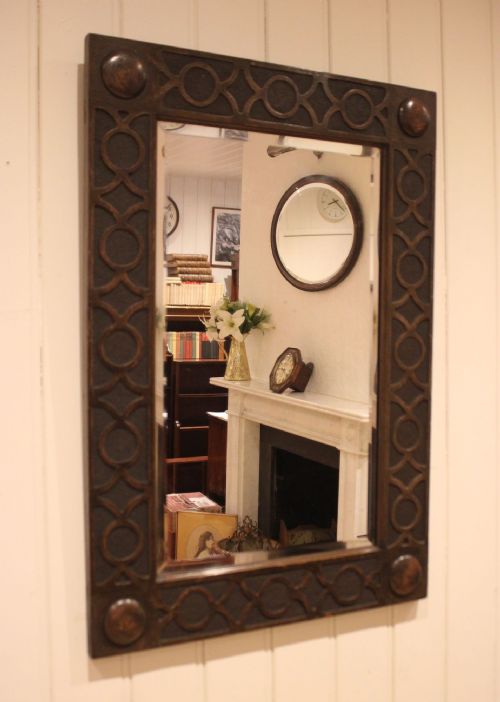


Fretwork Hanging Mirror
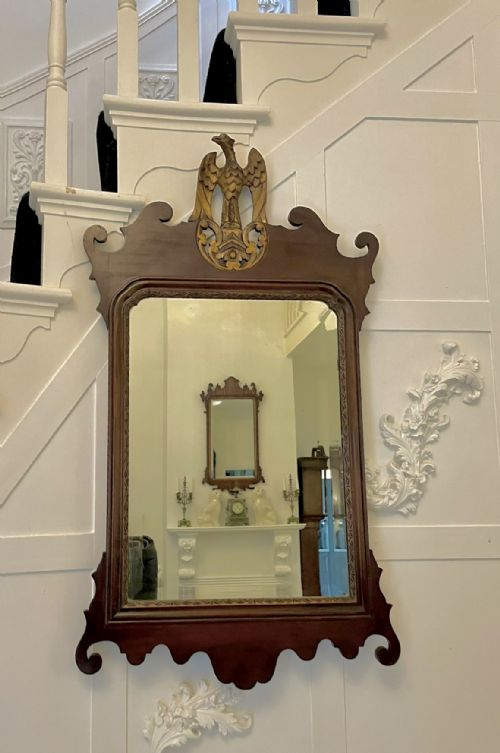
A fretwork hanging mirror brings lightness to a panelled room through intricate pierced woodwork and polished glass.
Fretwork Hanging Mirror
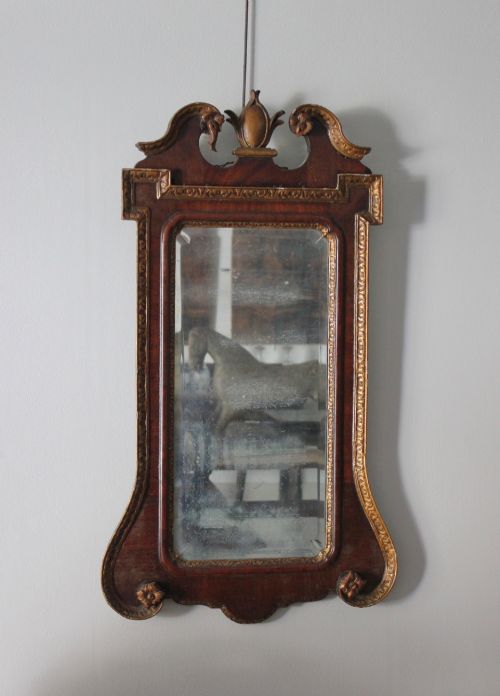
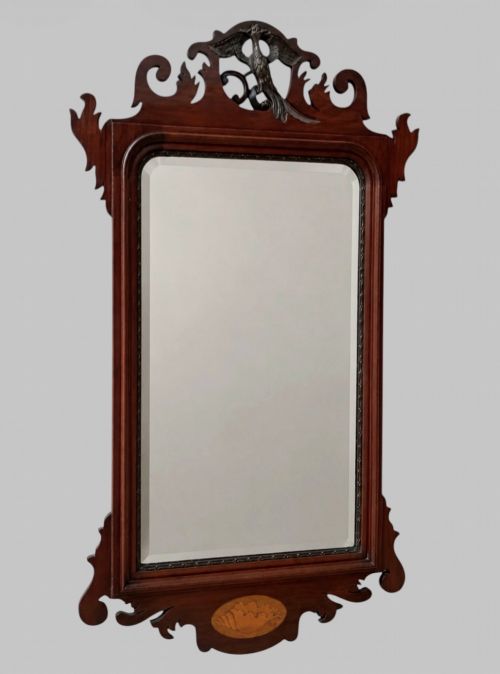
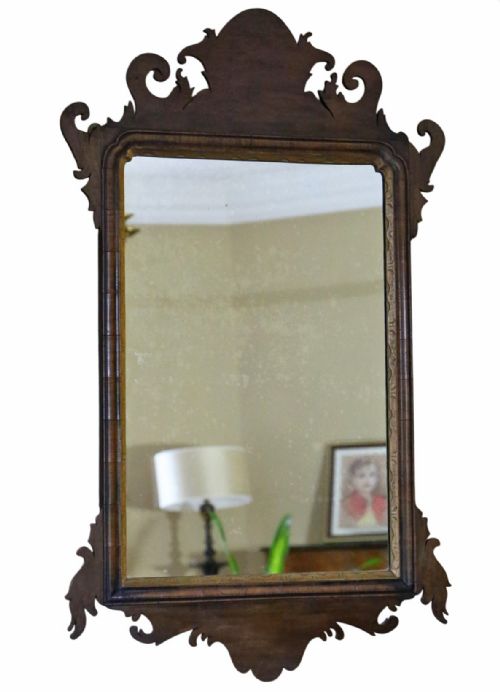
A fretwork hanging mirror is a wall-mounted glass plate set within a decorative wooden frame defined by pierced scrollwork and geometric fret cutting. These pieces range from authentic eighteenth-century examples to later revival interpretations made across the nineteenth and early twentieth centuries.
Makers drew upon classical design books to shape the pierced ears and scrolled crests that define the silhouette. Wall mirrors and pier mirrors dominate the selection, designed to hang between windows or above mantelpieces.
How they were made
Cabinetmakers shaped the distinctive pierced outlines of a fretwork hanging mirror using a fretsaw on thin boards of mahogany or walnut. Timber selection mattered greatly, as straight-grained woods resisted warping under the tension of intricate cutouts.
Glass plates were silvered by hand, sometimes set into stepped rebates behind bevelled edges or original Vauxhall mirror plates. Gilding was applied using gold leaf over gesso layers, particularly on the carved ears, bezels and parcel-gilt accents.
What varies in quality
The crispness of the fret cutting dictates the visual strength of the frame, separating finely detailed scrollwork from softer, more rounded machine-cut edges. Sharp internal corners and clean pierced apertures demonstrate superior workshop skill.
Originality of components elevates a piece, notably the retention of early mirror glass, backboards and original gilding rather than later restorations. Timber choice also plays its part, with highly figured burr walnut or rich mahogany veneers indicating higher status.
The Fretwork Hanging Mirror Glossary
- Fretwork
- Pierced decorative woodwork created by cutting patterns through thin timber panels with a fine saw. This technique forms the signature silhouette of these mirrors.
- Parcel gilt
- Partially gilded woodwork where gold leaf highlights specific carved details, such as sight edges or crest ornaments, against a dark wood background.
- Vauxhall mirror
- A mirror plate distinguished by a wide, hand-bevelled edge that follows the perimeter of the glass. These plates often show slight age imperfections.
- Pier mirror
- A tall wall mirror traditionally hung on the narrow pier of wall between two windows. They reflect natural light back into darker rooms.
Fretwork Hanging Mirror: Frequently Asked Questions
How do I hang a heavy fretwork mirror safely?
These frames require secure wall fixings distributed evenly to support the weight of the timber and glass plate without straining the joints.
Use appropriate wall plugs and brass mirror plates or picture wire attached to the structural wooden backboards rather than relying solely on the decorative fret borders.
What is the difference between Georgian and revival mirrors?
Eighteenth-century originals display the native patination and timber shrinkage of age, while revival pieces from the Victorian and Edwardian eras show later construction methods.
Revival makers closely copied Chippendale and George II proportions, making close inspection of secondary woods and fixings essential for dating.
Are the mirror plates usually original?
Many surviving pieces retain their early or original glass, which often exhibits characteristic minor oxidation, speckling and handmade distortions.
Replacement glass is sometimes fitted during centuries of use, so look for consistency between the age of the plate and the wooden frame.
Where should I place a fretwork mirror in a room?
These mirrors suit locations where reflected light enhances the space, such as above a fireplace mantel or on a principal drawing-room wall.
Keep them away from direct dampness and strong sunlight to protect the fragile mahogany or walnut veneers and delicate giltwood details.