

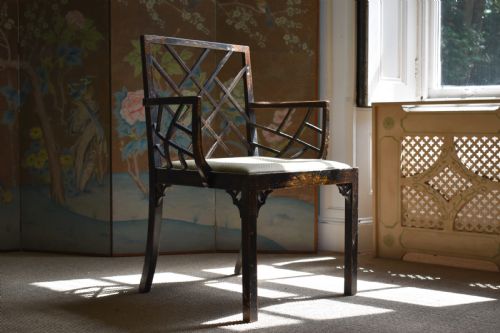


Fretwork Back Armchair
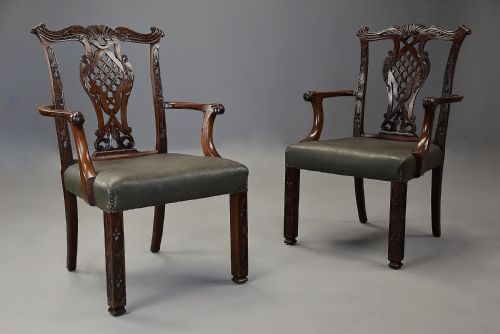
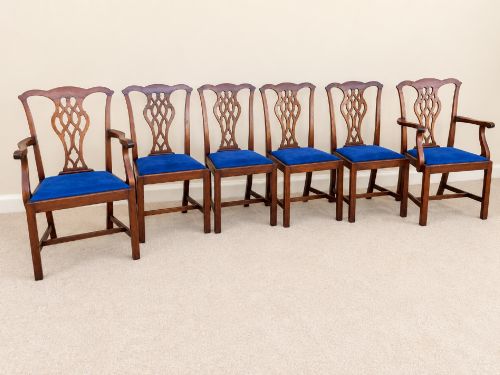
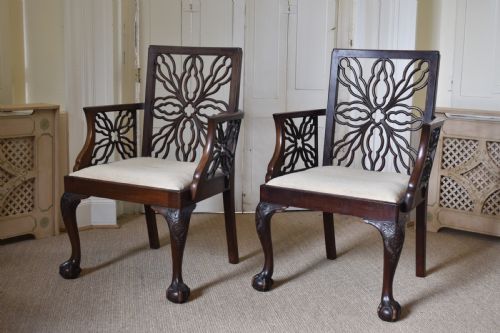
These fretwork back armchair examples combine open timber framing with pierced lattice designs, offering both structural strength and striking visual detail for daily seating.
Fretwork Back Armchair
A fretwork back armchair presents a pierced wooden splat in the backrest, turning simple seating into a decorative focus. Such chairs emerge in forms ranging from open timber armchairs to substantial dining chairs and low library seats.
You are most likely to meet mahogany pieces from the nineteenth century on this page, alongside Edwardian revivals and occasional Georgian antecedents. The category spans diverse stylistic revivals, incorporating Chinese lattice patterns and traditional regional joinery.
Makers adapted these pierced splats across various forms, including Gainsborough chairs, cockpen designs, and occasional pairs. Each variation retains the defining cutout woodwork that defines the grouping.
How they were made
Craftsmen built these chairs predominantly using solid mahogany and imported Chinese hardwoods, shaping the frames through traditional joinery techniques. The timber choice provided the necessary density to support intricate piercing without compromising structural integrity.
Surfaces were frequently finished with hand polishing or ebonisation, while select examples incorporate lacquerwork and hand-carved detailing. Upholstery materials range from plain textiles and damask to leather and patterned fabric fixed over drop-in or padded seats.
Fretwork Back Armchair Retail Price Guide 2026
Typical asking prices for fretwork back armchair among the pieces listed under this phrase on Sellingantiques today, from the lower quarter to the upper quarter. They describe what is for sale here now, not the wider market.
The documented upholstery options on this page include leather, damask, fabric, and textile finishes.
What varies in quality
Quality rests upon the precision of the pierced woodwork and the crispness of any applied hand carving. Superior examples exhibit clean, sharp interior angles within the lattice and tight, unyielding structural joints.
The selection of timber grain and the condition of the original or period upholstery further distinguish finer works from standard production. Greater care in finishing distinguishes pieces meant for principal reception rooms from more utilitarian seating.
The Fretwork Back Armchair Glossary
- Fretwork
- Ornamental perforated woodwork formed by cutting intricate patterns through a thin board. This technique creates the signature pierced lattice seen along the back splat.
- Cockpen chair
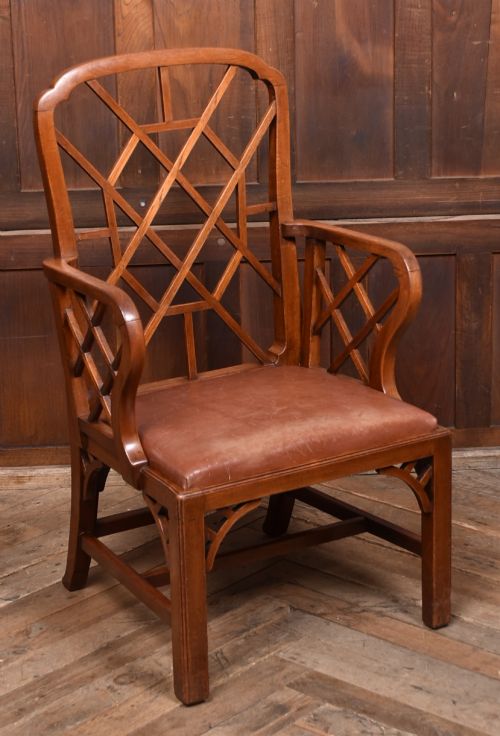
- An armchair featuring a distinctive Chinese lattice fretwork back, often associated with eighteenth and nineteenth-century revival work. These pieces frequently utilise straight uprights and square legs.
- Gainsborough armchair
- A wide, upholstered armchair with open padded arms and short legs, developed during the mid-eighteenth century. They often incorporate carved or pierced woodwork along the frame.
- Splatted back
- A central vertical wooden strip running from the seat up to the top rail of a chair. In these pieces, the splat receives the cutout fretwork decoration.
Fretwork Back Armchair: Frequently Asked Questions
What is a fretwork back armchair?
It is an open or upholstered seat featuring a wooden backrest pierced with geometric or lattice patterns. These designs draw upon historical styles ranging from Georgian craftsmanship to Edwardian revivals.
They function primarily as occasional seating, desk chairs, or dining armchairs. The pierced woodwork lightens the visual weight of the timber frame while adding ornamental interest.
How do I date a fretwork armchair?
Dating relies upon examining the timber species, joinery methods, and stylistic cues present in the frame. Nineteenth-century examples often display denser mahogany and machine-assisted cutting compared to eighteenth-century work.
Revival pieces from the Edwardian period or nineteen-twenty adopt earlier proportions but utilise contemporary manufacturing methods. Comparing the fretwork pattern to documented period styles helps confirm the era.
Where should I place one?
These chairs suit studies, living rooms, and hallways where the pierced backrest remains visible from multiple angles. Their open wooden framework prevents them from crowding smaller interior spaces.
Pairing them with a partner desk or using them as accent seating highlights the decorative lattice work. Positioning them away from direct sunlight protects the timber finish and upholstered surfaces.
Are they comfortable for daily use?
Comfort depends upon the seat configuration, as many historical examples feature firm drop-in pads or taut squabs. Models with padded arms and upholstered seats offer a softer sit for extended reading or working.
The upright posture encouraged by the rigid wooden backrest suits formal seating rather than lounging. Adding a matching textile cushion can adjust the seat depth to personal preference.