






French Wooden Clock
A french wooden clock brings warmth to a mantelpiece through rich timbers like mahogany, rosewood and walnut combined with classical brass and enamel dials.
French Wooden Clock
A french wooden clock encompasses various functional forms, predominantly mantel clocks, wall clocks and portico clocks originating across the nineteenth and twentieth centuries. Buyers seeking these timepieces encounter diverse regional styles spanning Louis Philippe, Empire, Belle Epoque and Art Deco aesthetics.
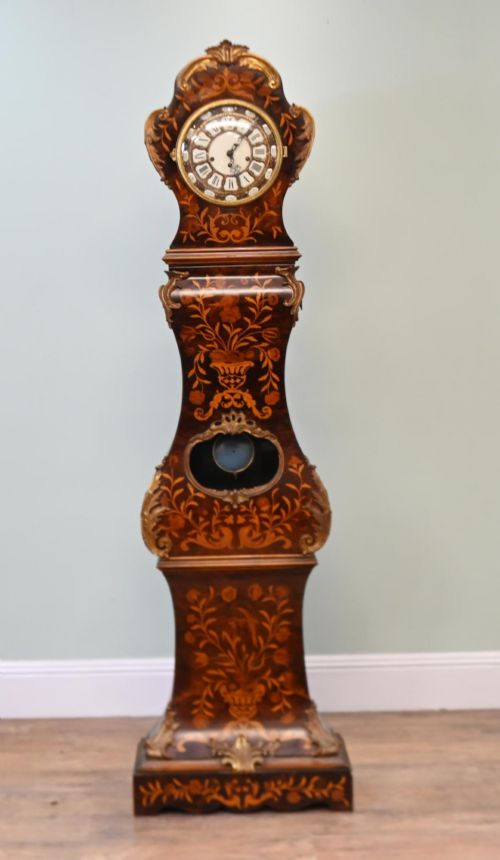
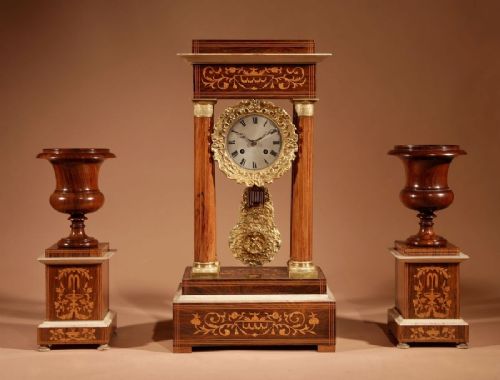
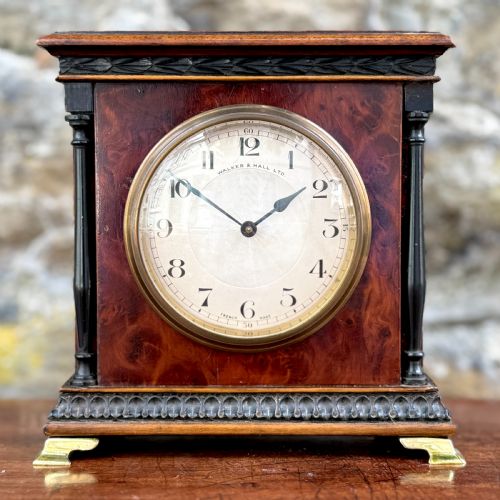
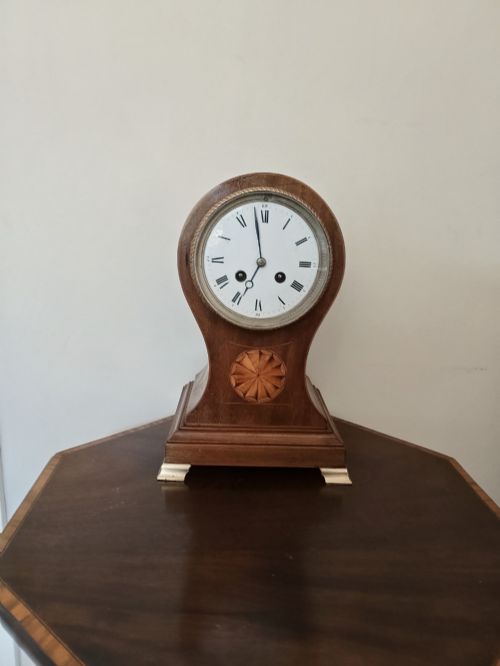
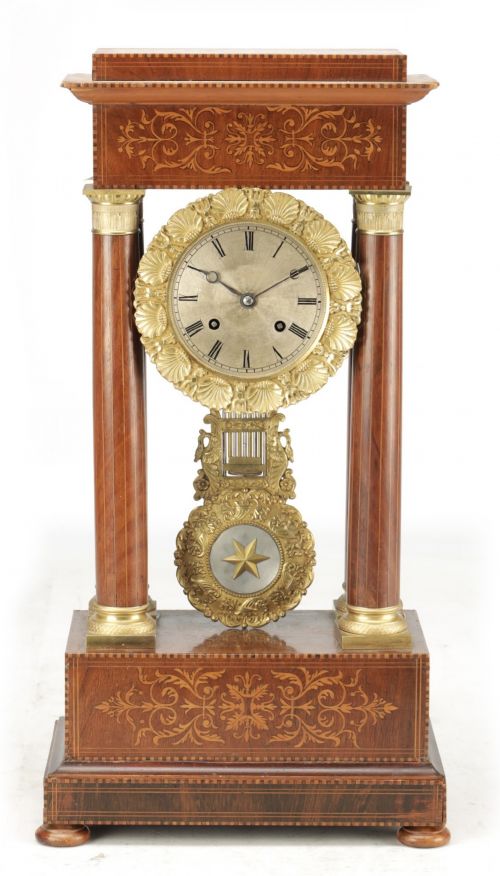
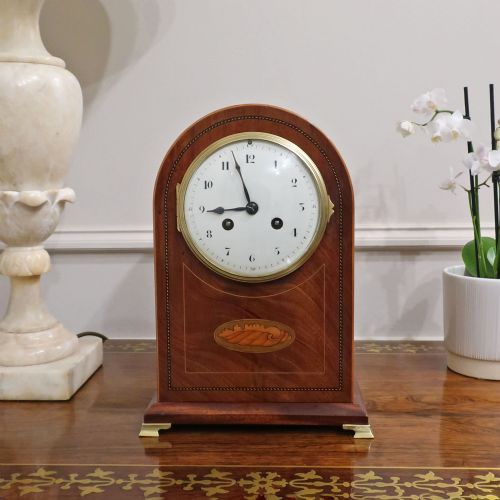
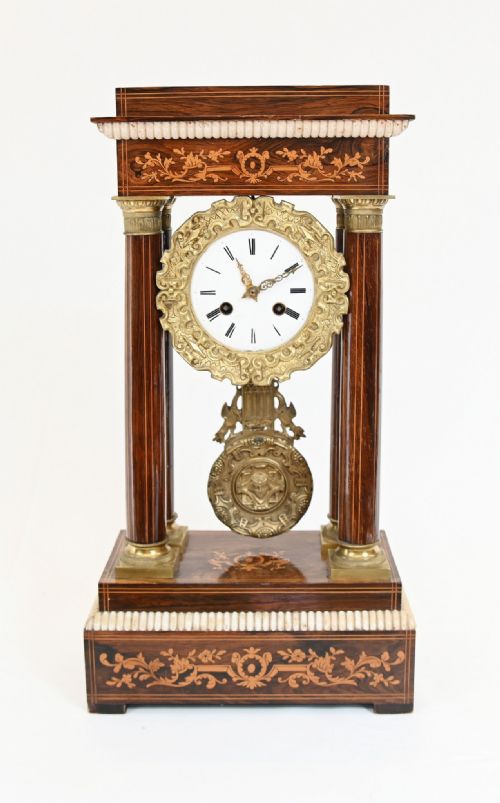
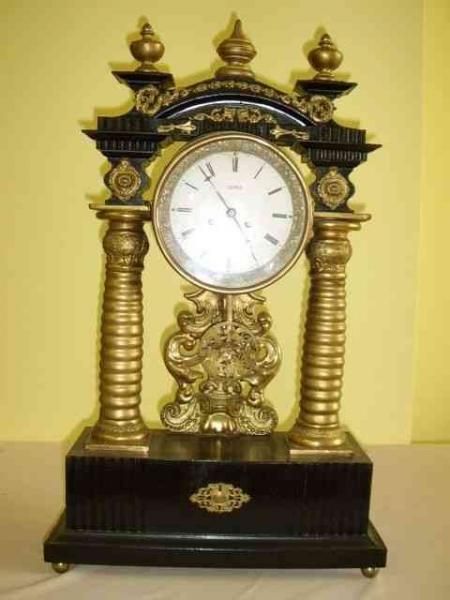
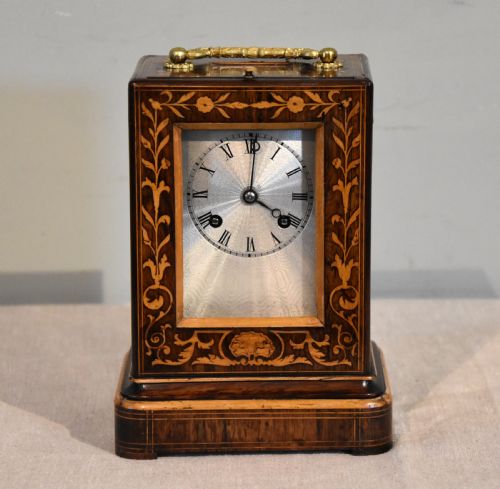
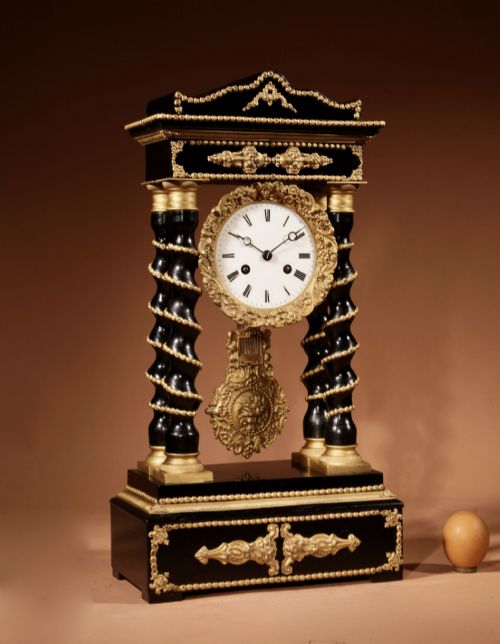
The selection ranges from architectural portico pieces in mahogany and ebonised wood to inlaid rosewood bracket clocks and striking wall clocks in walnut and oak. These domestic and architectural timepieces demonstrate how cabinet-makers adapted timber to suit changing interior fashions over successive centuries.
Materials and construction
Cabinet-makers constructed the cases of a french wooden clock using dense tropical and native hardwoods including mahogany, rosewood, walnut and oak, frequently embellished with marquetry, inlay or brass mounts. These wooden housings contained brass clockwork movements, glass bezels and enamel dials, combining joinery with horological engineering.
Makers shaped architectural portico frames, carved brackets and curved wall clock cases using traditional hand-working methods, finishing the timber surfaces with polish or wax to highlight the natural grain and marquetry patterns.
French Wooden Clock Retail Price Guide 2026
Typical asking prices for french wooden clock among the pieces listed under this phrase on Sellingantiques today, from the lower quarter to the upper quarter. They describe what is for sale here now, not the wider market.
Some nineteenth-century clocks managed to squeeze an entire universe into the woodwork, complete with hand-carved astronomical aspirations.
Judging execution and finish
Quality in a french wooden clock rests upon the precision of the cabinet-making, the crispness of any carving or inlay, and the harmony between the timber case and the movement. Superior examples exhibit tightly fitted mitres, finely figured veneer, and well-executed marquetry without warping or poor restoration.
The integration of the brass dial, bezels and glass relative to the wooden surround distinguishes finer pieces from simpler utilitarian production. Well-preserved original finishes and crisp metalwork elevate a clock beyond standard factory output.
Walker and Hall·Vedette·Girod·Malecot of Paris·BULLE
The French Wooden Clock Glossary
- Portico clock
- A distinct architectural clock style featuring a flat top supported by two or four pillars over a central pendulum suspended in the middle space.
- Marquetry
- Decorative patterns formed by fitting small pieces of veneer into a wooden background to create pictures or geometric designs.
- Bracket clock
- A portable domestic clock historically designed to sit on a wall bracket or table, usually featuring a handle and glazed sides.
- Carillon
- A mechanism in a clock that plays a sequence of musical chimes on multiple bells or gongs.
- Bezel
- The metal ring that holds the glass protecting the clock face in place.
French Wooden Clock: Frequently Asked Questions
What is a portico clock?
A portico clock is an architectural timepiece supported by pillars, framing a visible pendulum that swings centrally between them.
Cabinet-makers utilised dense timbers like mahogany and rosewood for these balanced, classical structures during the nineteenth century.
How do I wind my clock?
Most mechanical versions require a key inserted into the dial holes to tension the internal springs or weights gently.
Careful handling prevents over-winding and preserves the antique brass gear trains inside the wooden case.
Are these clocks electrically powered?
While the majority rely on traditional weight or spring-driven mechanical movements, certain twentieth-century examples utilise early electric systems.
Specific designs from the Art Deco period incorporate electric mechanisms like master clock setups or Bulle systems.
Where should I place my clock?
These timepieces suit stable mantelpieces, desks or interior walls where temperature fluctuations remain minimal to protect the wood.
Level surfaces ensure the pendulum swings evenly and the movement keeps accurate time without straining the suspension.
How do I identify the period?
Cabinet styles, timber choices and dial designs offer direct clues to the era, shifting from Empire and Louis Philippe to Belle Epoque and Art Deco.
Examining the woodwork construction and internal movement signatures helps narrow down the manufacturing decade.