


French Wooden Caddy
These French wooden caddy pieces offer timeless elegance and practical refinement, making them treasured additions to any classic interior.
French Wooden Caddy
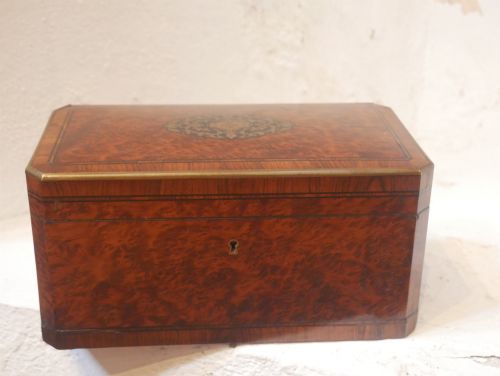
A French wooden caddy represents a sophisticated category of antique storage vessels designed for dried leaves, spirits, or personal items, originating primarily across the nineteenth century.
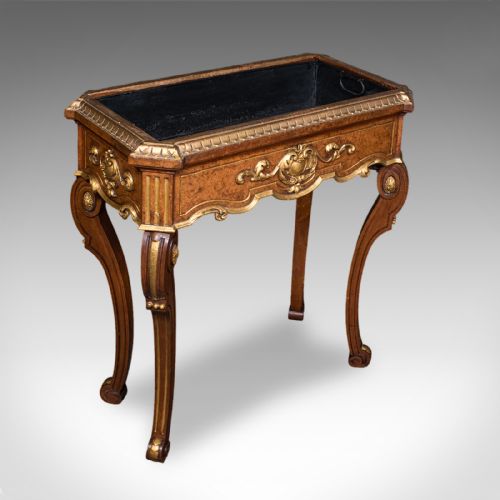
The selection ranges from traditional tea caddies and tantalus sets to decorative boxes and jardiniere tables, reflecting the diverse craftsmanship of French workshops.
Materials and construction techniques
Cabinetmakers utilised dense decorative hardwoods like rosewood and amboyna, shaping them over sturdy carcases of oak or fruitwood to ensure structural stability.
Surface ornamentation relied heavily on tortoiseshell, brass, and buhl inlay, applied with precise hand-cutting techniques that define the refined aesthetic of French second empire pieces.
Listings span multiple historical periods from the mid-eighteenth century through the late Victorian era, showcasing walnut, rosewood, and amboyna.
Assessing craftsmanship and execution
Quality rests upon the precision of the marquetry and the integrity of the timber, where tighter grain alignment and flush metalwork separate superior pieces from simpler utilitarian boxes.
The sophistication of the internal fittings, such as original mixing bowls or compartmentalised lids, heavily influences the overall calibre of an individual caddy.
Tahan Paris·Tahan of Paris
The French Wooden Caddy Glossary
- Buhl
- An elaborate form of marquetry utilising brass and tortoiseshell inlay, popular in French decorative arts during the nineteenth century. This technique creates high-contrast patterns across the surface of boxes and caddies.
- Tantalus
- A locking beverage cabinet holding decanters visible yet secured against unauthorized access. Typically fitted with metal frameworks and carried into the Victorian period.
- Amboyna
- A highly prized exotic wood derived from the narra tree, known for its mottled and swirling grain patterns. It forms the primary decorative surface of high-end nineteenth-century caddies.
- Ormolu
- Gilded bronze ornamentation applied to furniture and decorative boxes. It provides metallic contrast against dark rosewood and walnut surfaces.
French Wooden Caddy: Frequently Asked Questions
What was a french wooden caddy used for?
These vessels originally served to store expensive dry tea leaves safely under lock and key in wealthy households.
Over time, many were adapted or repurposed into general decorative boxes, sewing caskets, or liquor cabinets depending on their internal fittings.
How do I identify a napoleon iii caddy?
Napoleon III pieces typically exhibit dark exotic veneers accented with elaborate brass, mother-of-pearl, or tortoiseshell inlay.
They often lean toward ornate revivalist aesthetics reflecting the opulence of the French second empire.
Are these caddies made from solid wood?
Most examples utilise fine decorative veneers applied over a secondary structural timber such as oak or fruitwood.
This technique prevented costly exotic hardwoods from warping while presenting a continuous decorative surface.
How should I care for antique wood and inlay?
Keep wooden caddies away from direct sunlight and sudden temperature changes to protect the delicate veneer and brass inlay from lifting.
Apply a minimal amount of appropriate wax polish occasionally to nourish the historic timber surface.