


French Wood Console
A french wood console brings sculptural proportion and varied marble tops to an interior, shaped by centuries of provincial and formal design.
French Wood Console
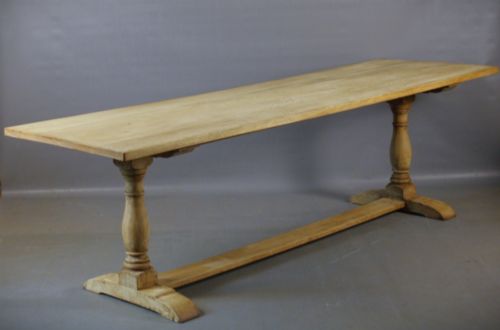
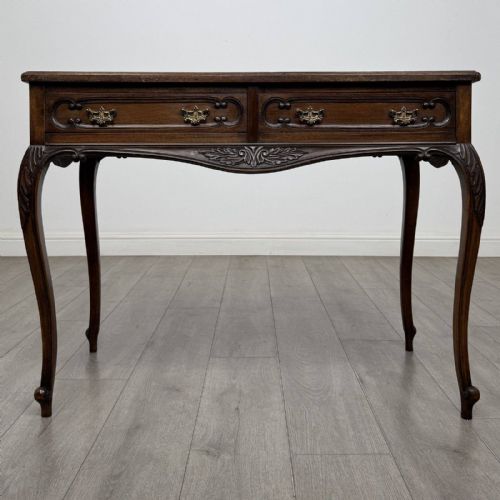
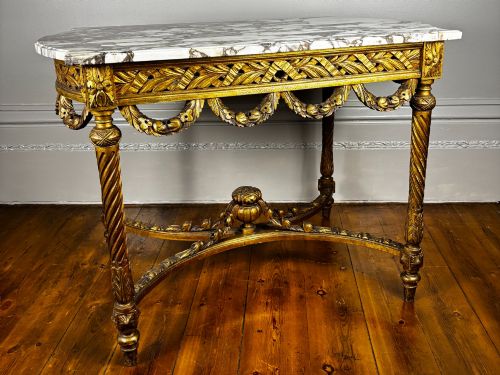
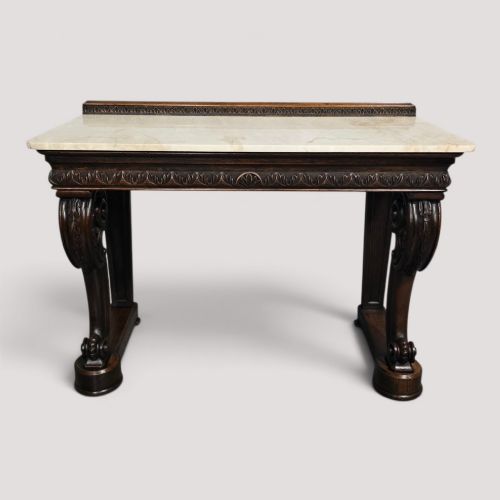
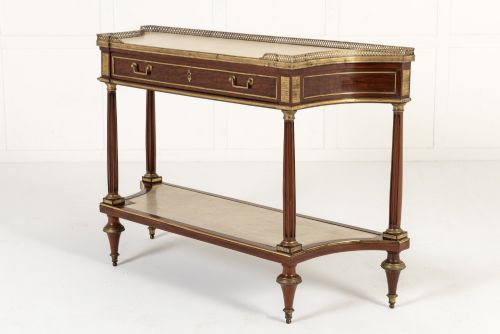
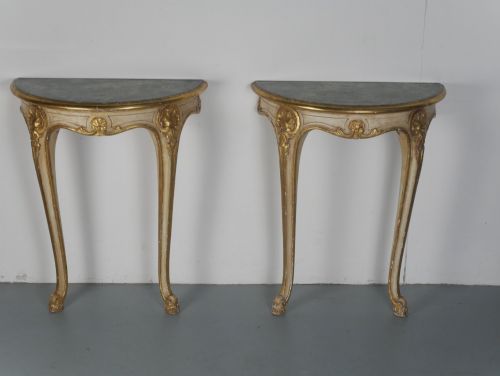
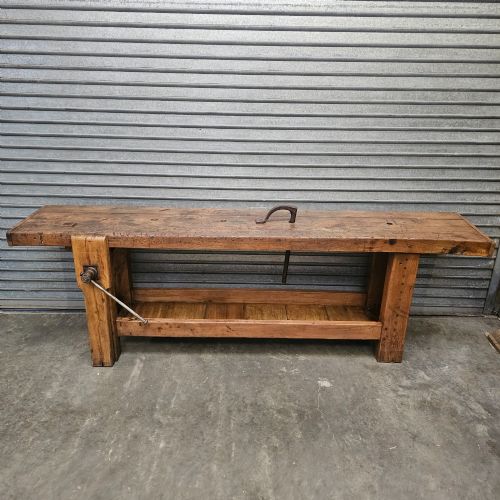
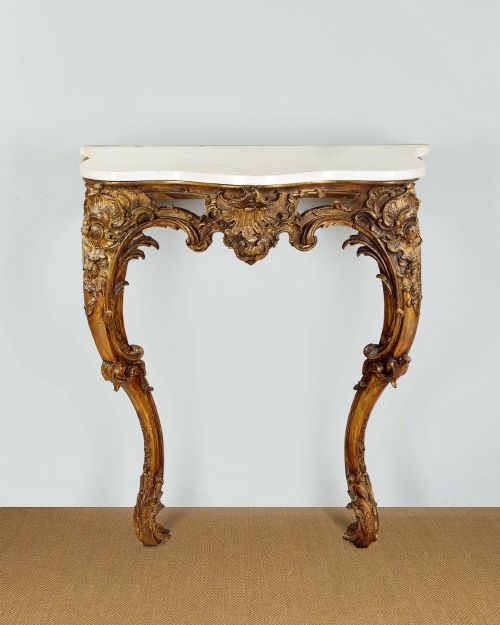
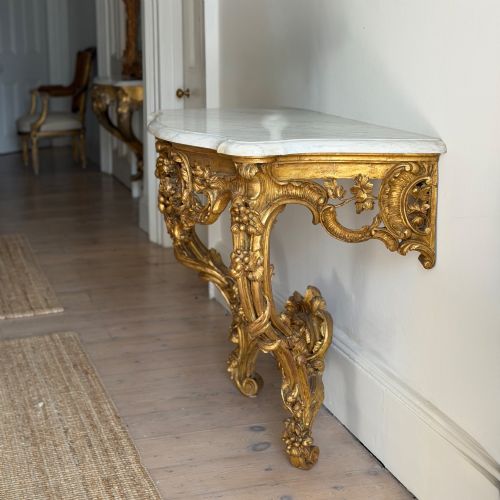
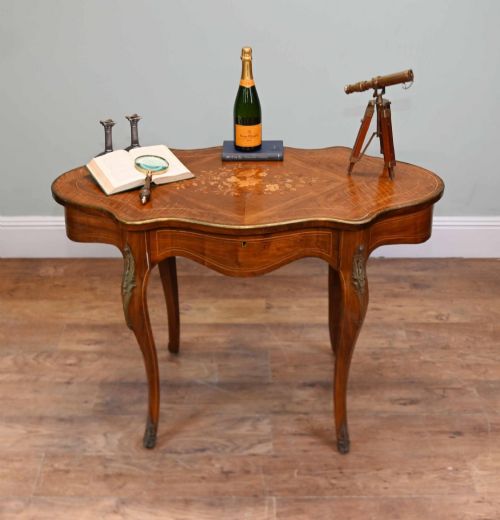
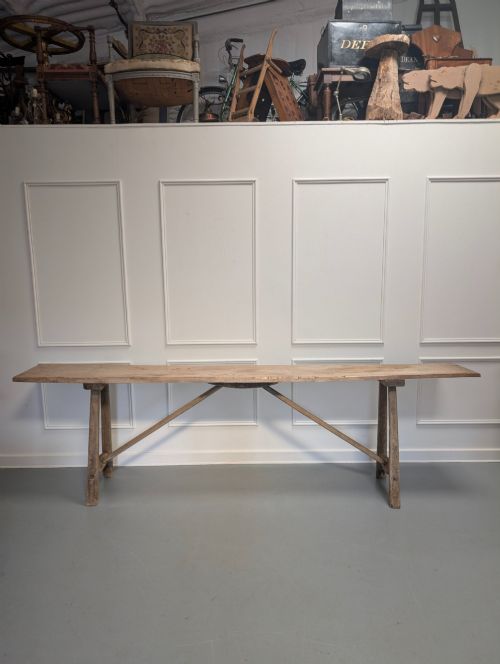
When you search for a french wood console, you encounter forms ranging from rustic laundry tables and prep surfaces to highly carved gilt tables designed for formal reception rooms. The pieces span centuries from the eighteenth through to the early twentieth century, taking shapes such as demi-lune, serpentine front, and rectangular bases fitted with drawers.
The domestic role of these pieces dictates their construction, often featuring flat wall-abutting profiles or narrow depths suited for hallways and salons. They frequently arrive paired with matching marble slabs or integrated mirrors.
Materials and construction
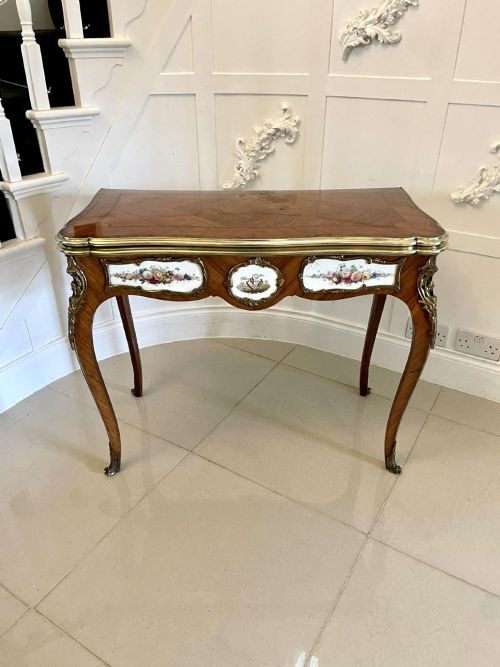
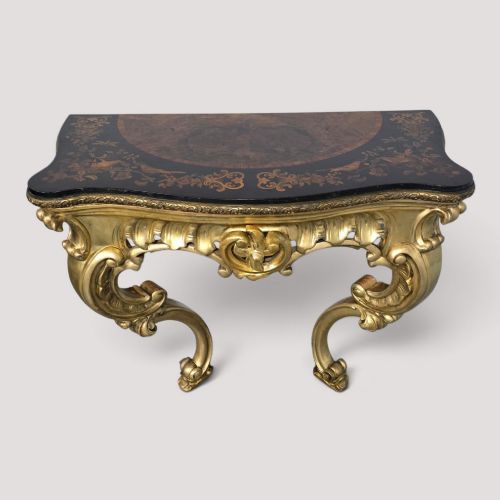
Makers utilised a combination of structural timbers like oak, walnut, fruitwood, elm, and mahogany, often pairing them with decorative veneers such as kingwood and marquetry inlay. Giltwood and gesso finishes provide the ornate surface detailing characteristic of formal pieces.
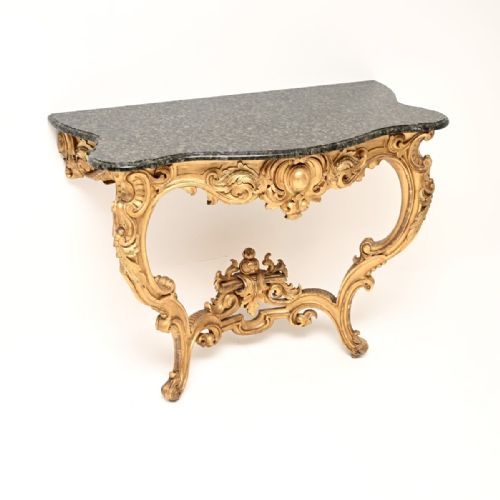
Tops are heavily defined by stone, particularly figured marble varieties like breccia, resting upon hand-carved wooden frames joined by mortise and tenon construction. Brass, ormolu mounts, and bronze accents frequently reinforce corners and aprons.
Provincial pieces lean towards simple paint or natural wax finishes on pine, chestnut, and oak, while grander iterations employ intricate hand-carving and gilding directly onto softwoods or hardwoods.
French Wood Console Retail Price Guide 2026
Typical asking prices for french wood console among the pieces listed under this phrase on Sellingantiques today, from the lower quarter to the upper quarter. They describe what is for sale here now, not the wider market.
Listings feature woods spanning oak, walnut, mahogany, fruitwood, pine, and elm, alongside giltwood finishes.
Assessing the work
Quality rests in the crispness of the hand-carving on wooden frames and the depth of the gilding or patination on the timber. Superior pieces display seamless joinery and well-balanced proportions that support heavy stone tops without sagging.
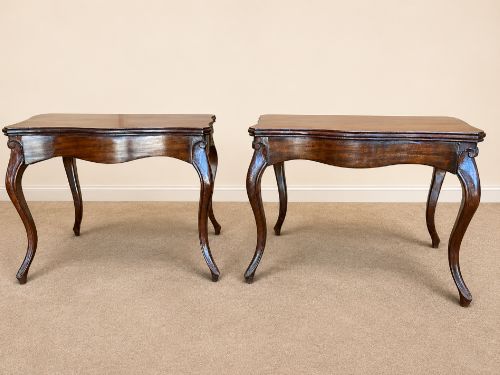
The selection of the marble slab significantly alters the standing of a console, with distinct veining and intact original edges separating standard utilitarian tops from finer examples. Finer tables also retain original hardware, marquetry details, and uncompromised structural integrity in the cabriole legs.
Felix-Alfred Ternisien·G T Morant·François Linke
The French Wood Console Glossary
- Demi-lune
- A half-moon shape used for console tables designed to sit flush against a wall. This profile saves floor space in narrow hallways.
- Breccia marble
- A composite stone made of broken fragments cemented together in a fine matrix, frequently found on the tops of nineteenth-century tables. Its complex multi-coloured patterns make each slab visually distinct.
- Cabriole leg
- A furniture leg that bends outward and then tapers inward, ending in a pad or foot. This curved form defines much of the Rococo and provincial French seating and table design.
- Ormolu
- Gilded bronze mounts applied to furniture for decorative effect. It requires precise casting and chasing by hand.
- Marquetry
- The art of applying pieces of veneer to a structure to form decorative patterns. Craftsmen use contrasting woods to achieve pictorial designs on tabletops.
French Wood Console: Frequently Asked Questions
What is a french wood console used for?
These tables served primarily as decorative ledges against walls in formal salons, hallways, and dining rooms. They held porcelain, mirrors, and lighting.
Provincial variants also functioned as functional prep surfaces in kitchens and laundries, offering sturdy wooden tops for daily labour.
How do I care for a marble top?
Wipe the surface regularly with a soft, damp cloth and neutral soap. Avoid acidic liquids like vinegar or wine which etch polished stone.
Apply a specialist wax or stone sealer periodically to protect the porous surface from staining.
Are these tables solid wood?
Construction varies between solid timbers like oak, walnut, and fruitwood, and framed pieces utilising decorative veneers over secondary woods. Provincial workbenches and tables tend to use solid planks.
Formal console tables often combine carved softwood or hardwood frames with applied gesso and gilt layers.
How do I distinguish eighteenth and nineteenth century pieces?
Eighteenth-century examples display hand-cut joinery marks, native timber ageing patterns, and organic tool marks from primary hand-working. They reflect the specific constraints of period tools.
Nineteenth-century revival pieces often replicate these forms with mechanical aid, employing machine-sawn components alongside traditional assembly methods.