


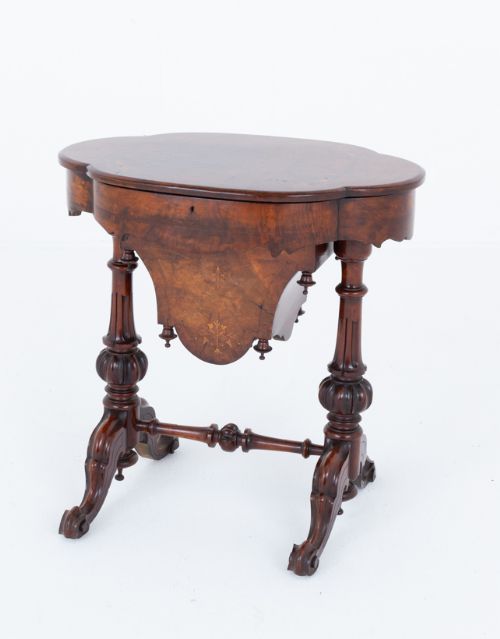


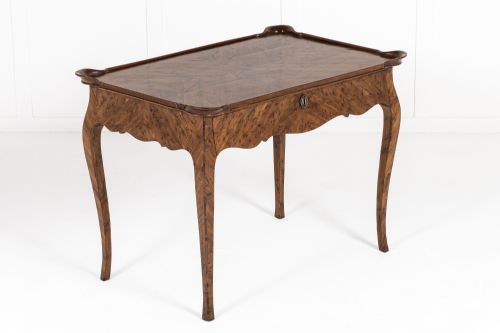

French Walnut Work Table
A french walnut work table brings continental refinement to a room while offering clever compartments for needlework and correspondence.
French Walnut Work Table
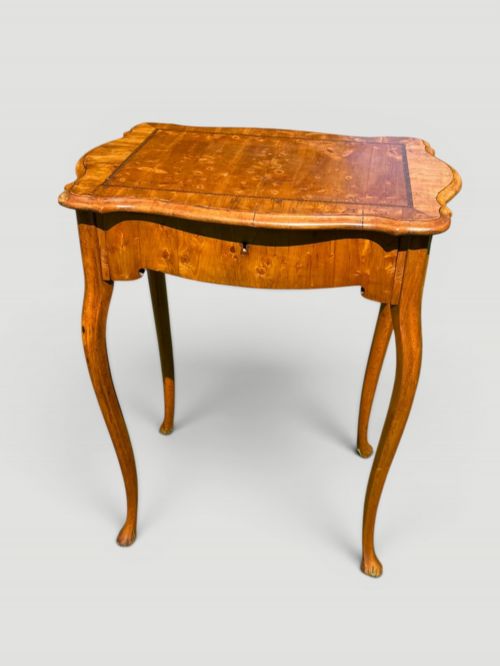
A french walnut work table is a versatile piece designed for sewing, writing, and small domestic tasks, appearing frequently in nineteenth-century styles such as Louis XV and Victorian revivals. These tables often combine a lift-up lid or fitted drawer with a compartment or fabric basket underneath to hold threads and materials.
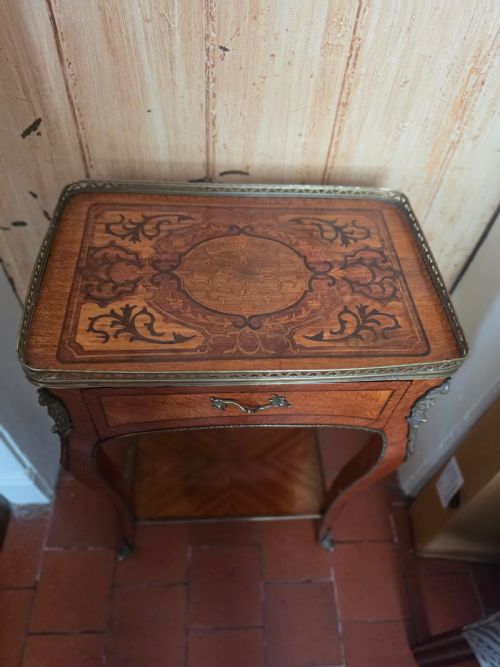
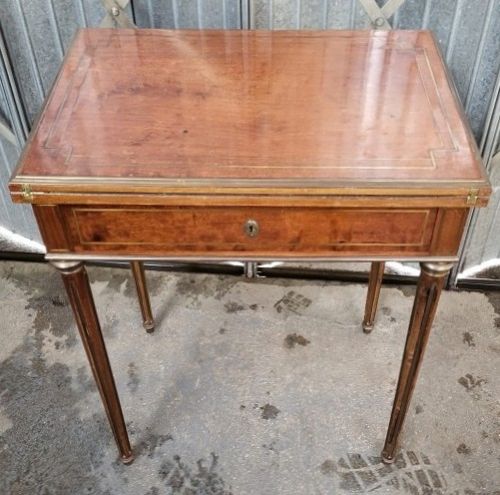
The selections available range from plain veneered surfaces to highly decorative marquetry pieces featuring intricate floral or geometric patterns. Alongside standard rectangular forms, occasional kidney shapes and metamorphic designs appear within the periods spanning the eighteenth to the early twentieth centuries.
Assessing Quality and Craftsmanship
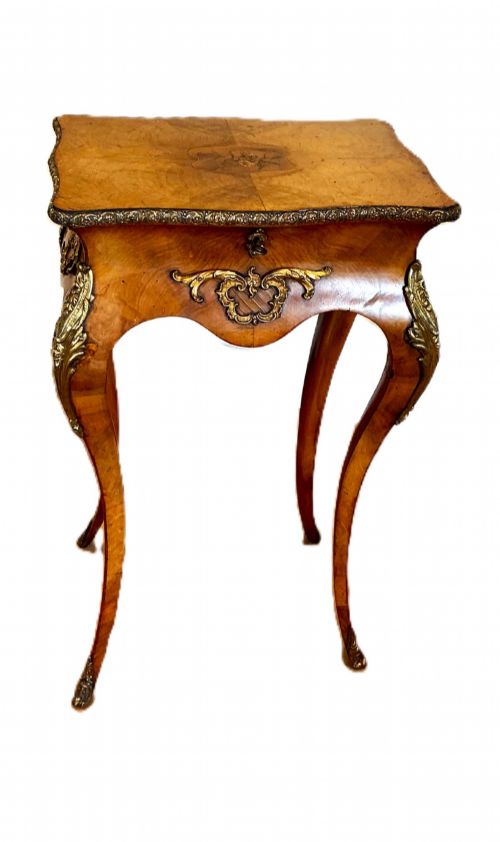
Quality rests upon the precision of the veneer work and the crispness of the applied brass or ormolu mounts rather than the sheer complexity of the design. Superior examples display seamless matching of wood grain across opening lids and drawer fronts, maintaining alignment as the timber ages.
The structural integrity of the internal compartments and the smoothness of any sliding mechanisms or folding leaves distinguish better workshop production. Finer pieces also retain their original fitted interiors, such as small lidded compartments and pin cushions, rather than having empty spaces.
Some nineteenth-century versions conceal secret compartments designed to hide love letters from prying family members.
The French Walnut Work Table Glossary
- Marquetry
- Decorative veneer work arranged in pictorial or ornamental patterns using various coloured woods. This technique requires considerable skill to cut and fit the thin wooden elements together.
- Ormolu
- Gilt bronze mounts applied to furniture for decorative effect and edge protection. The finish provides a bright golden contrast against dark walnut surfaces.
- Poudreuse
- A type of dressing table featuring a folding top that conceals a mirror and compartmented interior. These dual-purpose items served both cosmetic and writing needs.
- Parquetry
- Geometric patterns formed by small pieces of wood veneer laid in repeating arrays like cubes or diagonals. It offers a structured alternative to floral marquetry.
- Metamorphic
- Furniture designed to transform from one form or use into another through clever hinges or folding sections. Such pieces demonstrate ingenuity in nineteenth-century design.
French Walnut Work Table: Frequently Asked Questions
What is a french walnut work table?
A french walnut work table is a compact antique furniture piece designed primarily for needlework, sewing, and light writing tasks. They typically feature fitted interiors, drawers, or hanging bags beneath the top surface.
Most examples date from the nineteenth century and incorporate regional French styling such as cabriole legs and marquetry inlay. Their small scale makes them adaptable for use beside chairs or as decorative side surfaces in modern rooms.
How were these tables used originally?
These tables served as functional stations for ladies to manage correspondence, mend garments, and keep sewing implements organised. The internal compartments kept spools, thimbles, and letters neatly tucked away out of sight.
Beyond utilitarian tasks, they functioned as decorative occasional furniture in drawing rooms and boudoirs. Their refined appearance allowed them to sit comfortably in formal entertaining spaces.
How do I date a walnut work table?
Dating relies on examining the timber preparation, joinery methods, and stylistic cues present in the design. Pieces from the eighteenth century show different construction hallmarks compared to nineteenth-century revival styles like Louis XV or Victorian productions.
Secondary woods inside drawers and the specific character of brass or ormolu mounts also provide clues to the decade of manufacture. Comparing the decorative motifs against documented periods helps narrow down the exact era.
Where should I place one at home?
A work table fits easily beside a sofa or armchair where its surface can hold a lamp or book. The compact footprint allows it to occupy narrow hallways or small bedroom corners without dominating the space.
Keeping the piece away from direct heat sources and strong sunlight protects the delicate walnut veneers and marquetry. Using the interior compartments for small modern items keeps the antique functional in daily life.