


French Walnut Display Case
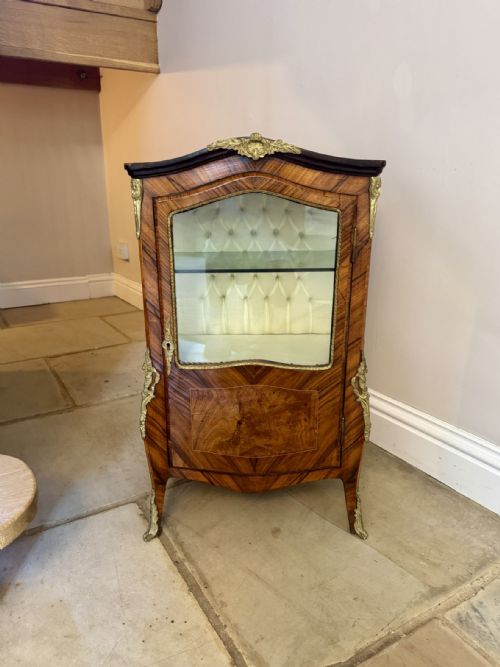
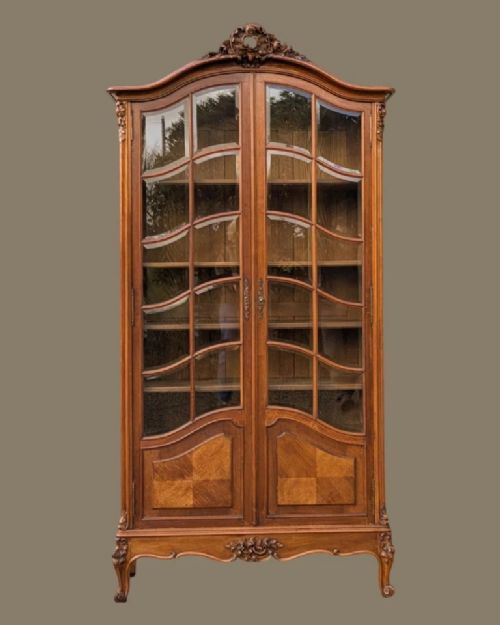
A french walnut display case brings continental warmth and clear glass display into a room through rich timber and fine mounts.
French Walnut Display Case
A french walnut display case combines timber framing with glass panels to showcase objects, spanning forms from slender pier cabinets and corner cupboards to grand vitrines and credenzas.
The pieces appearing in this selection draw from nineteenth-century origins, taking stylistic cues from Louis XV and Louis XVI revivals as well as Victorian tastes.
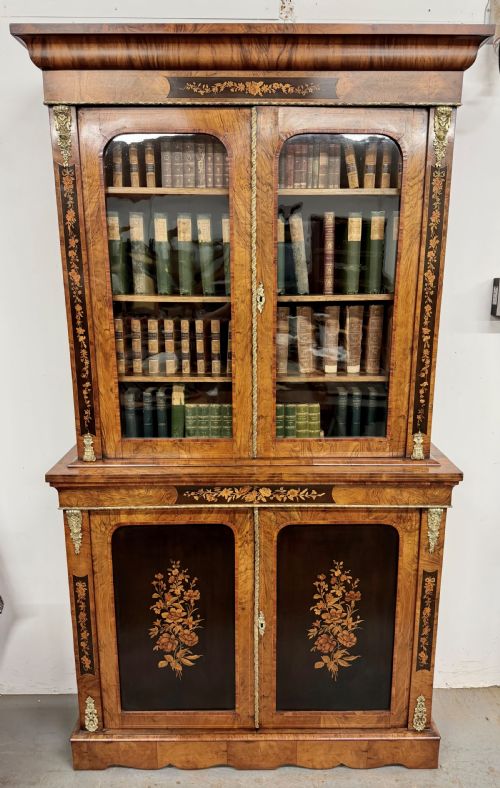
Buyers will encounter freestanding cabinets, marble-topped bookcases, and tabletop vitrines that integrate burr walnut, kingwood, and marquetry inlay.
Quality markers
The standard of a french walnut display case rests on the choice of figured timber, the crispness of the ormolu chasing, and the integration of marquetry details.
Superior examples demonstrate precise cabinetwork in curved or serpentine fronts, well-fitted glass panes, and balanced proportions across pairs and single vitrines alike.
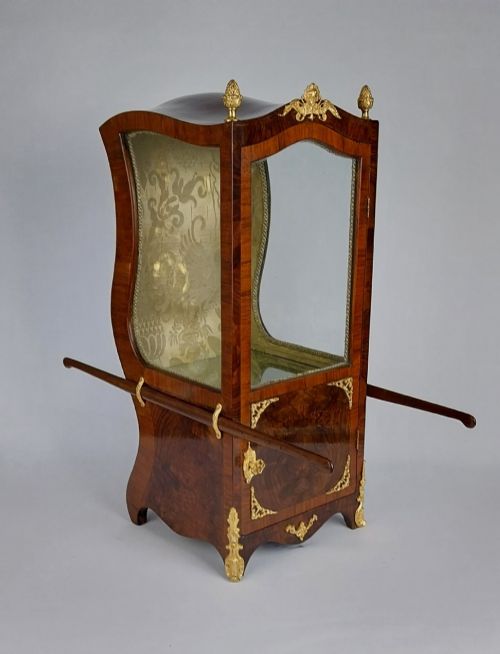
Some nineteenth-century makers concealed delicate velvet linings inside small tabletop vitrines to cushion fragile trinkets.
The French Walnut Display Case Glossary
- Ormolu
- Gilded bronze mounts applied to furniture. These decorative elements add metallic contrast to the walnut surfaces.
- Vitrine
- A glass-fronted cabinet designed for displaying porcelain and small objects. These pieces rely on clear side and front panels to maximise visibility.
- Marquetry
- Inlaid wood veneers forming pictorial or geometric patterns. Artisans arrange contrasting timbers like kingwood and walnut to create these designs.
- Pier cabinet
- A low cabinet built to fit the wall space between windows. These narrow pieces often include glass doors and ormolu mounts.
French Walnut Display Case: Frequently Asked Questions
What is a french walnut display case?
It is a glazed cabinet built from walnut timber, designed to hold and exhibit collections of small objects or books.
These pieces range from tall nineteenth-century bookcases to low pier cabinets and tabletop glass vitrines.
How do I date a display cabinet?
Dating relies on stylistic markers, construction methods, and material combinations recorded across the nineteenth-century periods.
Victorian pieces and Louis revival designs often incorporate specific hardware, veneers, and ormolu mounts typical of their decade.
Where should I place a vitrine?
A glass cabinet suits reception rooms or studies where natural light illuminates the interior display.
Care should be taken to keep timber furniture away from direct heat sources and strong sunlight to protect the walnut and veneer.
What is the difference between a vitrine and a bookcase?
A vitrine prioritises glazed side and front panels for viewing decorative items from multiple angles.
Bookcases generally feature wooden shelving enclosed by glass doors designed primarily for housing volumes.
Are these cabinets sold as pairs?
Some listings offer matched pairs of pier cabinets or display cases designed for symmetrical placement.
Single freestanding cabinets and corner cupboards also appear regularly across the nineteenth-century selections.