






French Walnut Card Table
A french walnut card table brings folding leaves and polished timbers together, offering both a functional writing surface and a games top for any room.
French Walnut Card Table
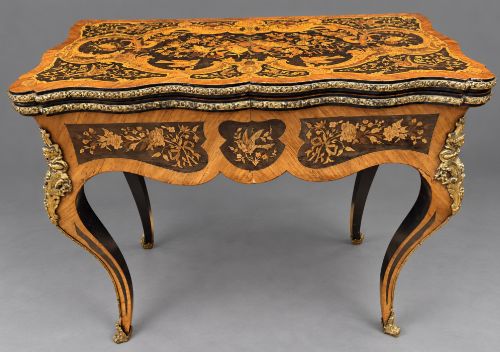
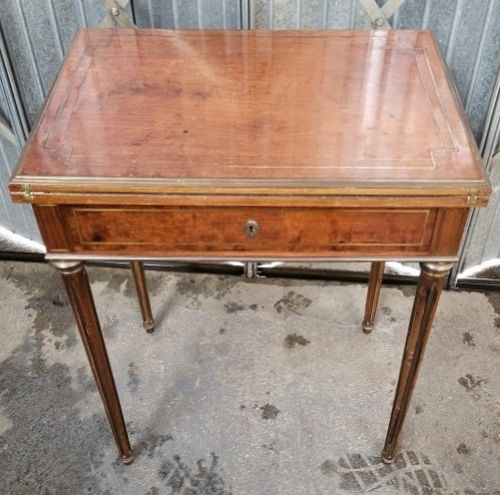
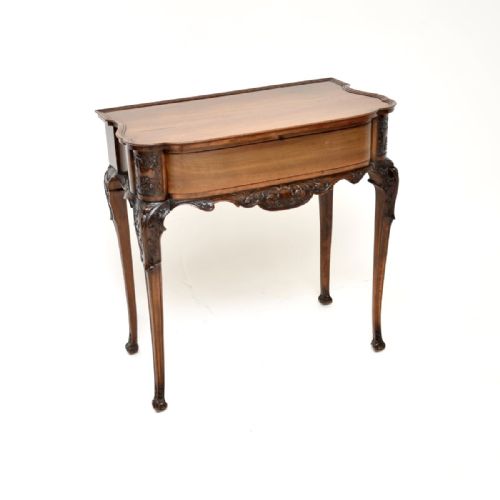
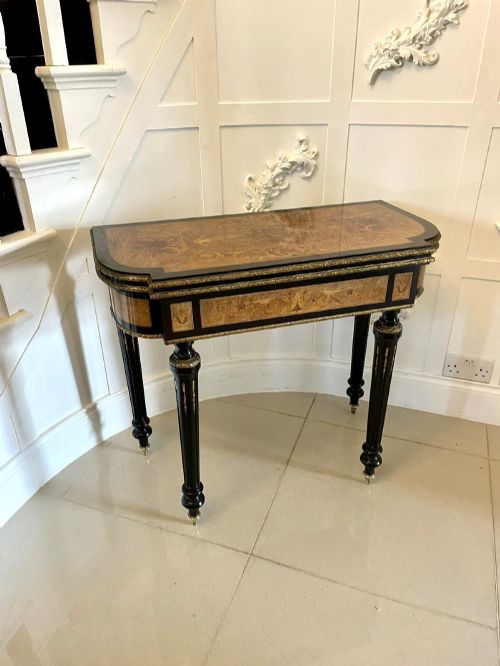
A french walnut card table combines refined timberwork with a fold-over leaf designed for games or writing. The pieces seen here span the nineteenth century, including Victorian interpretations and mid-nineteenth century examples.
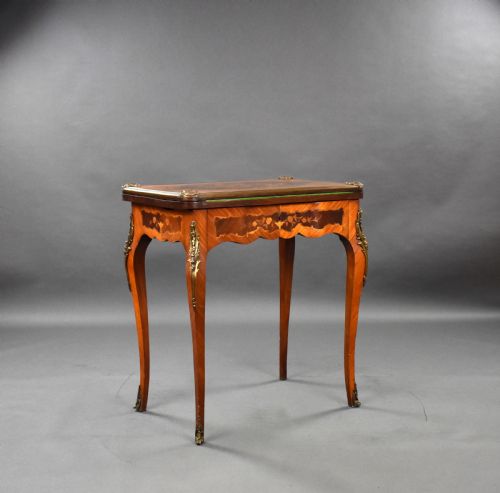
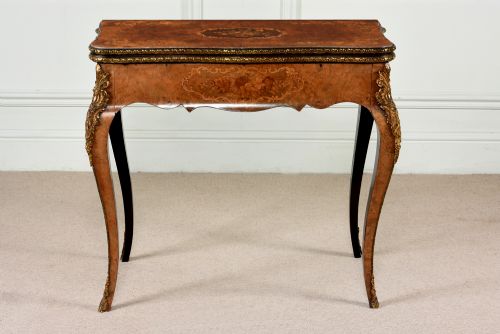
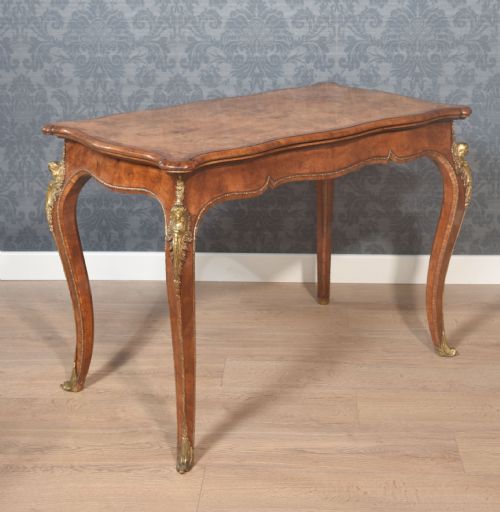
Most items on this page adhere to Louis XV and Rococo revival styles, featuring curved forms and decorative inlays. Alongside standard card tables, the selection includes related forms like games tables, occasional pieces, and metamorphic side tables.
How they were made
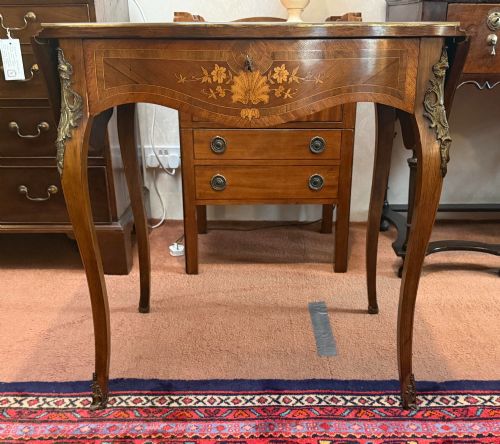
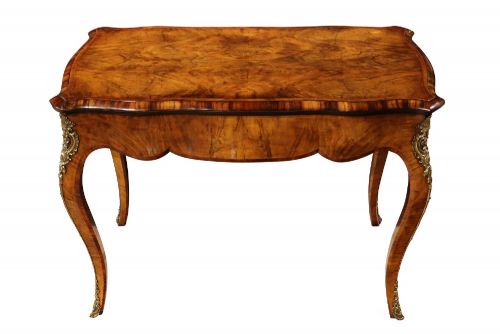
Cabinetmakers used walnut and burr walnut as primary timbers, often enhanced by kingwood, exotic woods, and timber veneers. These surfaces were paired with marquetry inlay and parquetry patterns to create complex geometric or floral ornamentation.
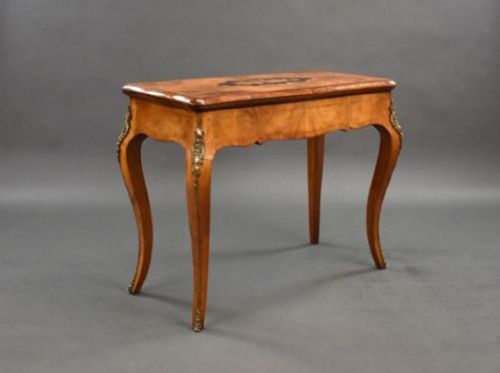
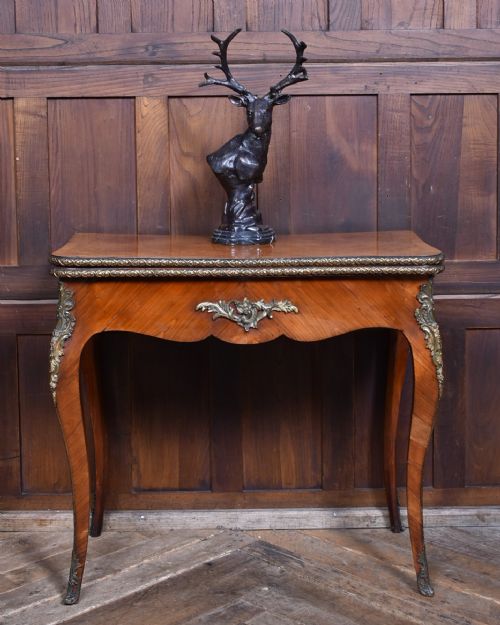
Metal mounts in ormolu and brass frequently accent the corners, edges, and cabriole legs. Construction methods relied on solid wood framing overlaid with finely sliced veneers to achieve rich grain figures.
French Walnut Card Table Retail Price Guide 2026
Typical asking prices for french walnut card table among the pieces listed under this phrase on Sellingantiques today, from the lower quarter to the upper quarter. They describe what is for sale here now, not the wider market.
The inventory spans the Victorian period and the nineteenth century, alongside specific dates from eighteen-fifty to nineteen-thirty.
What varies in quality
The sophistication of the marquetry inlay and the choice of burr figure in the walnut dictate the visual impact of the piece. Crispness in the cast ormolu mounts and fluidity in the carved cabriole legs separate standard production from superior examples.
Stability in the folding mechanism and the precision with which the leaves align when closed show the standard of the original workshop joinery.
The French Walnut Card Table Glossary
- Burr walnut
- A prized timber harvested from tree growths, yielding intricate swirling grain patterns. It was sliced into thin veneers for decorative table tops.
- Marquetry inlay
- Decorative patterns formed by fitting contrasting wood veneers into a prepared ground. Floral motifs and geometric designs are common on these surfaces.
- Ormolu
- Gilded bronze applied as decorative mounts on furniture edges and legs. It provides a bright metallic contrast to the dark walnut timber.
- Fold-over leaf
- A hinged top section that opens to double the surface area for games or dining. The mechanism often reveals a lined interior surface.
- Cabriole leg
- A curved furniture leg featuring an outward knee and an inward ankle, typical of revival styles. It lifts the body of the table off the floor with flowing lines.
French Walnut Card Table: Frequently Asked Questions
How do I use a card table today?
These pieces serve well as console tables against a wall when folded shut, offering a flat surface for lamps or ornaments.
Opening the leaf transforms the piece into a games surface, a desk, or a compact dining table for smaller spaces.
What is the difference between burr walnut and plain walnut?
Plain walnut shows a straight, uniform grain pattern that provides a calm, dark surface across the top and sides of the table.
Burr walnut comes from knotty growths on the tree, creating erratic, swirling figures that catch the light and add visual depth.
How can I tell a Louis XV style table from other periods?
Louis XV style pieces rely on asymmetrical curves, serpentine edges, and cabriole legs without heavy rectilinear geometry.
Later Victorian interpretations often mix these French revival curves with denser marquetry patterns and richer ormolu mounts.
Are all these tables french in origin?
The designs follow French aesthetic movements like the Louis XV style and the Rococo revival, executed during the nineteenth century.
British and continental makers alike produced these forms to satisfy the widespread demand for French fashion during the Victorian era.