


French Wall Fixture
A french wall fixture brings period illumination and decorative metalwork to a room.
French Wall Fixture
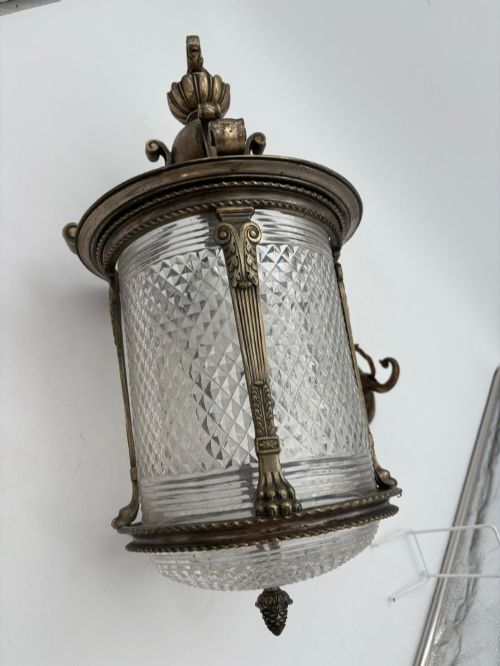
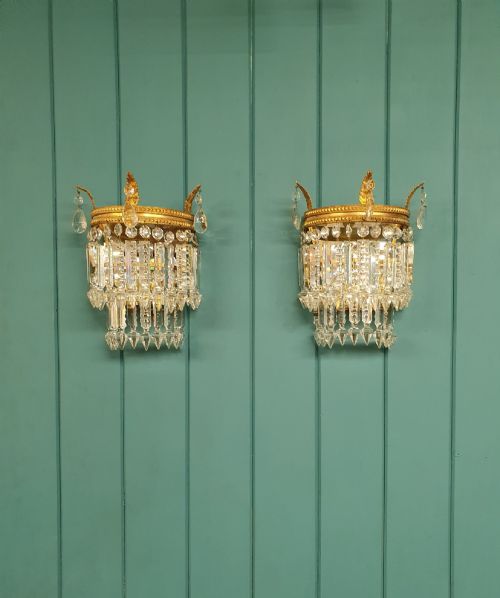
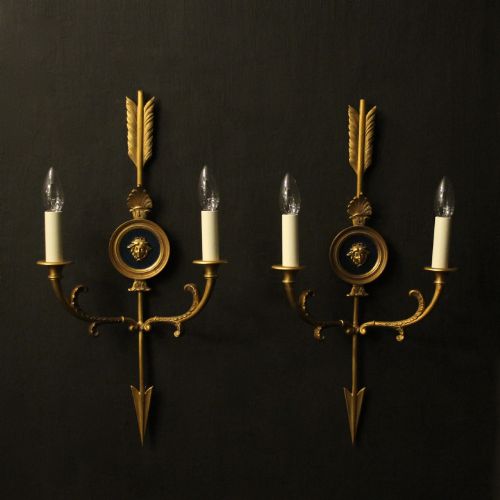
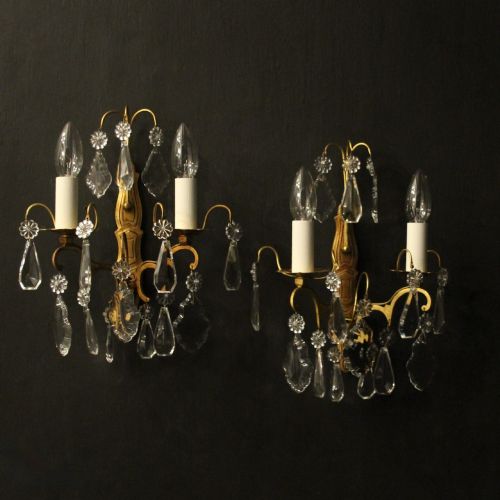
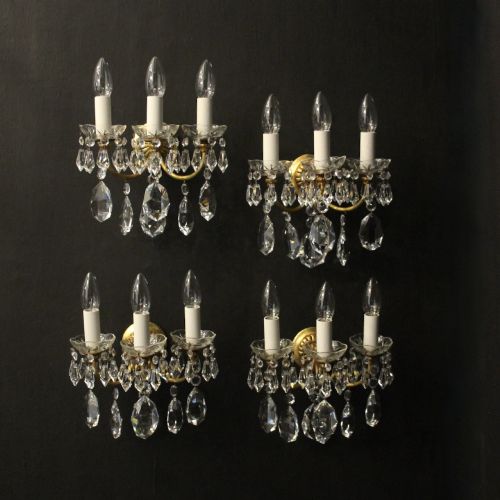
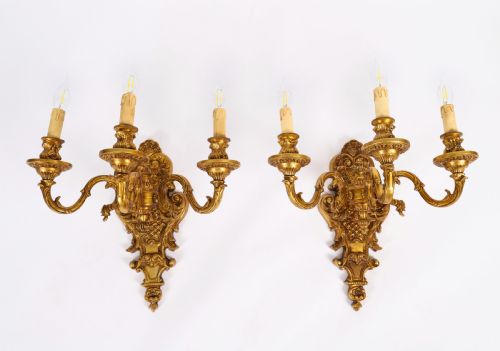
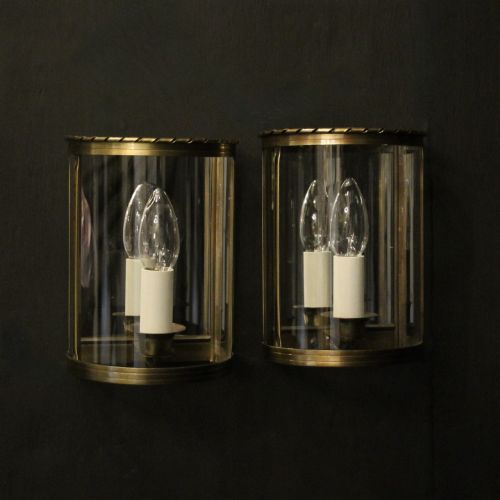
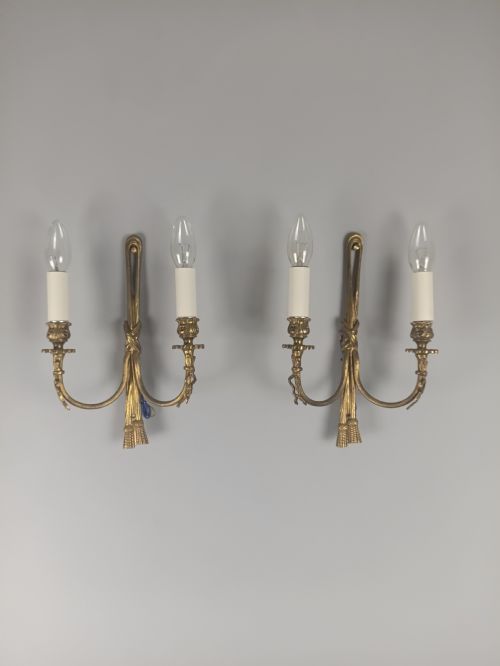
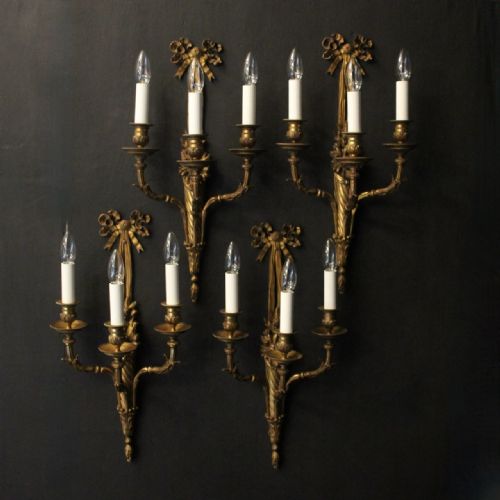
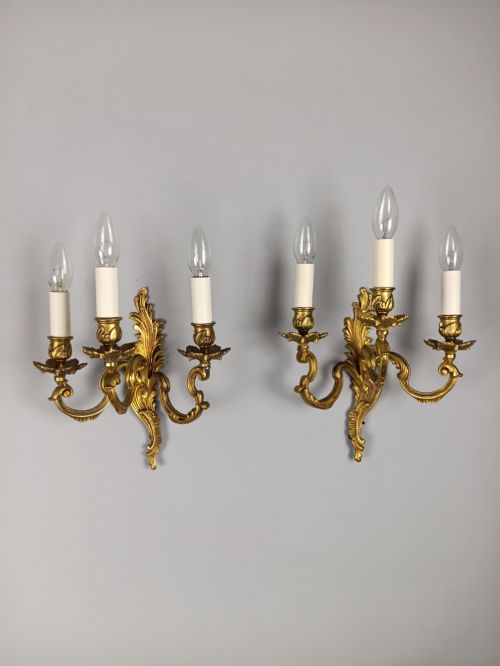
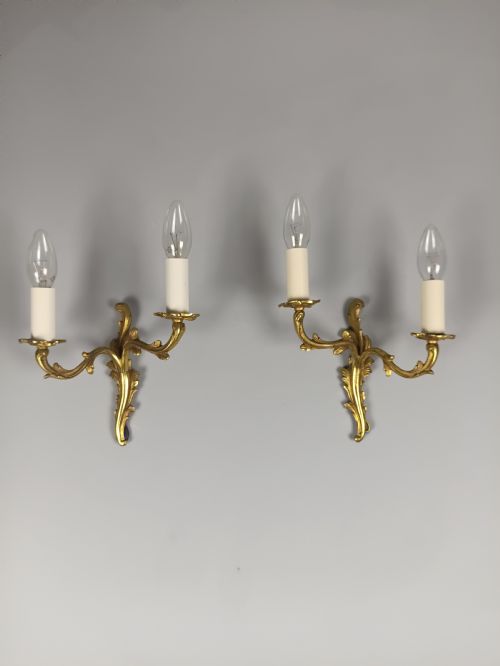
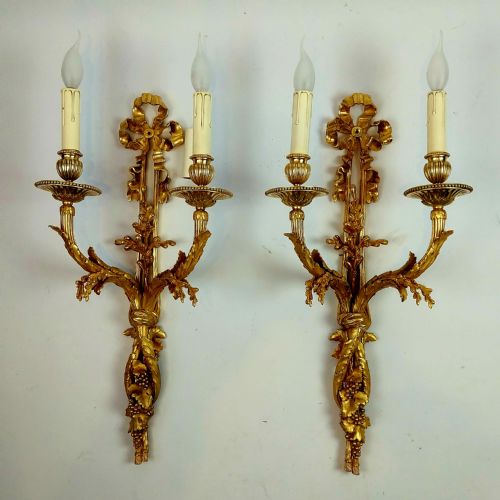
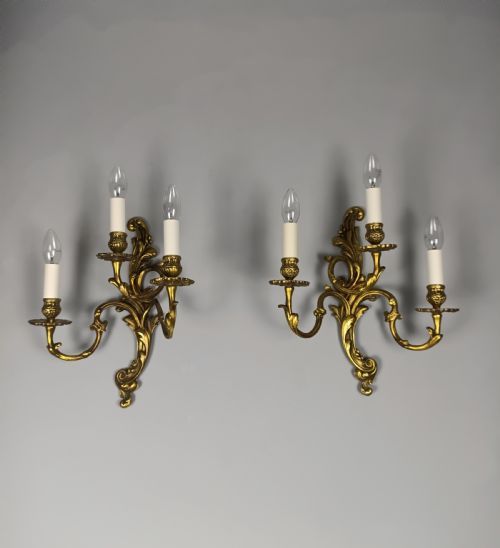
When you search for a french wall fixture, you encounter lighting designed to mount directly onto vertical surfaces, predominantly taking the form of wall lights, wall sconces, and light fittings. The selection on this page leans heavily towards pairs and sets dating from the nineteenth century through to the 1930s.
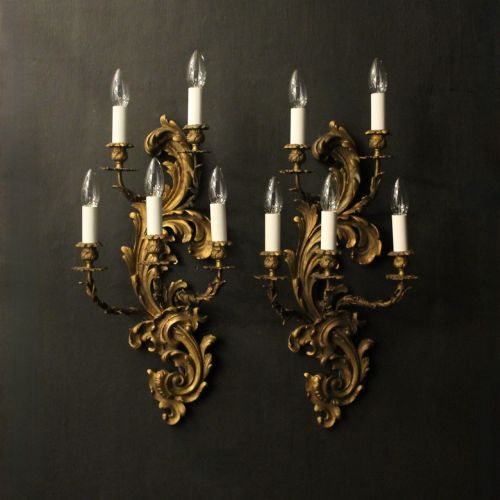
The dominant aesthetic draws on classical and revivalist vocabularies, featuring French Rococo, Louis XV Revival, Neoclassical, and Art Deco styles. These pieces function both as sources of illumination and as sculptural wall ornaments.
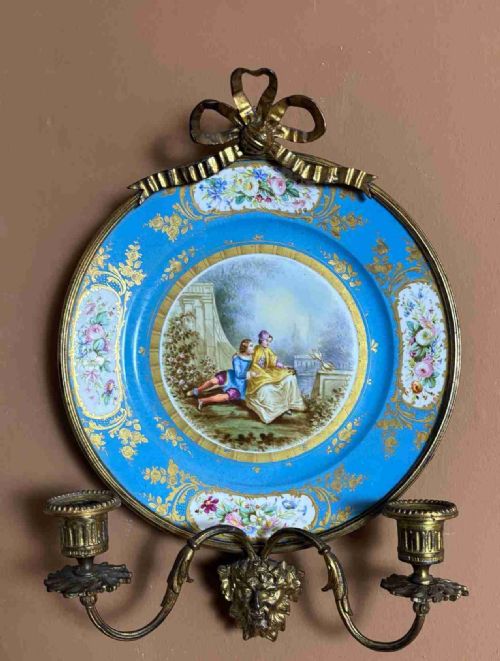
Forms range from simple twin-arm configurations to grand multi-arm fittings, often incorporating crystals, porcelain flowers, or toleware shades. They originate primarily from French workshops adhering to traditional decorative arts.
How they were made
The construction of these fixtures relies heavily on cast metals, specifically brass, bronze, and gilt metal, shaped into intricate arms, backplates, and decorative motifs. Gilding and ormolu finishes provide the characteristic metallic sheen seen across the selection.
Glass elements, including frosted glass, crystal drops, and tubular shades, complement the metalwork to diffuse or reflect light. Secondary materials such as carved wood, toleware, and porcelain appear in specific regional or period pieces.
French Wall Fixture Retail Price Guide 2026
Typical asking prices for french wall fixture among the pieces listed under this phrase on Sellingantiques today, from the lower quarter to the upper quarter. They describe what is for sale here now, not the wider market.
What varies in quality
The distinction between tiers rests upon the crispness of the metal casting and the depth of the chasing work on bronzes and brasses. Superior examples exhibit finely detailed ornamentation, such as distinct acanthus leaves or rendered masks, rather than softened contours.
Material composition also dictates standing, with heavy gilt bronze and fire-gilt ormolu occupying the upper end, alongside pieces retaining original crystals and hand-painted porcelain elements.
The French Wall Fixture Glossary
- Ormolu
- A gilded bronze technique applied to decorative hardware and lighting mounts. It involves using a mercury-gilding process on cast bronze to achieve a durable, rich golden surface.
- Toleware
- Painted or lacquered sheet metal items used for shades and backplates. This technique allows for vibrant colour application, often in greens or dark tones.
- Rococo
- A decorative style characterised by asymmetrical scrollwork, naturalistic plant motifs, and ornate curves. It dominates many of the nineteenth-century revival pieces.
- Sconce
- A wall-mounted light fixture designed to hold candles or electric lamps. These project outward from the surface to illuminate surrounding architecture.
- Neoclassical
- An artistic movement drawing inspiration from classical antiquity. It introduces symmetry, urns, ribbons, and strict geometric proportions to the design.
French Wall Fixture: Frequently Asked Questions
How do I install antique wall lights?
Most vintage and antique wall fixtures require professional wiring to meet contemporary safety standards before mounting to a wall junction box. Many period pieces are adapted for modern electrical supplies while retaining their original brass or bronze backplates.
Secure the mounting bracket firmly to wall studs or use appropriate cavity anchors given the substantial weight of cast bronze and crystal components. Ensure the electrical load aligns with the wiring capacity of the specific fixture.
What is the difference between a sconce and a wall light?
In historical terminology, the two terms often overlap when describing decorative fixtures attached to vertical surfaces. Sconces traditionally held candles before the advent of electricity, whereas wall lights frequently denote electrified apparatus.
On this page, both descriptors refer to ornamental bracket lighting originating from French and European traditions. The distinction usually lies in regional naming conventions rather than structural divergence.
How do I clean gilt bronze without damage?
Dust the metal surfaces gently using a soft, dry microfiber cloth to prevent accumulation of particulate matter. Avoid abrasive cleaners, commercial metal polishes, or harsh chemicals that can strip away historic gilt layers.
For stubborn grime, a damp cloth with mild soap water works safely if dried immediately. Preserve the patination by treating the metal with minimal intervention.
How can I date a French wall fixture?
Examine the casting quality, fastening screws, and stylistic vocabulary to establish the manufacturing era. Pieces exhibiting heavy hand-chased ormolu and organic rococo curves typically align with nineteenth-century production or earlier revivals.
Art Deco examples introduce geometric tubular glass, chrome finishes, and streamlined silhouettes characteristic of the 1920s and 1930s. Inspect the wiring channels and backplate construction for clues regarding period assembly methods.