
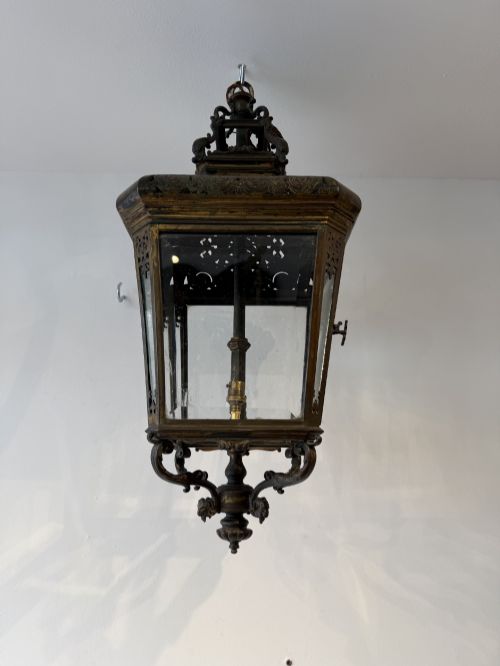


French Vestibule Light
A French vestibule light hangs in an entranceway to cast a warm welcome and set a refined architectural tone.
French Vestibule Light
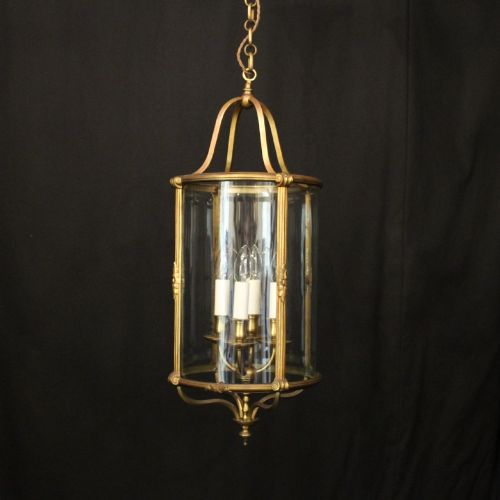
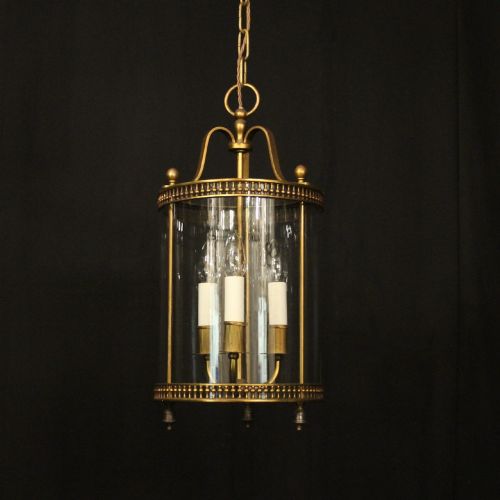
A French vestibule light brings character to a hallway or entrance passage through historic metalwork and glass panels. These hanging and ceiling-mounted lanterns originate from periods spanning the nineteenth and early twentieth centuries.
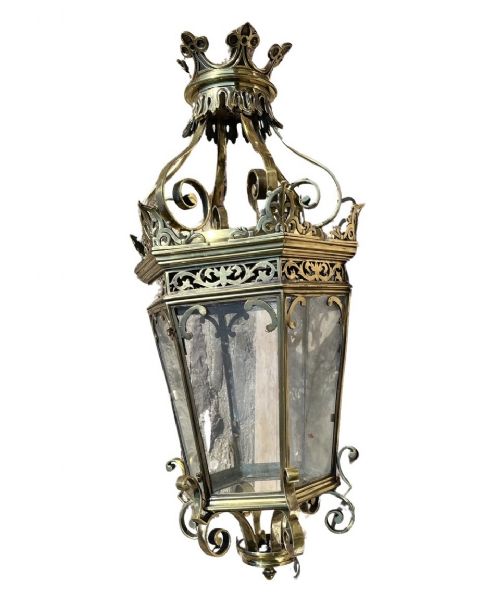
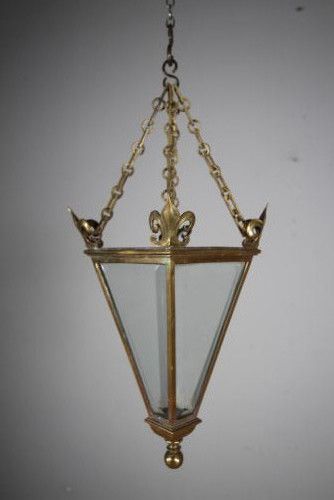
The selections here range from compact brass hall lanterns to large multi-light gilded bronze fixtures. Common forms include hexagonal shapes, side-door access designs, and simpler cylindrical pendant configurations.
Stylistic influences draw heavily upon French Neoclassical, Louis XVI, and Rococo traditions alongside Gothic Revival and Victorian interpretations. Buyers choose them to illuminate halls with genuine period presence.
How they were made
Construction relies upon durable metals such as brass, bronze, gilt bronze, steel, and wrought iron to form the structural frames. These metallic components are frequently cast, chased, or forged into decorative shapes before receiving gilding or polish.
Panels of glass, including frosted, etched, cut, and leaded varieties, are fitted into the metal frameworks to enclose the internal light source. Many examples incorporate hinged doors for maintenance and internal candle or bulb access.
Listings feature pieces spanning from the mid-nineteenth century through the early twentieth century, including Edwardian and 1930s examples.
What varies in quality
Quality reveals itself in the crispness of casting detail on bronze and brass frames, alongside the depth and survival of original gilding. Finer pieces exhibit heavier metal gauges and hand-finished ornamentation rather than mass-produced simplicity.
The glass elements also distinguish better examples, particularly where bevelled, cut, or etched panels remain intact and properly seated within the frame. Proportional balance and the integration of functional doors demonstrate superior maker skill.
The French Vestibule Light Glossary
- Gilt bronze
- Bronze that has been coated with a thin layer of gold or gold-coloured alloy. This technique provides a lustrous finish that resists tarnish.
- Hall lantern
- A ceiling-suspended lighting fixture designed specifically for narrow spaces like vestibules and corridors. They direct illumination downwards and outwards.
- Louis XVI style
- An aesthetic characterised by classical symmetry, straight lines, and restrained ornamentation derived from ancient Roman motifs. It values geometric clarity over exuberant curves.
- Hexagonal
- Having six sides and six angles in plan view. This geometric form allows for balanced light dispersion through multiple glass panes.
- Etched glass
- Glass surfaces treated with acid to create opaque decorative patterns. It softens the glare from internal illumination.
French Vestibule Light: Frequently Asked Questions
How do I clean a brass hall lantern?
Dust the metal and glass components regularly using a soft, dry cloth to prevent grime accumulation. Avoid harsh chemical polishes that can strip historic patinas from brass or gilt surfaces.
For glass panels, remove them if secured safely and clean with a mild glass solution. Dry thoroughly before reassembly to protect the surrounding metal frame.
Can these antique lanterns take modern bulbs?
Most historic fixtures can accommodate modern electrical wiring and low-heat LED bulbs installed by a qualified professional. Ensure the internal lampholder matches contemporary safety standards while preserving the exterior structure.
Consult an electrician to check that the hanging chain and ceiling canopy safely support the weight of bronze or iron frames.
Where should a vestibule light hang?
These lights suit entrance halls, porches, and stairwells where overhead illumination is required in a defined vertical space. Ensure the ceiling height allows sufficient clearance beneath the lowest point of the hanging lantern.
Centring the fixture in the architectural volume of the hallway creates a balanced focal point upon entry.
How do I date a bronze lantern?
Examine the casting techniques, fastening methods, and stylistic cues such as neoclassical swags or rococo scrolls. Heavier cast bronze and mercury gilding often point towards nineteenth-century production.
Compare the construction of hinges, glass retention clips, and wiring channels with documented examples from similar decades.