



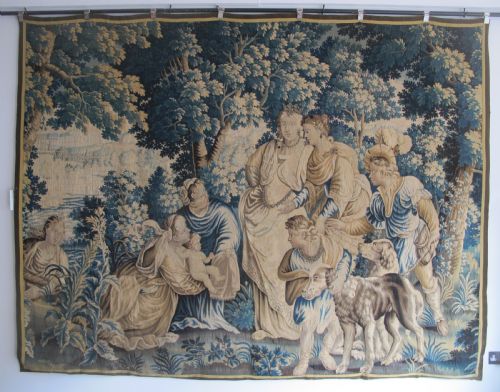


French Textile Wall Art
French textile wall art brings centuries of woven and embroidered history into a room through verdure scenes, pastoral panels and framed antique needlework.
French Textile Wall Art
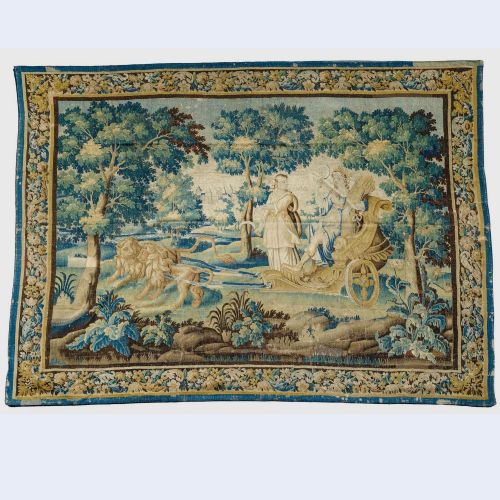
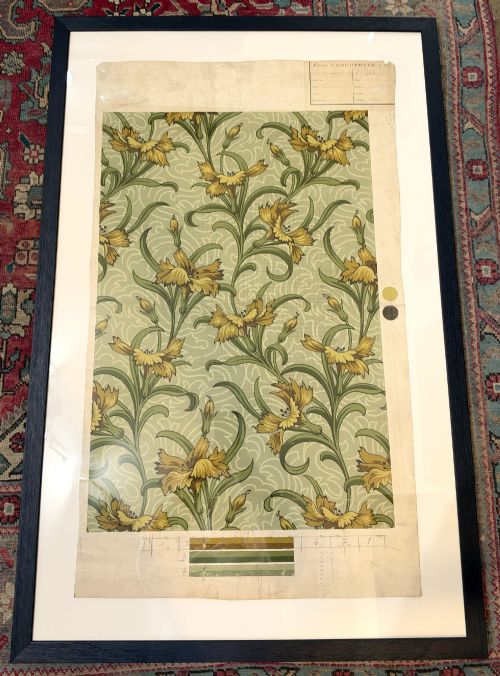
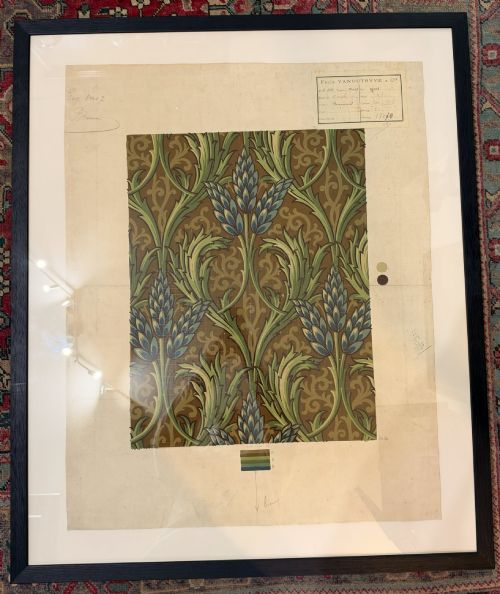
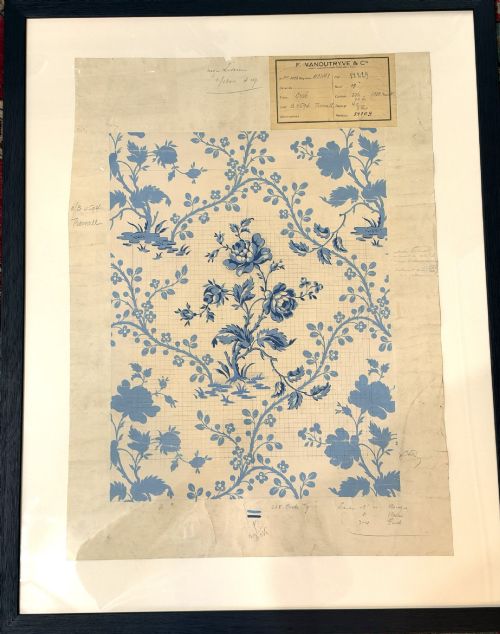
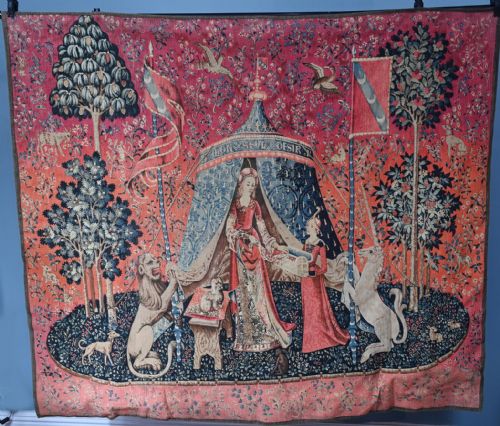
French textile wall art comprises woven tapestries, framed silk embroideries, needlework panels and lace samplers spanning from the sixteenth century to the mid-twentieth century. Buyers seeking this phrase encounter large verdure landscape fragments, pastoral scenes, and historic motifs mounted in wood frames or hung directly.
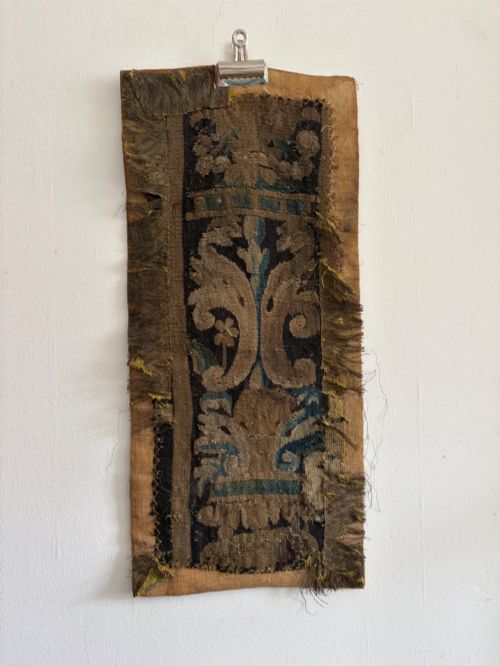
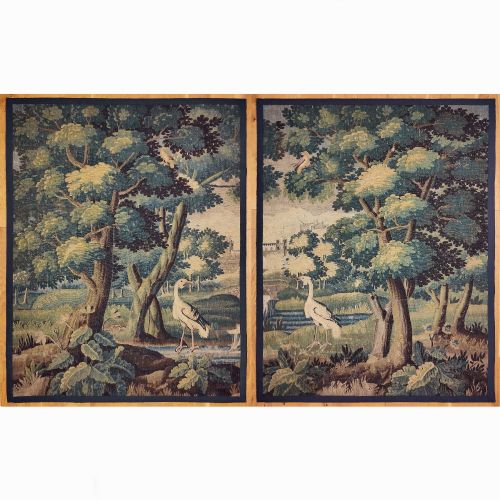
The selection ranges from seventeenth-century Aubusson verdure panels and sixteenth-century style mille-fleurs wall coverings to nineteenth-century needlework and ciselé silk velvet hangings. Pieces appear as large framed wall art, cushion covers mounted for display, and textile fragments carefully sewn to linen backing.
Materials and construction
These pieces utilise natural fibres including wool, silk, cotton, linen and velvet, frequently worked across wooden frames and sometimes highlighted with gold leaf or set behind glass. Hand-woven tapestry techniques and intricate needlepoint embroidery form the structural foundation of the wall hangings.
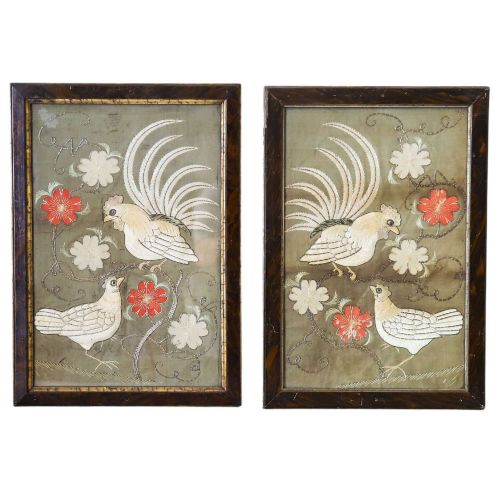
Framing materials often incorporate walnut and faux tortoiseshell, while smaller textile pieces utilise mounted linen backings and protective glass panels to secure fragile fabrics. Ciselé velvet and lace require specialised handling during construction to preserve the pile and delicate mesh patterns.
French Textile Wall Art Retail Price Guide 2026
Typical asking prices for french textile wall art among the pieces listed under this phrase on Sellingantiques today, from the lower quarter to the upper quarter. They describe what is for sale here now, not the wider market.
Distinguishing quality in textile art
Quality rests upon the fineness of the weave, the complexity of the needlework, and the clarity of the pictorial design, whether depicting a biblical Aubusson scene or a delicate silk embroidery of cockerels. Finer execution in seventeenth-century verdure or eighteenth-century pastoral panels demonstrates superior control over dye lots and tension.
The integrity of the mounting matters significantly, distinguishing professionally secured linen-backed fragments and solid walnut frames from casual interventions. Preserved surface texture in ciselé silk velvet and intact pile density separate exceptional wall hangings from simpler woven panels.
The French Textile Wall Art Glossary
- Aubusson tapestry
- A woven wall hanging produced in the town of Aubusson, known for pastoral landscapes, floral motifs and verdure scenes. These works lack the metallic threads found in royal manufactories.
- Verdure tapestry
- A woven textile depicting lush foliage, trees, plants and frequently birds or animals in a woodland setting. They typically date from the seventeenth and eighteenth centuries.
- Ciselé velvet
- A velvet fabric featuring a pattern created by contrasting cut and uncut pile loops. This technique produces textured designs on a silk ground.
- Mille-fleurs
- A background style composed of a multitude of small, distinct flowers scattered across a field. This medieval and renaissance design style appears in traditional wall coverings.
- Needlework panel
- A textile piece created by stitching yarn onto a canvas or linen ground with a needle rather than a loom. These panels often depict historical figures or pastoral subjects.
French Textile Wall Art: Frequently Asked Questions
How do I hang a heavy antique tapestry?
Large tapestries require even distribution of weight across a wooden batten or a concealed iron rod rather than suspension from a single point. Sewn-on fabric channels along the reverse edge distribute the tension safely.
Keep woven textiles away from direct sunlight and damp walls to protect the natural wool and silk fibres from fading and mildew.
What is the difference between a tapestry and needlework?
Tapestries are woven on a loom where the pattern is created by interlacing warp and weft threads simultaneously. Needlework is stitched by hand onto an existing woven fabric or canvas ground.
Both forms serve as wall art but involve distinct manufacturing techniques and visual textures.
How do I clean antique French textiles?
Surface dust should be removed gently using a soft brush or low-suction vacuum through a protective mesh screen. Professional textile conservators should handle deeper cleaning to prevent shrinkage or dye bleeding.
Water and standard detergents cause irreversible damage to aged silk, wool and velvet.
How do I identify an Aubusson tapestry?
Aubusson pieces typically feature verdure landscapes, floral borders or pastoral scenes woven without gold or silver threads. The absence of a maker's signature is common, as many were produced in regional workshops.
Examination of the reverse side reveals the interlocking weave characteristic of traditional French flat-weaving.