


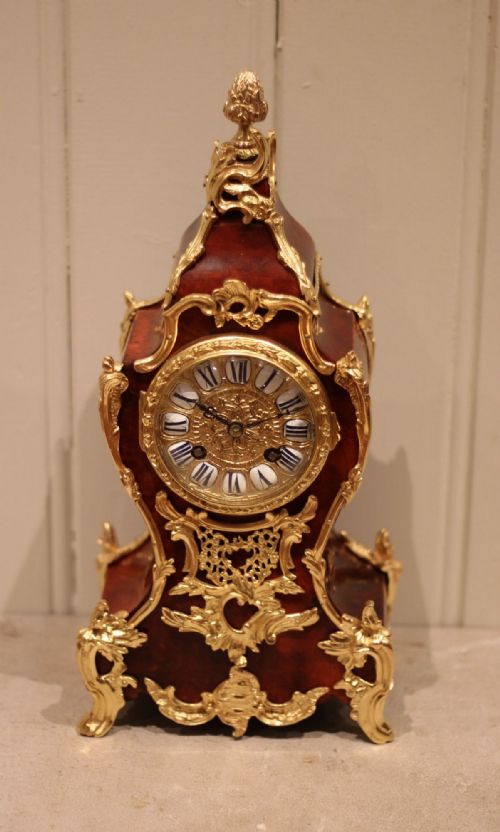


French Tabletop Clock
A French tabletop clock brings mechanical precision and nineteenth-century decorative metalwork to a desk, mantel or carriage interior.

French Tabletop Clock
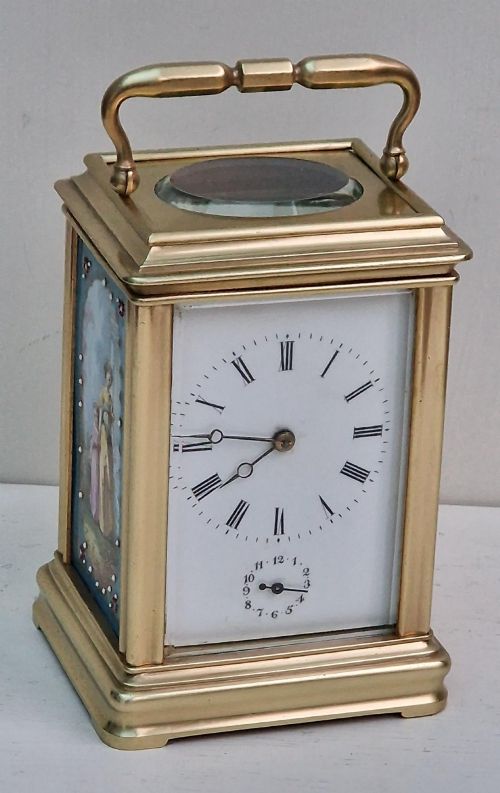
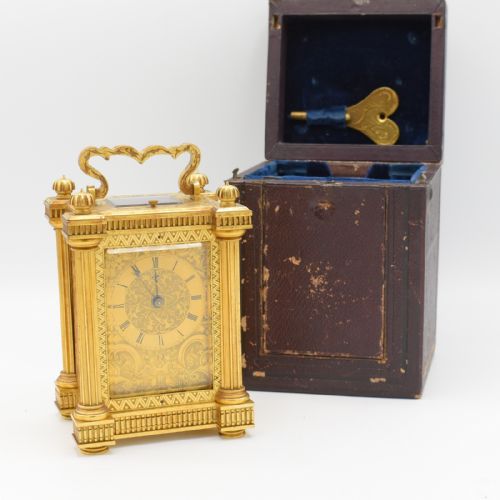
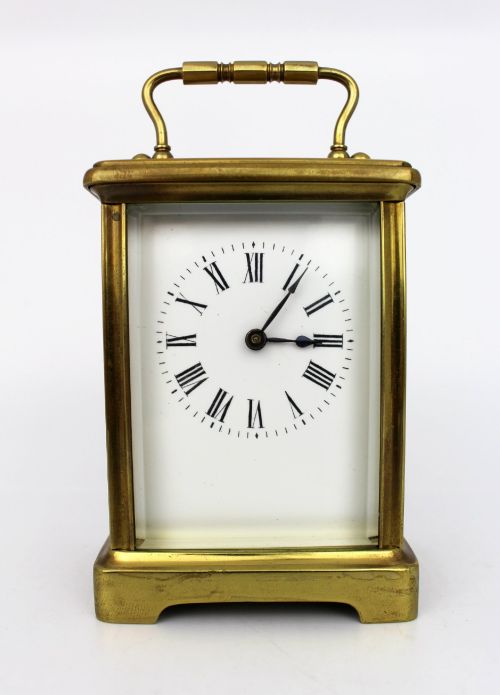
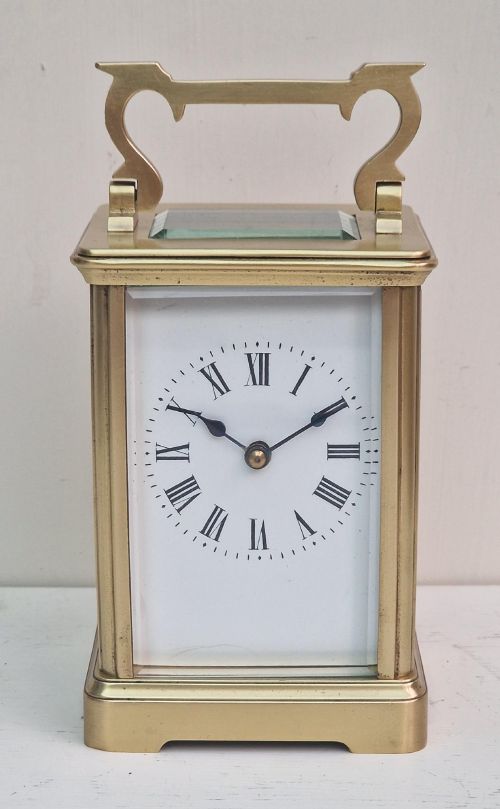
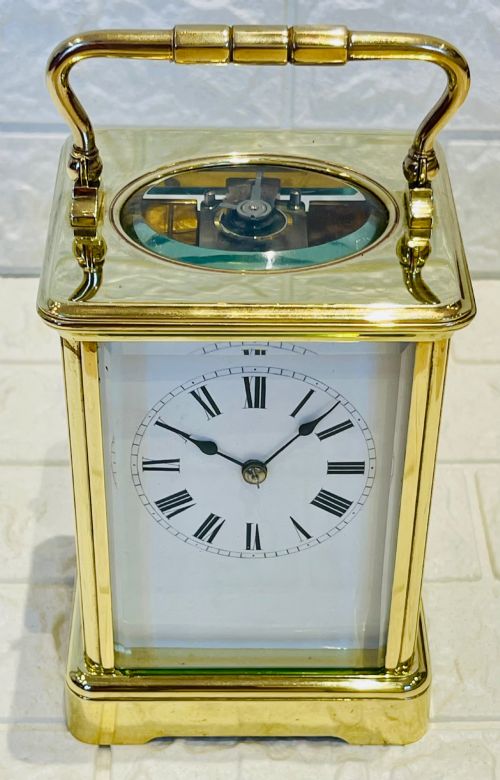
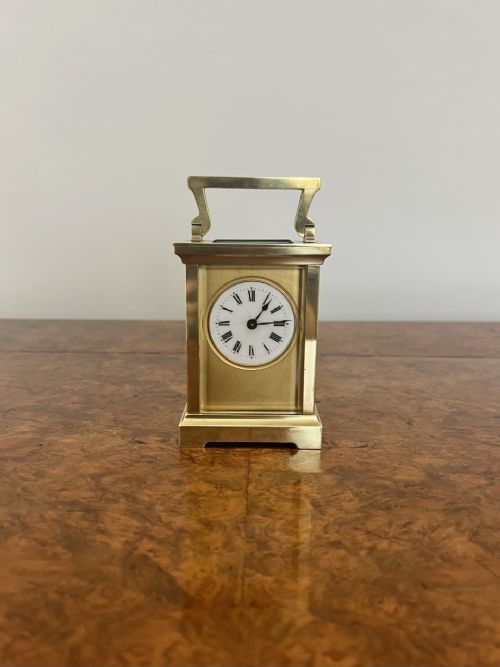
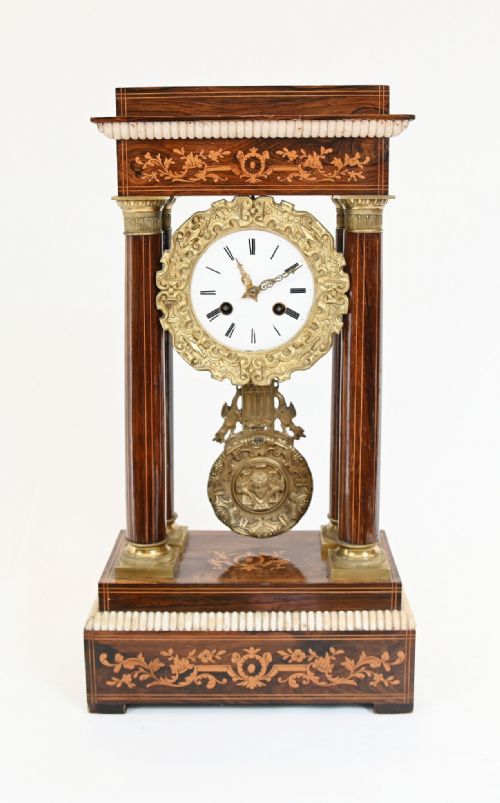
A French tabletop clock covers a broad range of domestic timepieces, spanning carriage clocks, mantel clocks, portico clocks and desk clocks. You will frequently encounter brass carriage clocks and gilt bronze mantel clocks from the nineteenth century on this page.
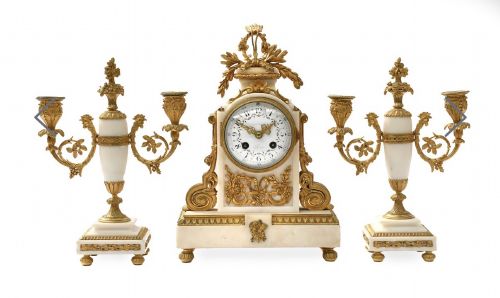
These works range from simple bedside timepieces to complex mantel garnitures and striking carriage clocks with repeaters and alarms. The forms draw on Victorian, Edwardian, Charles X, Rococo Revival and Art Nouveau styles.
Makers and retailers such as Howell & James, Brunelot, Delépine-Barrois, Dent and Alfred Hollinge appear among the nineteenth and early twentieth-century examples. The selection includes architectural portico clocks under glass domes alongside tortoiseshell and mahogany mantel pieces.
Materials and construction
Brass, gilt bronze, ormolu and glass form the primary structural and decorative elements for nineteenth-century carriage and mantel clocks. Makers frequently combined these metals with marble, porcelain panels, enamel dials, and champlevé enamel work.
Wood varieties such as mahogany, walnut and tortoiseshell shape the bodies of bracket and desk clocks. Travel cases in leather accompanied portable carriage clocks designed for transit.
Markers of quality
Quality rests in the precision of the movement, the weight of the metal case, and the crispness of casting or engraving. Fully signed movements by known makers and retailers elevate a piece above standard domestic production.
Complex strike mechanisms such as grande sonnerie, repeaters and alarms demonstrate superior horological ambition. The presence of painted porcelain panels, champlevé enamel or detailed bronze casting distinguishes finer examples from plain brass housings.
Howell & James London·Brunelot·Delépine-Barrois·Dent·Alfred Hollinge
The French Tabletop Clock Glossary
- Carriage clock
- A portable spring-driven timepiece originally built for travel, typically housed in a brass frame with glass panels.
- Gorge case
- A stepped, rectangular brass case commonly used for nineteenth-century carriage clocks.
- Grande-sonnerie
- A striking mechanism that sounds both the hours and the quarters automatically on every quarter hour.
- Champlevé
- An enamelling technique where troughs are dug into metal and filled with vitreous enamel before firing.
- Garniture
- A set comprising a mantel clock matched with accompanying decorative objects such as urns or candelabra.
French Tabletop Clock: Frequently Asked Questions
What is a carriage clock?
A carriage clock is a portable mechanical timepiece designed for travel during the nineteenth century. They utilise spring-driven movements and feature glass panels so the escapement can be observed.
Most sit in brass or gilt-bronze frames with a folding handle at the top.
How do repeater clocks work?
A repeater mechanism allows the owner to press a button or cord on the case to make the clock sound the last hour or quarter hour on demand. This function was useful for telling time in the dark before electric lighting.
Many French carriage clocks incorporate this feature alongside standard striking trains.
How do I identify the period?
Dating relies on stylistic clues like Rococo Revival scrolls, Charles X architectural symmetry, or Art Nouveau floral motifs, alongside materials like champlevé enamel and ormolu. Signed movements and maker inscriptions provide further historical context.
Construction methods and case proportions also shift across the nineteenth and early twentieth centuries.
Where should I place a mantel clock?
Mantel clocks suit stable horizontal surfaces such as fireplace mantels, sideboards, desks and bookshelves. They require a level foundation to ensure the pendulum or balance wheel operates correctly.
Keep them away from direct sunlight, damp walls and areas subject to heavy vibrations.