


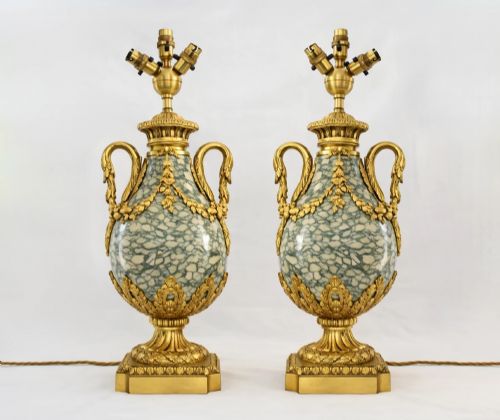


French Style Urn Lamps
French style urn lamps bring classical form and warm illumination to a room, drawing on centuries of European design.
French Style Urn Lamps
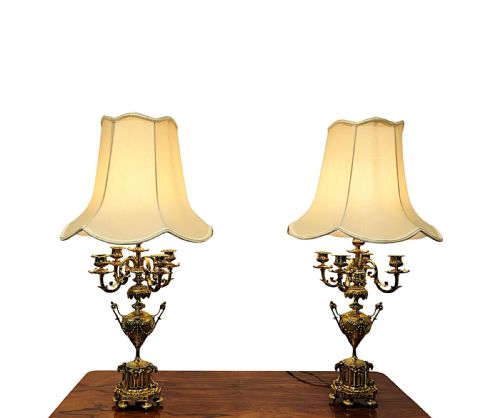
French style urn lamps adapt classical vessels, vases, and ewers into functional lighting, often standing on marble or bronze bases. When you search for French style urn lamps, you encounter pieces designed to evoke the grandeur of continental drawing rooms through balanced proportions and decorative mounts.
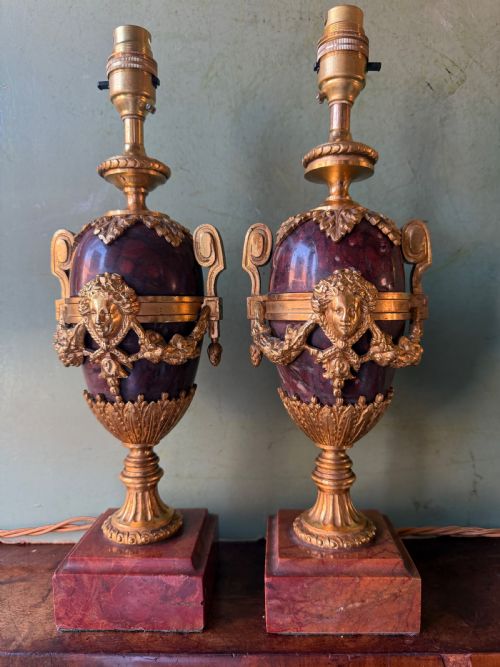
The selections on this page span the nineteenth and early twentieth centuries, drawing heavily on Neoclassical and Louis XVI design vocabulary. Pairs frequently appear, intended originally for mantlepieces or side tables before conversion to electricity.
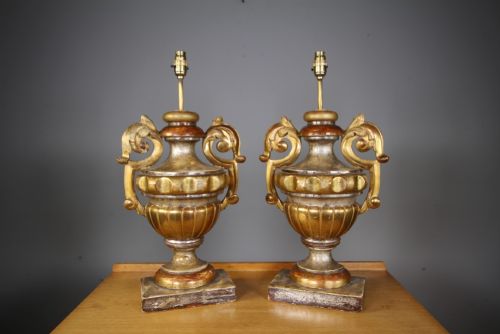
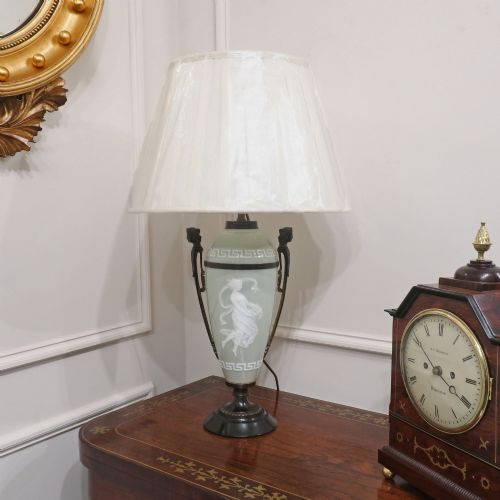
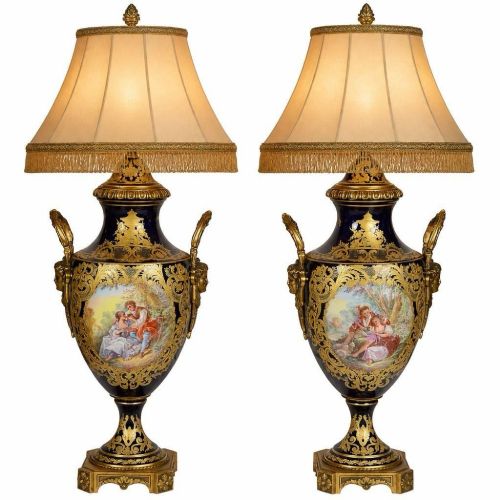
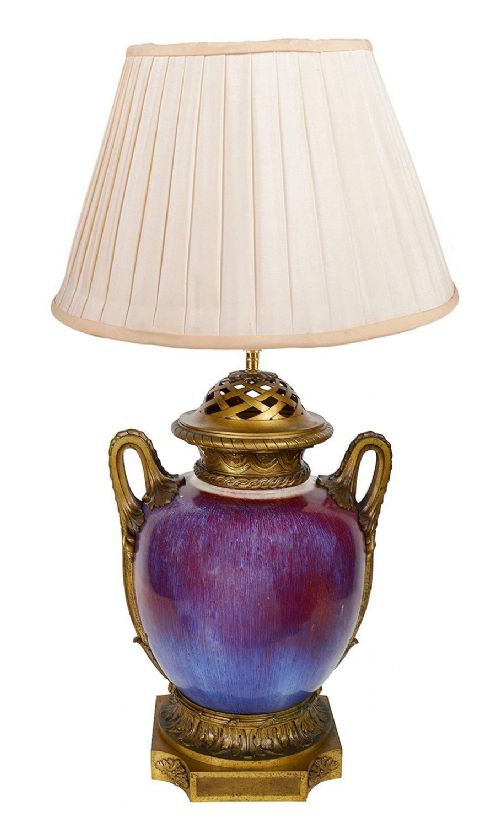
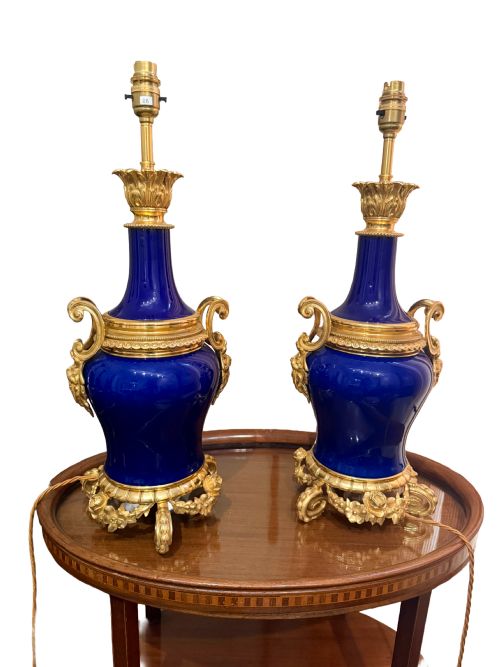
Forms range from slender porcelain vases fitted with ormolu handles to robust bronze and marble cassolettes. Makers and manufacturers adapted existing ceramic vessels or cast new metal bodies to satisfy Victorian and Edwardian tastes for continental interior decoration.
Materials and construction
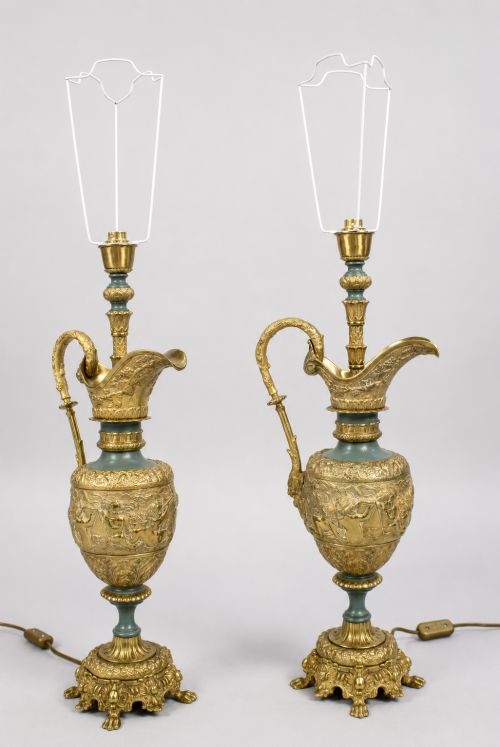
Foundries cast bronze, brass, and ormolu mounts with intricate chased details, securing them to turning bases of white or rouge marble. These metal elements provide structural weight and a polished finish that contrasts with ceramic bodies.
Porcelain sections utilise hand-painted decoration, often in cobalt blue, bleu celeste, or famille rose palettes, sometimes paired with pate sur pate relief work. Silk and fabric shades complete the fixtures, diffusing light across the gilded surfaces.
French Style Urn Lamps Retail Price Guide 2026
Typical asking prices for french style urn lamps among the pieces listed under this phrase on Sellingantiques today, from the lower quarter to the upper quarter. They describe what is for sale here now, not the wider market.
Listings feature items spanning the eighteenth to the twentieth centuries, utilising materials including porcelain, ormolu, marble, and gilt bronze.
Assessing quality and execution
Quality rests in the crispness of the bronze chasing and the precision with which the metal mounts fit the stone or porcelain body. Superior examples display sharply defined acanthus leaves, bead reels, and ram mask handles rather than soft, cast-over-cast smoothing.
The integration of the electrical conversion also distinguishes the pieces; finer specimens conceal wiring cleanly through the central axis while retaining original burners, fonts, or collar mounts where applicable.
Samson
The French Style Urn Lamps Glossary
- Ormolu
- Gilded bronze produced by applying a mercury-gilt amalgam to cast bronze, yielding a rich, matte gold surface.
- Cassolette
- A decorative vase or urn with a reversible lid that functions either as a closed vessel or a candle holder.
- Ewer
- A large jug with a wide spout and elaborate handle, frequently adapted into the body of a table lamp.
- Pate sur pate
- A ceramic technique where wet white relief designs build up layer by layer on a coloured clay body before firing.
- Louis XVI Style
- A neoclassical design idiom characterised by straight lines, symmetrical geometry, and classical architectural motifs.
French Style Urn Lamps: Frequently Asked Questions
Where should I place these lamps?
These lamps suit prominent locations such as living room sideboards, entry hall consoles, or large bedside tables where their sculptural profiles draw the eye.
Because many specimens are tall and substantial, ensure the surrounding furniture provides adequate depth and stability to support the base.
How do I identify Louis XVI style?
Louis XVI style pieces display straight tapered legs, fluted columns, guilloche bands, and restrained classical symmetry rather than the curved asymmetry of earlier rococo work.
Look for architectural elements like acanthus scrolls, pendant husks, and bead-and-reel friezes executed in bronze or ormolu.
Were these originally electric?
Most pieces from the nineteenth century began life as oil lamps, decorative cassolettes, or mantel vases before conversion to electricity in later decades.
Converters often repurposed burners or central wells to run wiring without permanently destroying the antique metalwork.
How do I care for marble and ormolu?
Dust marble and gilt surfaces gently with a soft, dry cloth, avoiding abrasive cleaners or harsh chemical polishes that strip the historic surface.
Keep the lamps away from direct sunlight and excessive moisture to protect the delicate hand-painted porcelain and mercury gilding.