


French Style Sofa
When you search for a french style sofa, you find seating that brings continental curves, carved woodwork, and traditional upholstery into a room.
French Style Sofa
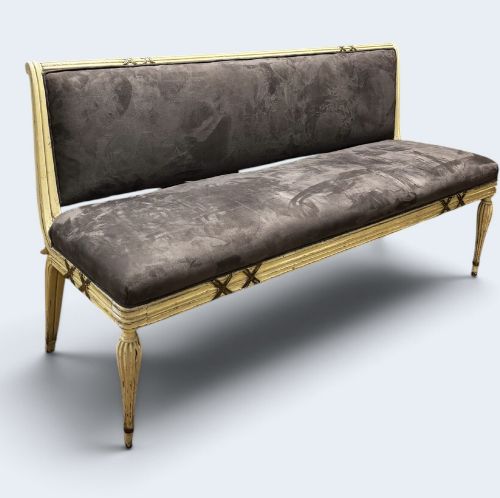
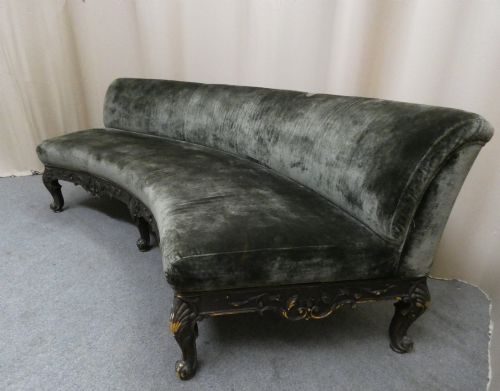
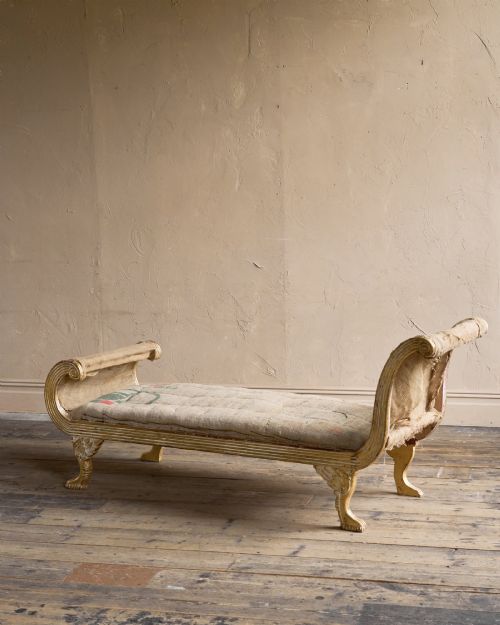
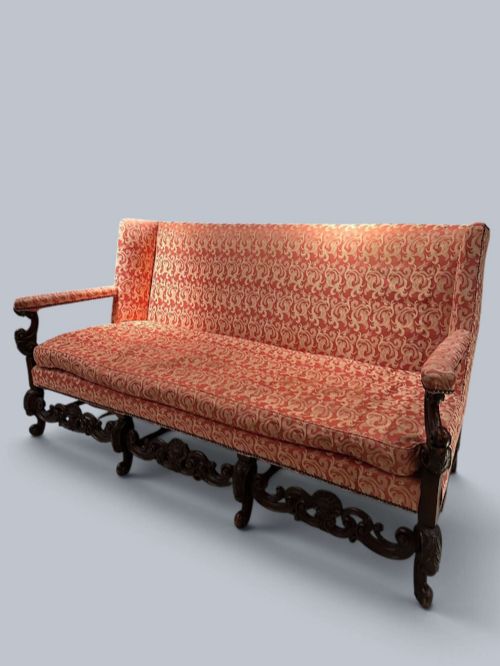
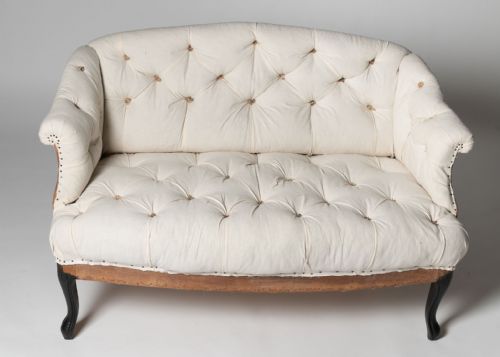
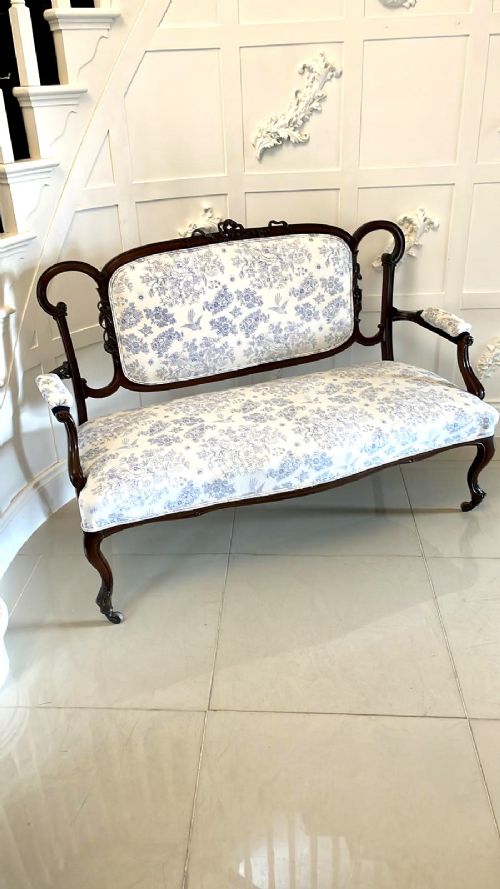
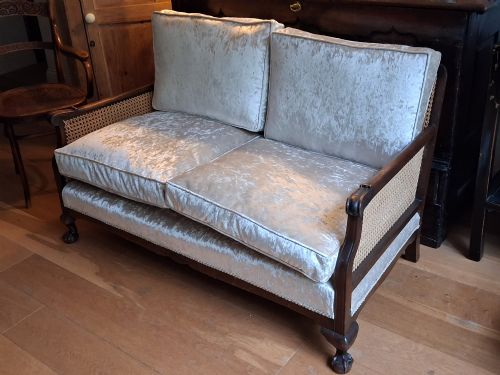
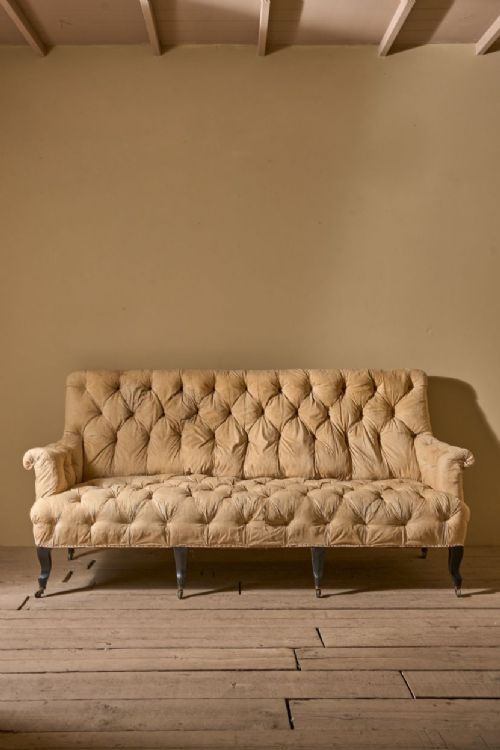
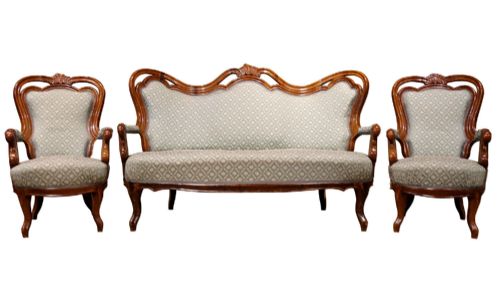
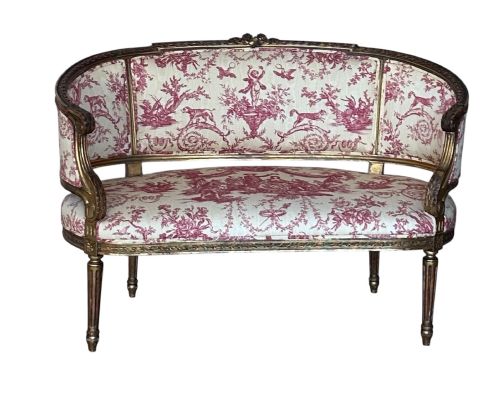
A french style sofa takes inspiration from continental court furniture, drawing on periods such as the nineteenth century, the Victorian era, and the early twentieth century. These pieces appear in forms ranging from expansive three-seater couches and canapés to compact two-seater settees and daybeds.
Makers adapted classical continental designs over successive decades, producing pieces that reflect Rococo Revival, Louis XV, Louis XVI, and Empire styles. The most common examples on this page date from the nineteenth century through to the 1930s, showing carved wooden frames and traditional seating layouts.
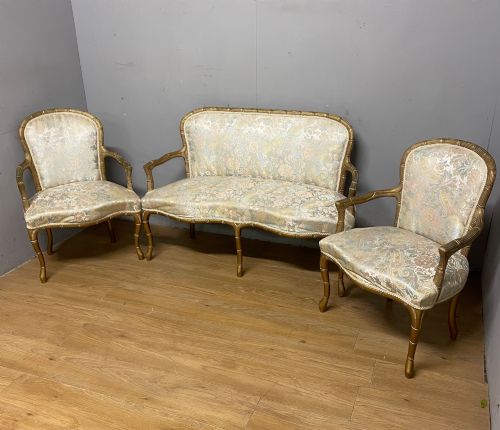
Alongside standard sofas, the category encompasses salon suites, conversation seats, and chaise longues. These items share a lineage of ornate woodwork and generous proportions designed for formal reception rooms.
How they were made
Frames rely primarily on solid hardwoods such as walnut, beech, and mahogany, shaped through manual carving and joinery. Artisans frequently applied giltwood, paint, or ebonised finishes to the timber, sometimes highlighting details with parcel gilt or ormolu mounts.
French Style Sofa Retail Price Guide 2026
Typical asking prices for french style sofa among the pieces listed under this phrase on Sellingantiques today, from the lower quarter to the upper quarter. They describe what is for sale here now, not the wider market.
Listings for this phrase feature walnut predominantly among timber choices, alongside beech, mahogany, and cast iron.
What varies in quality
The precision of the wood carving dictates much of the distinction between pieces, with sharper hand-chiselled details separating superior frames from simpler production. The choice of primary timber also marks a difference, as dense walnut and heavily figured mahogany support more intricate structural work than softer woods.
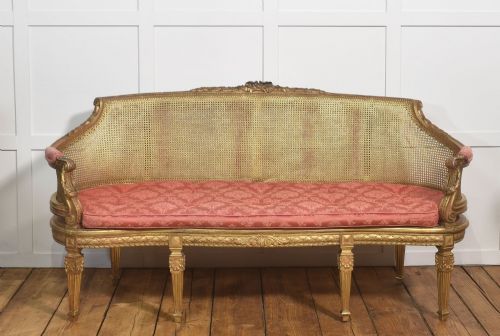
The integrity of the original canework and the execution of gilding or painted decoration indicate the level of craftsmanship invested in the piece. Additionally, the survival of genuine period upholstery materials and intact ormolu mounts elevates the character of a couch or settee.
The French Style Sofa Glossary
- Canapé
- An antique French sofa featuring an upholstered back and seat within an exposed wooden frame. These pieces typically reflect Louis XV or Louis XVI design idioms.
- Bergère
- An enclosed armchair or sofa featuring upholstered armrests and sides, frequently incorporating woven cane panels. The style emerged in France during the eighteenth century and saw revivals in later periods.
- Giltwood
- Timber coated with a thin layer of gold leaf or gesso preparation. It appears extensively on decorative frames from the nineteenth century and revival eras.
- Ormolu
- Gilded bronze mounts applied as decorative ornaments to furniture frames. This technique characterises Empire revival and neoclassical pieces.
- Chaise Longue
- An elongated upholstered chair designed for reclining. Nineteenth-century examples often combine a partial backrest with a single rolled arm.
French Style Sofa: Frequently Asked Questions
What is a canape sofa?
A canapé is a traditional French-style sofa characterised by an exposed wooden frame, often carved, with an upholstered back and seat.
These pieces typically follow Louis XV or Louis XVI design styles and were built for formal reception rooms.
How do I identify a louis xv style sofa?
Louis XV style pieces show asymmetrical curved lines, cabriole legs, and naturalistic floral carvings on the wooden frame.
They generally avoid straight edges in favour of flowing cabriole forms and serpentine seat rails.
Are these sofas suitable for daily use?
Many antique settees and couches serve well for everyday seating when constructed with sturdy hardwood frames and sound internal webbing.
Buyers often check the stability of the joints and the condition of the upholstery support before placing them in daily living spaces.
What is the difference between a settee and a sofa?
In historical furniture terms, a settee often denotes a lighter, narrower two-seat bench with an upholstered back, while a sofa can describe larger cushioned seating.
Both terms overlap significantly across nineteenth and twentieth-century listings.