




French Style Room Divider
These french style room divider pieces are folding screens that shape a space and catch the eye, formed from wood, brass, and painted canvas.
French Style Room Divider
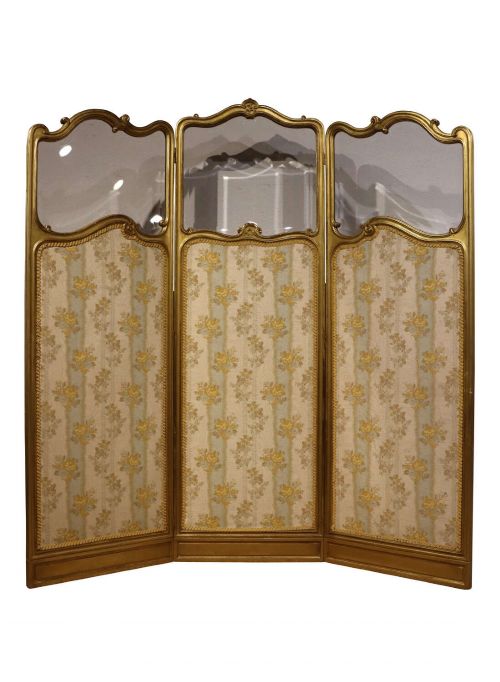
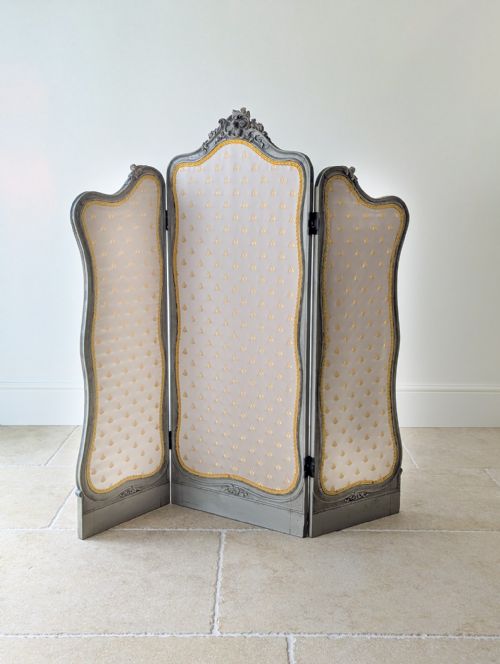
A french style room divider takes the form of a folding screen with three or more panels, designed to partition a chamber or frame a corner. The examples gathered here span from the mid-nineteenth century up to the Edwardian period, drawing heavily on French Rococo Revival, Louis XVI, and Napoleon III aesthetics.
Most pieces encountered on this page rely on hinged wooden frames of giltwood or painted wood, configured into three or four folds. Makers utilised canvas, fabric, glass, and bevelled glass to fill the panels, sometimes incorporating hand-painted pastoral scenes or Chinoiserie motifs.
Beyond full-scale room dividers, the selection includes smaller vanity screens and gilt fire screens sharing the same ornamental vocabulary. These objects reflect nineteenth-century and earlier continental taste for theatrical interior architecture and decorative zoning.
Construction and materials
Carved giltwood and painted wood form the structural backbone of these screens, shaped with the curved flourishes characteristic of Rococo Revival and French Chateau styles. Artisans joined multiple panels with brass hinges to ensure the screens could articulate smoothly and stand independently.
The infill materials demonstrate considerable variety, combining stretched canvas, silk panels, and glazed or bevelled glass within the wooden framework. Surface decoration frequently involves hand painting, particularly pastoral scenes and decorative motifs applied directly to fabric or wood.
French Style Room Divider Retail Price Guide 2026
Typical asking prices for french style room divider among the pieces listed under this phrase on Sellingantiques today, from the lower quarter to the upper quarter. They describe what is for sale here now, not the wider market.
One screen hides secret pastoral scenes behind its folds, ready to transport an entire drawing room to the French countryside.
Assessing quality and craftsmanship
Quality rests in the depth and crispness of the wood carving, particularly on giltwood frames where intricate mouldings define the French Neoclassical or Rococo aesthetic. Superior examples display refined proportions and substantial joinery across each fold, maintaining stability without excessive weight.
The artistry of the panel inserts marks another distinction between tiers of production, moving from simple painted surfaces to detailed hand-painted pastoral scenes or high-clarity bevelled glass. Original gilding and well-preserved textiles elevate a piece above standard decorative alternatives.
The French Style Room Divider Glossary
- Giltwood
- Wood that has been coated with gold leaf or a gold-coloured metallic finish. This technique highlights carved details on frames and furniture.
- Napoleon III
- A nineteenth-century French design period known for eclectic revivals of past royal styles, often featuring rich ornamentation and dark woods.
- Bevelled glass
- Glass panes with edges cut and polished at an angle. This treatment creates a prismatic border that catches the light.
- Chinoiserie
- European artistic style reflecting Chinese motifs and decorative techniques. It appears frequently on painted screens and panels.
- Rococo Revival
- A nineteenth-century movement emulating the ornate, asymmetrical curves and scrollwork of the eighteenth-century French Rococo style.
French Style Room Divider: Frequently Asked Questions
How were folding screens used historically?
These screens divided large chambers into smaller, intimate zones, blocked draughts from doors and windows, and provided privacy for dressing.
They also served as decorative backdrops in parlours and reception rooms, often positioned to frame seating areas or conceal utilitarian corners.
How do I distinguish between periods?
Distinguishing periods relies on observing decorative motifs, framing techniques, and material choices.
Mid-nineteenth-century pieces often display heavier Rococo Revival carving, while later Victorian and Edwardian iterations incorporate lighter painted finishes or specific revival idioms like Louis XVI style.
Where should I place a room divider at home?
A folding screen works effectively to zone open-plan spaces, create a backdrop behind a bed, or soften an empty corner in a living room.
Positioning them away from direct sunlight protects delicate silk panels and painted canvas from fading over time.
What is the difference between a fire screen and a room divider?
Fire screens are typically smaller, single-panel pieces designed to stand in front of an unlit fireplace to block draughts or decorate the hearth.
Room dividers feature multiple folding panels intended to partition floor space rather than shield a specific architectural opening.