





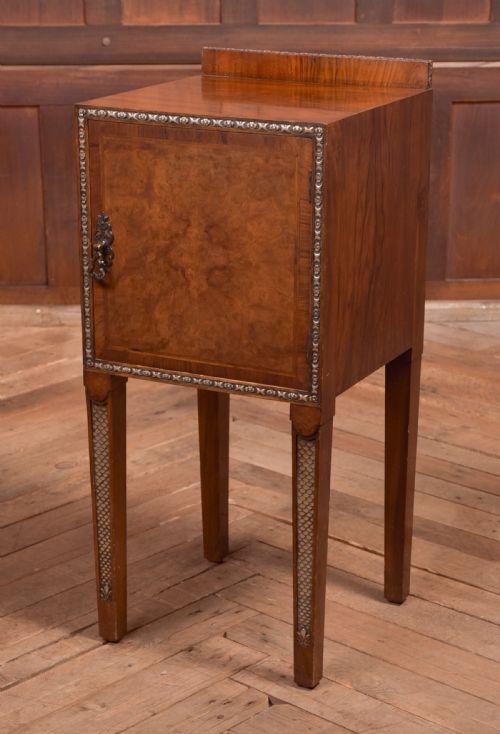
French Style Night Tables
These French style night tables bring continental elegance to a bedroom, offering practical bedside storage paired with period charm.
French Style Night Tables
When searching for French style night tables, buyers encounter a variety of bedside cabinets, chests, commodes, and side tables that channel continental aesthetic traditions. These pieces predominantly appear in revival styles such as Louis XV, alongside French Provincial, country, chateau, and Victorian interpretations.
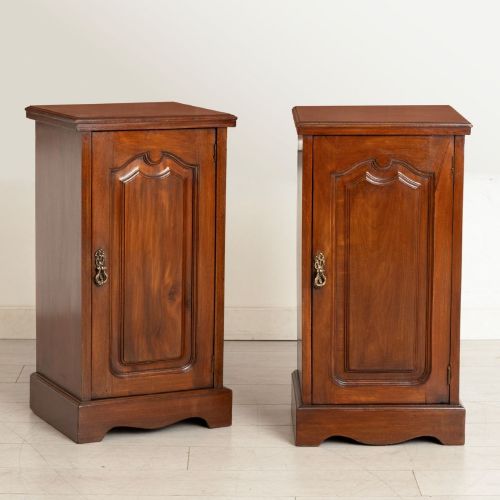
The selections available range from sturdy mahogany and oak examples dating back to the late nineteenth century to lighter parquetry and marquetry pieces from the early twentieth century. Most items emerge as matched pairs, which remain particularly sought after for balancing a bedroom scheme on either side of a bed.
Materials and construction
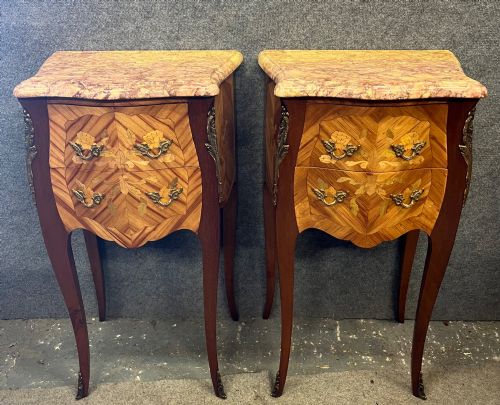
Cabinet makers utilised a rich palette of timber, pairing structural hardwoods like oak and mahogany with decorative veneers such as walnut, rosewood, and kingwood. Inlaid marquetry and parquetry techniques added intricate geometric or floral patterns to drawer fronts and tabletops.
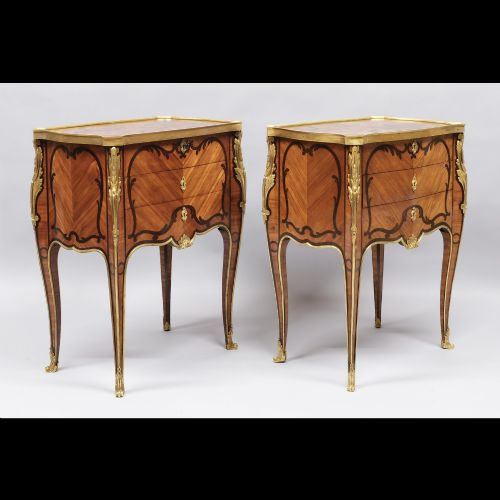
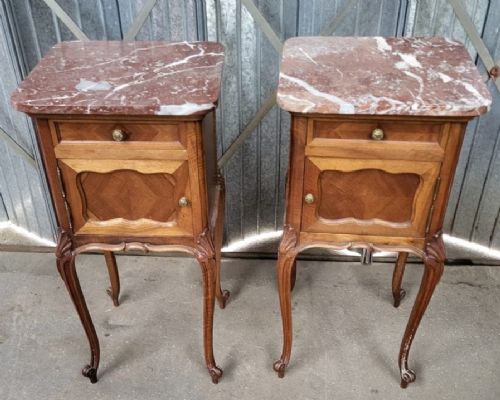
Many high-end variants incorporate fitted marble tops for durability and elegance, frequently complemented by cast brass mounts, handles, and sabots. Some later or provincial pieces utilise painted finishes or bleached oak to alter the visual weight of the wood.
Listings span periods from eighteen eighty to nineteen thirty, showcasing materials including brass, walnut, marble, rosewood, kingwood, mahogany, oak, and leather.
Assessing quality and execution
Superior examples demonstrate meticulous attention to detail in the execution of wood veneers, where grain patterns align harmoniously across drawer fronts and surfaces. The precision of inlaid marquetry and the crispness of carved wooden details distinguish finer workshops from simpler production.
The incorporation of genuine marble tops, substantial brass mounts, and solid timber secondary woods elevates a piece above standard utility items. Structural integrity in the joints and drawers ensures that functional bedside storage withstands daily use while retaining its aesthetic appeal.
Sormani
The French Style Night Tables Glossary
- Marquetry
- Decorative veneer work forming pictorial or ornamental patterns using various woods. Craftsmen cut thin sheets of different timbers to fit together precisely like a puzzle.
- Parquetry
- Geometric wood inlay forming repeating patterns such as cubes or chevrons. This technique displays the natural grain variations of timbers like walnut and rosewood.
- Commode
- A low chest of drawers or cabinet. In a bedroom context, these serve as substantial bedside storage units.
- Ormolu
- Gilt bronze mounts applied to furniture for decorative accent. These metal fittings highlight the curves of Louis XV revival pieces.
- Sabot
- A metal shoe fitted to the foot of a table or cabinet. This brass or bronze element protects the timber leg from wear and floor moisture.
French Style Night Tables: Frequently Asked Questions
Are these tables usually sold as pairs?
Many listings feature matched pairs designed to sit symmetrically on either side of a bed. This configuration reflects historical bedroom layouts where balanced furnishings were standard.
Individual cabinets also appear in the record, serving equally well as lamp tables or occasional side storage in smaller rooms.
How do I care for marble topped tables?
Marble surfaces require gentle cleaning with mild, pH-neutral soap and water to protect the stone from staining or acidic etching. Avoid harsh chemical cleaners and abrasive scrubbing pads.
Using coasters for glasses and protecting the stone from heavy impacts ensures the polished finish remains intact over decades of daily domestic use.
How can I tell different revival periods apart?
Late nineteenth-century examples often rely on solid mahogany or oak construction with deeper tones and restrained carving. Pieces from the early twentieth century frequently showcase lighter marquetry, parquetry, or painted finishes.
Stylistic cues such as cabriole legs and serpentine fronts link directly to Louis XV inspiration, regardless of whether the piece dates from eighteen eighty or nineteen thirty.