


French Style Hearth Guard
These French style hearth guard pieces offer ornate brass protection for the fireplace, bringing continental elegance to a room.
French Style Hearth Guard
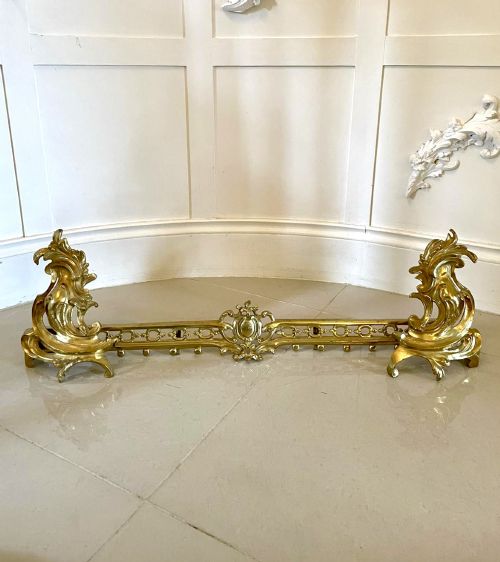
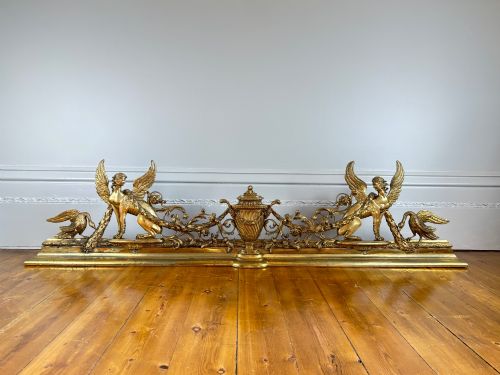
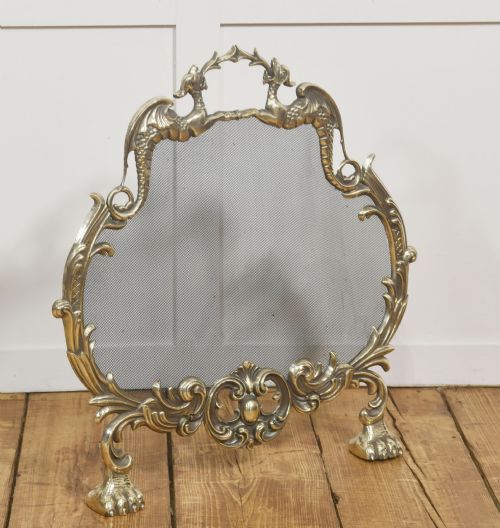
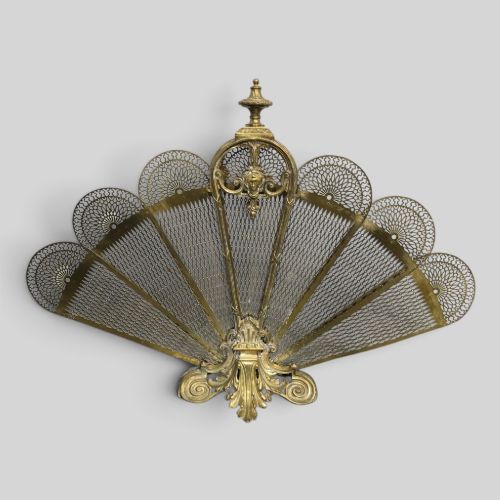
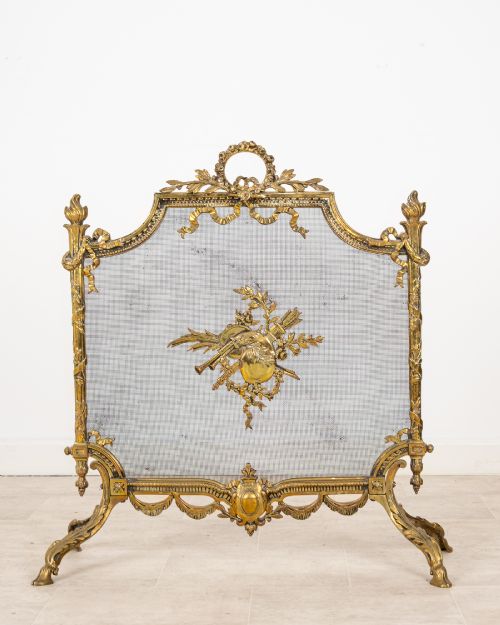
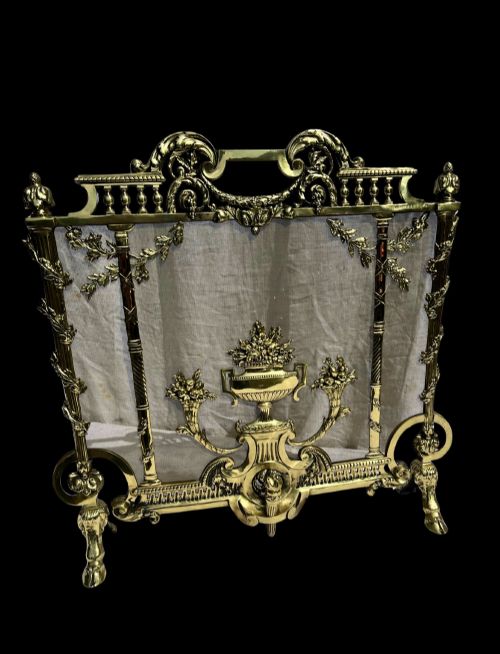
A french style hearth guard typically takes the form of a decorative fire screen or an extending fireplace fender designed to sit in front of the grate. These items protect the room from stray sparks while adding a refined decorative element to the chimney breast. The selection on this page spans the nineteenth century and the early twentieth century, capturing Victorian interpretations alongside Continental designs.
Forms vary between folding or static fire screens featuring wire mesh and substantial metal fenders that frame the hearth. Many examples display the curving asymmetrical lines of the Rococo Revival or the disciplined symmetry associated with Louis XV and Louis XVI styles. Brass and gilt bronze dominate the physical forms, offering a bright metallic presence that reflects the firelight.
Makers and designers from both sides of the Channel produced these accessories during the Victorian era and the decades following. Buyers encounter everything from simple brass screens to massive dore bronze fenders spanning nearly two metres in length. Each piece reflects the enduring popularity of French interior aesthetics in period British and American homes.
How they were made
Construction relies heavily on cast brass, gilt bronze, and ormolu, shaped into intricate frames and mounts. Artisans employed traditional casting and chasing techniques to achieve the characteristic scrollwork, floral motifs, and classical detailing seen on Rococo and Neoclassical revival pieces. Wire mesh is frequently integrated into the screens to provide functional spark protection without obscuring the decorative metalwork behind it.
Adjustable mechanisms and extending frames appear on several fenders, allowing the metalwork to fit various hearth widths precisely. Guilds and metalworkers utilised fire gilding or electroplating to impart a rich golden surface finish to the base brass or bronze. The combination of structural iron or brass backing with decorative cast mounts ensures both durability and ornamental flair.
Listings feature items dated from the Victorian period up to nineteen twenty, predominantly utilising brass and gilt bronze.
What varies in quality
The distinction between standard production and exceptional work lies in the crispness of the casting and the depth of the hand-chasing on the metal surface. Finer examples display sharply defined acanthus leaves, scrolls, and figural details that catch the eye from across the room, whereas lesser items rely on softer, shallower stamping. The weight of the metal and the substantial feel of extending mechanisms also signal superior manufacturing standards.
Gilt surfaces show variation in tone and preservation, with original fire gilding or ormolu retaining a warmer, more nuanced lustre than later chemical finishes. The integration of fine wire mesh and the structural integrity of the frame further separate ordinary fireplace accessories from masterworks designed for formal reception rooms.
E F Caldwell New York
The French Style Hearth Guard Glossary
- Ormolu
- Gilded bronze or brass, typically produced by applying a mercury and gold amalgam to a base metal before heating. This technique creates a durable and brilliant golden finish characteristic of fine decorative hardware.
- Fire screen
- A movable barrier placed before a fireplace to shield the room from radiant heat when the fire is low. They often double as decorative furnishings during warmer months.
- Fender
- A low metal guard placed on the hearth around the base of a fireplace. Extending versions can be adjusted to fit different hearth dimensions.
- Rococo Revival
- A nineteenth-century design style inspired by the French Rococo movement of the eighteenth century. It is marked by exuberant asymmetry, C-scrolls, and naturalistic plant motifs.
- Louis XV style
- An aesthetic characterised by curving lines, asymmetrical cartouches, and floral ornamentation. Pieces from this tradition emphasise elegance and fluid movement.
French Style Hearth Guard: Frequently Asked Questions
What is a french style hearth guard used for?
These items serve primarily to contain sparks and flying embers while the fireplace is in use. They also act as a decorative screen to hide an empty grate during the summer months.
In period interiors, matching fire screens and fenders helped unify the metalwork of the fireplace with other furnishings in the room.
How do I measure for a fender?
You should measure the width and depth of your hearth stone to ensure the metal frame sits securely within the perimeter. Extending models offer flexibility if your hearth dimensions do not match standard fixed sizes.
Take care to account for any protruding hearth stones or surround mouldings when checking the length.
Are these pieces made of solid brass?
Many items feature solid cast brass or bronze components, particularly the decorative mounts and frames. Some screens incorporate iron or steel internal structures for added stability.
Surface treatments such as gilt bronze or ormolu provide the golden appearance without necessarily altering the core metal composition.
How do I date a fireplace screen?
Dating relies on stylistic clues such as the presence of Victorian revival motifs or specific Neoclassical proportions. The manufacturing techniques, type of screw threads, and composition of the wire mesh also offer clues to the period of origin.
Makers' stamps, where present, provide the most direct evidence of a workshop's active dates.