


French Style Bronze Lantern
A French style bronze lantern brings dramatic height and warm illumination to any hall, drawing the eye with its intricate metalwork.
French Style Bronze Lantern
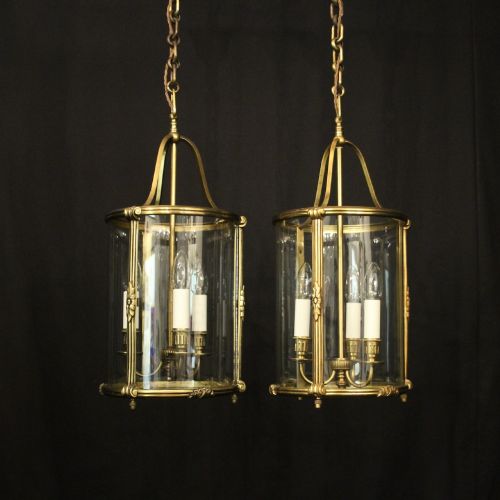
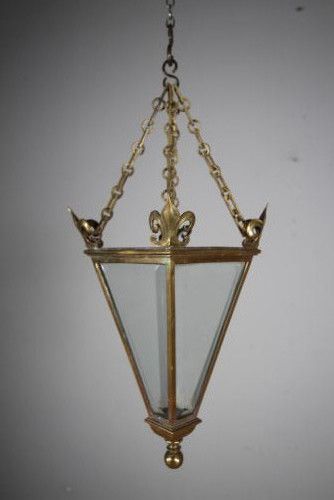
A french style bronze lantern is an architectural hanging light designed to illuminate entryways, corridors, and high-ceilinged rooms with historical elegance. These pieces primarily take the form of ceiling lights, hall lanterns, and pendant lanterns suspended on chains or rods.
The pieces available span from the nineteenth century into the early twentieth century, taking inspiration from periods such as the Victorian era, the Edwardian period, and Regency design. Many examples adopt French Neoclassical, Louis XVI, and Rococo Revival aesthetics, echoing palace interiors.
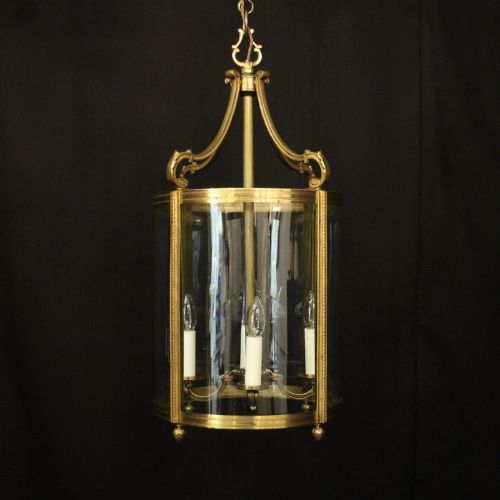
Buyers most frequently encounter gilded bronze, gilt brass, and standard brass frameworks paired with transparent, frosted, etched, or opaline glass panes. Certain models incorporate convex glass panels or coloured crystal details to refract light across the surrounding walls.
Materials and construction methods
The structure relies heavily on cast bronze and brass, often finished with fire gilding, ormolu, or a layer of gold leaf to impart a rich metallic sheen. These durable metal frames are cast and assembled in sections, allowing for intricate decorative mounts, swags, and acanthus leaf motifs.
Transparent enclosures utilise specialised glass types, including hand-cut glass, opaline panes, and acid-etched or frosted panels designed to soften the glare of internal bulbs. Convex glass is slumped or moulded to create rounded panels that project light outward in a wide arc.
Listings feature items spanning the nineteenth century through the 1930s, incorporating materials such as gilt bronze, brass, cut glass, and opaline panes.
Distinctions in craftsmanship and design
Quality rests upon the crispness of the metal casting and the depth of the gilding, where finer pieces display sharp relief work and hand-chased details rather than soft, flat surfaces. The weight of the bronze or brass frame and the substantial thickness of the glass panels also signal superior production standards.
Design ambition separates standard commercial lighting from exceptional examples modelled after historic interiors, such as those inspired by the Palace of Versailles. The inclusion of complex cut glass crystals, multiple internal light fixtures, and custom convex glazing marks the upper tiers of this craft.
Perry And Co
The French Style Bronze Lantern Glossary
- Ormolu
- A technique of applying finely ground high-carat gold to a bronze object using a mercury amalgamation process, or simply cast brass finished to simulate gold. This imparts a brilliant, warm metallic lustre that resists tarnishing over decades.
- Convex glass
- Curved glass panels that bulge outward from the metal frame, designed to catch and diffuse light across a wider angle. This technique adds visual depth and complexity to the silhouette of a hanging lantern.
- Opalescent glass
- A milky, translucent glass that diffuses internal light into a soft, glowing halo. It reduces harsh shadows while maintaining a bright ambient output.
- Neoclassical
- A style rooted in the revival of classical antiquity, featuring symmetrical forms, geometric precision, and classical motifs like urns and swags. It dominates many nineteenth-century lighting designs.
- Pendant lantern
- A suspended light fixture hanging from a single chain, cord, or rod, engineered to illuminate vertical spaces such as stairwells and entrance halls.
French Style Bronze Lantern: Frequently Asked Questions
Where should I hang a bronze lantern?
These fixtures suit high-ceilinged entrance halls, stairwells, and grand corridors where their vertical drop and reflective glass can be fully appreciated. They also anchor large dining spaces or living rooms seeking a historic focal point.
Ensure adequate ceiling height is available to allow safe clearance underneath the hanging chain or rod, keeping the proportions balanced with the surrounding room dimensions.
How do I identify a Louis XVI style lantern?
Louis XVI pieces typically display straight lines, symmetry, and classical motifs such as ribbons, urns, beaded trim, and laurel leaves. This aesthetic contrasts with the more asymmetrical and fluid curves found in earlier Rococo designs.
Look for architectural rigidity in the frame, often complemented by cast brass or gilt bronze mounts that reflect classical restraint and formal elegance.
Can these antique lanterns take modern wiring?
Most antique fixtures can be professionally rewired to accommodate modern electrical standards and safety requirements without altering the exterior metalwork or glass. Electricians can integrate standard lamp holders inside the frame while preserving the original hanging mechanisms.
It is advisable to consult a qualified restorer to ensure the internal electrical components respect the weight distribution and heat limitations of the antique housing.
What is the difference between gilt bronze and brass?
Gilt bronze, or bronze coated with gold leaf or ormolu, contains a copper and tin alloy that yields a heavier weight and a deeper, warmer undertone beneath the gold surface. Brass is a copper and zinc alloy that tends to have a brighter, yellower metallic tone of its own.
In historical lighting, bronze was generally reserved for higher-end decorative commissions, whereas brass offered a more accessible alternative for standard production pieces.