


French Style Armoire
A French style armoire brings grand Continental scale and generous storage to a room through traditional timber construction and classic carved detailing.
French Style Armoire
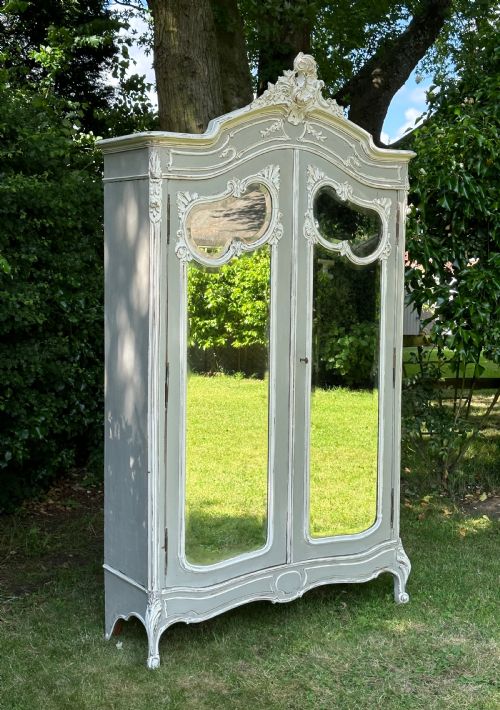
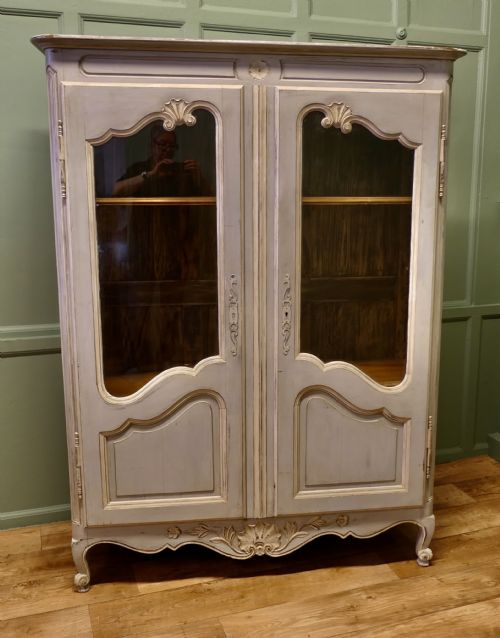
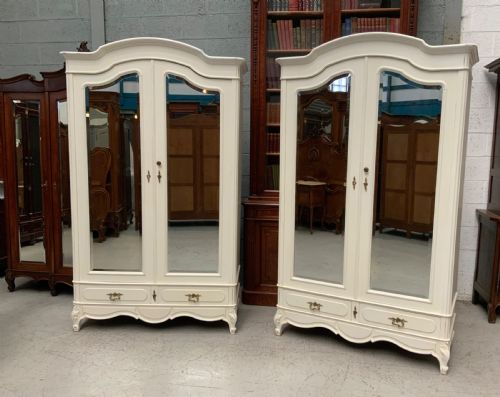
A French style armoire functions primarily as a large storage wardrobe or display cabinet, originating from various periods including the eighteenth and nineteenth centuries. These pieces typically display regional forms such as the buffet à deux corps or simpler single and double door wardrobes.
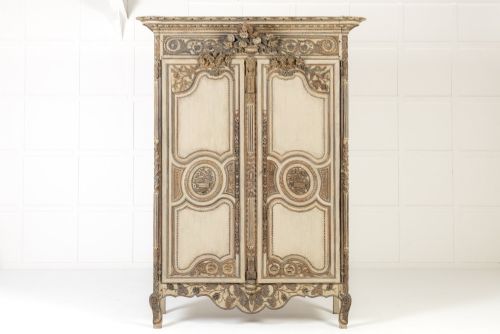
Buyers will frequently encounter revival pieces reflecting Louis XV, Louis XVI, and Empire designs alongside painted provincial models. Oak and walnut form the structural backbone of these cabinets, often enhanced by carved panels and glazed doors.
The selection ranges from tall triple door wardrobes to compact marriage armoires and specialised bookcases. Regional variations like Breton armoires and painted pine cupboards add distinct character to the available forms.
How they were made
Cabinetmakers utilised heavy hardwoods like oak, walnut, and mahogany for the primary carcases, ensuring structural stability for large doors and cornices. Softer woods such as pine and cherry appear in regional provincial pieces, occasionally finished with paint.
Decorative surface treatments rely on hand carving, marquetry, and applied veneers to create traditional ornamentation. Ormolu and gilt brass mounts provide metallic contrast to the timber, while glass panels feature in vitrines and display cabinets.
Regional styles include French Provincial, Empire, and Gothic influences applied to wardrobes, bookcases, and double-bodied buffets.
What varies in quality
The depth and crispness of the hand carving separate standard production pieces from finer examples, particularly around the crests and door panels. Pierced scrollwork and detailed floral motifs demand high levels of joinery skill.
The choice of timber and veneer figure dictates the overall visual weight, with burr walnut and figured mahogany commanding particular attention. Original hardware, including working locks and cast ormolu mounts, elevates the integrity of the piece.
The French Style Armoire Glossary
- Ormolu
- Gilt bronze mounts applied to furniture for decorative effect. This technique was widely utilised during the eighteenth and nineteenth centuries to accent mahogany and walnut cabinets.
- Buffet à deux corps
- A large two-part cupboard or sideboard stacked vertically. These substantial pieces offer significant storage capacity in dining spaces and halls.
- Marquetry
- The art of applying pieces of veneer to a structure to form decorative patterns. Craftsmen utilised various coloured woods to create intricate pictorial designs on cabinet doors.
- Vitrine
- A glass-fronted cabinet designed for displaying objects. These display pieces often feature mesh or glass doors set within a wooden frame.
- Bonnetiere
- A tall, narrow single door cupboard originally intended for storing hats and linen. These slender pieces suit smaller rooms while maintaining traditional height.
French Style Armoire: Frequently Asked Questions
How do I fit a large armoire?
Many traditional French armoires were constructed to be dismantled into manageable panels, cornices, and base sections for transport and installation.
Checking whether the specific cabinet utilises knock-down construction ensures it can be safely moved through modern doorways and stairwells.
What is a marriage armoire?
A marriage armoire is a traditional French cupboard commissioned or gifted to celebrate a wedding, often featuring specific carved motifs.
These pieces frequently display symbols such as intertwined hearts, floral garlands, or specific family crests within the woodwork.
How do I identify Louis XV style?
Louis XV style furniture is characterised by flowing asymmetrical lines, cabriole legs, and naturalistic scrollwork without straight geometric rigidity.
Carved acanthus leaves, C-scrolls, and floral sprays dominate the ornamentation on these eighteenth-century inspired cabinets.
Where should I place an armoire?
An armoire serves well in a bedroom for wardrobe storage or in a living area as a display cabinet for books and porcelain.
Their substantial height draws the eye upward, making them effective focal points against blank walls in rooms with high ceilings.