



French Strike Clock
These heavy brass and marble timekeepers bring audible charm to a room, sounding the hours with a satisfying tone.
French Strike Clock
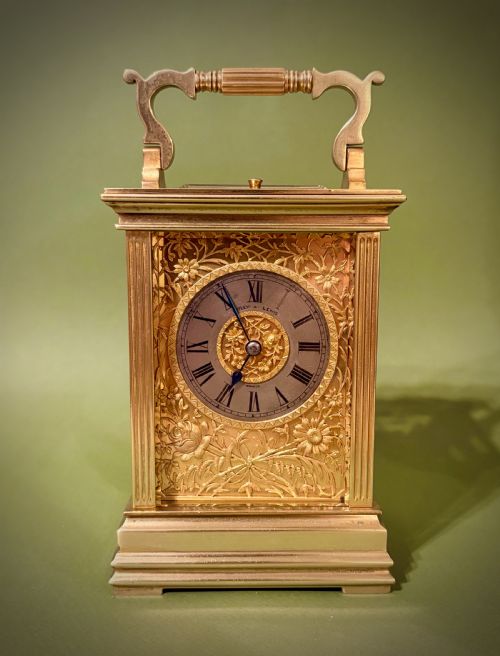
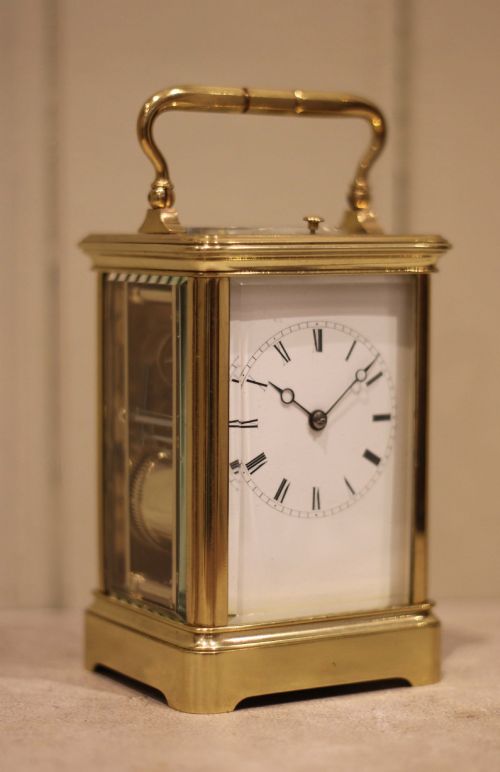
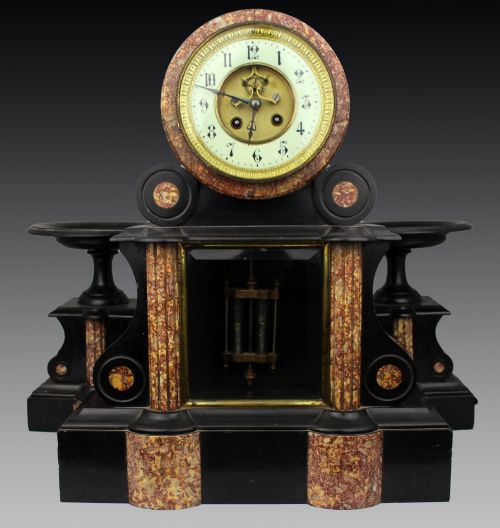
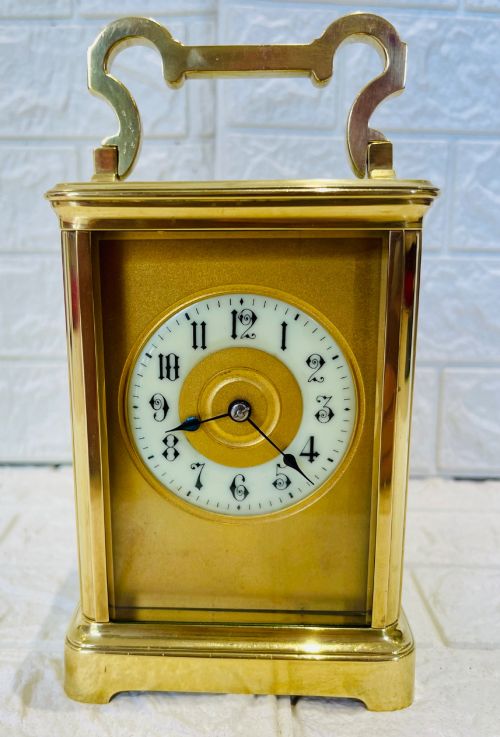
A french strike clock brings an audible mechanical presence into a room, sounding the hours and half-hours on a bell or gong. When searching this phrase, buyers encounter portable brass carriage designs alongside heavier mantel pieces in marble and slate.
Most examples originate from the nineteenth century, spanning Victorian production up to the early decades of the twentieth century. Carriage clocks housed in glass panels dominate the selections, accompanied by larger architectural mantel clock garnitures.
Workshop output ranges from plain travelling timekeepers to elaborate gilt brass models featuring enamel dials. Makers across Paris produced these reliable eight-day movements for both domestic use and export through British retailers.
Materials and movement construction
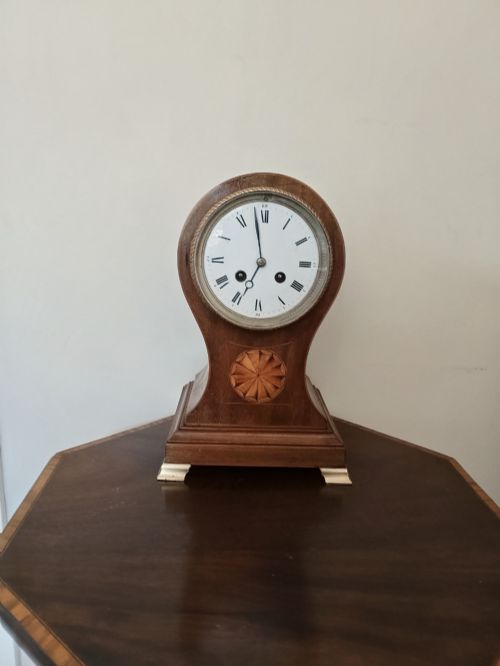
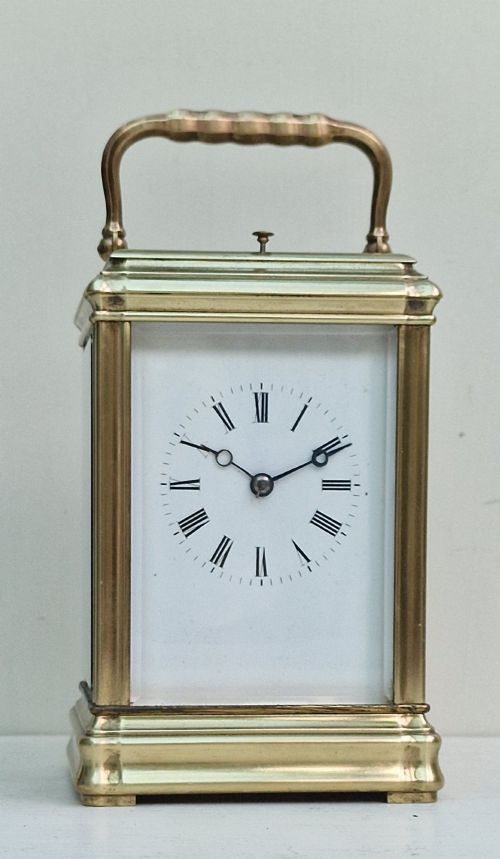
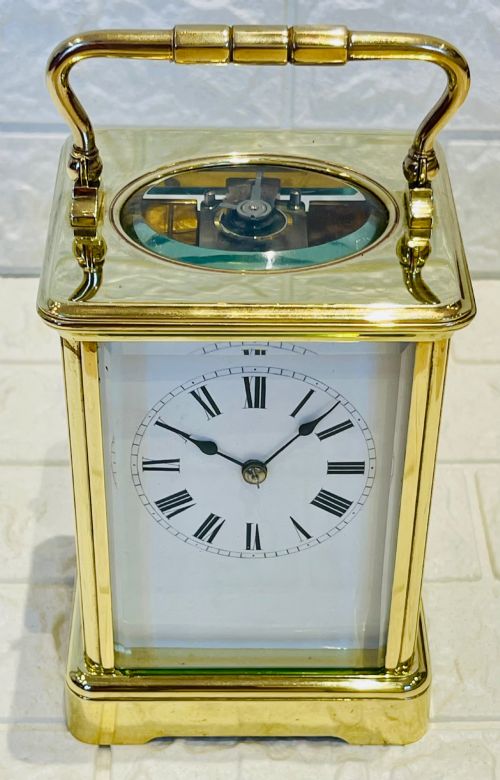
Brass, gilt brass, and ormolu form the primary housing for portable movements, often combined with bevelled glass panels to reveal the escapement. Heavier architectural cases utilise black slate, marble, and inlaid mahogany or rosewood.
Enamel dials with Roman numerals provide the face for both carriage and mantel versions, sometimes paired with subsidiary alarm dials or visible mechanical complications. Steel components operate within the eight-day gear train, driving the strike and repeat mechanisms.
Casting and fire-gilding techniques created ornate ormolu mounts and bronze figures for grander salon pieces, while standard carriage clock cases relied on polished brass frames soldered and screwed together.
Listings feature movements spanning the Victorian period through to the mid-nineteenth and twentieth centuries, constructed from brass, marble, and slate.
Distinctions in horological execution
Superior execution shows in the crispness of the gilt brass casting, the depth of the hand-engraving on gorge cases, and the inclusion of complications like alarm and grand sonnerie striking. Plain brass boxes with machine-stamped plates sit at the accessible end of the scale.
Makers known for signed plates and serial numbers command greater attention from collectors, reflecting workshop reputation and precision adjustment. The survival of matching leather travelling cases and original mercury gilding further elevates an example above standard production.
Japy Freres·T. Martin And Co·C. Detouche Paris·Henri Jacot Paris·Henry Jacob·Paul Garnier·Drocourt·Pons De Paul·AD Mougin·Dwerrihouse And Bell·J. F. Bautte Et Cie·Le Roy Of Paris·Mottu Freres·SJ Rety
The French Strike Clock Glossary
- Gorge case
- A stepped brass carriage clock case with curved mouldings at the top and bottom. This distinctive housing style frequently accommodates repeating mechanisms and enamel dials.
- Grand Sonnerie
- A striking train that sounds both the hours and the quarters automatically on every quarter hour. It represents a more complex mechanism than standard hourly striking.
- Strike-repeat
- A complication allowing the last hour to be sounded again at will by pressing a button on the top of the case. It is commonly found on carriage clocks.
- Garniture set
- A mantel clock accompanied by matching side ornaments such as urns or vases. These arrangements were designed to sit centrally on a fireplace mantelpiece.
- Platform escapement
- The small self-contained assembly holding the balance wheel and hairspring placed visibly on top of the movement. It replaced the pendulum in portable clocks.
French Strike Clock: Frequently Asked Questions
How do I wind my clock?
Use the matching key on the winding squares located at the back of the movement. Turn steadily until you feel resistance, taking care not to overwind the mainspring.
Keep the key in a safe place away from the mechanism to ensure you do not lose it, as original keys hold distinct collector value.
Why does the clock strike the wrong hour?
The striking train can get out of sequence if the hands are moved backwards or if the clock runs down while striking. Let the mechanism complete its sequence without forcing the components.
Advance the minute hand slowly forward past the hours, allowing the strike to finish fully at each interval until it matches the time displayed on the dial.
Where should I place a carriage clock?
Position the piece on a stable, level surface away from direct sunlight and draughts. Heavy mantel clocks require a sturdy shelf or sideboard to support their weight.
Avoid high-moisture rooms like kitchens or bathrooms, as humidity can tarnish polished brass and degrade delicate enamel dials over time.
What is the difference between carriage and mantel clocks?
Carriage clocks are smaller, portable timekeepers housed in brass and glass with folding top handles designed for travel. Mantel clocks are larger, heavier stationary pieces made from marble, slate, or wood.
Both utilise similar spring-driven eight-day movements, but carriage clocks often feature visible escapements through glass panels on all four sides.