



French Silvered Mantel Mirror
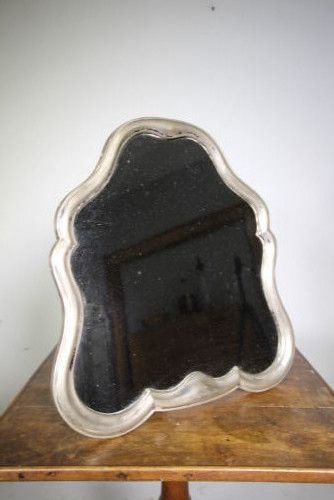
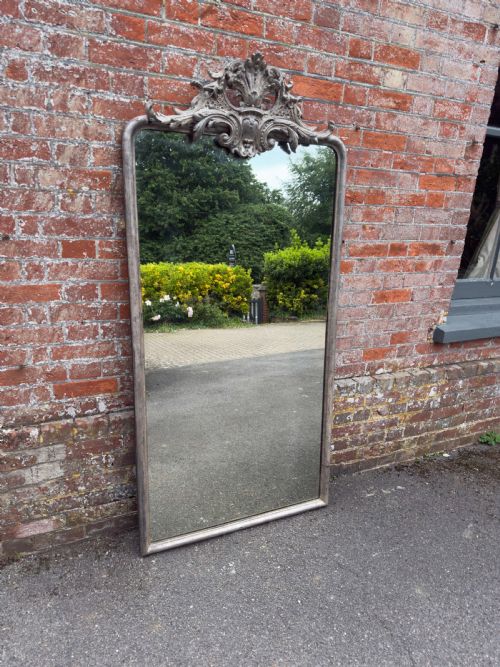
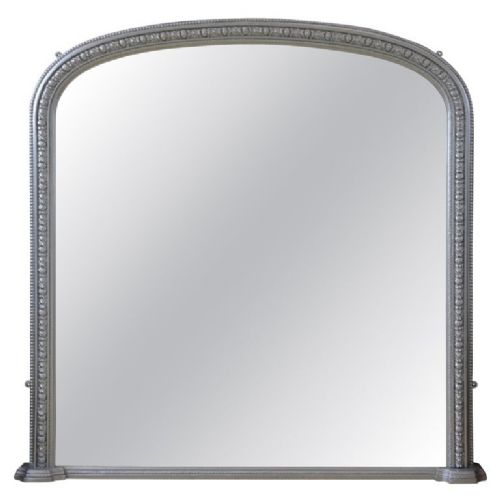
A french silvered mantel mirror brings immediate depth and light to a room, framed in carved wood and gesso with silver leaf.
French Silvered Mantel Mirror
When you search for a french silvered mantel mirror, you enter a domain of large overmantel mirrors and wall mirrors originating from the eighteenth and nineteenth centuries. These pieces sit above fireplaces or along principal walls, reflecting the room and expanding the perceived space.
The versions you meet most often on this page date from the nineteenth century, including examples from eighteen sixty and eighteen seventy. Styles span from French chateau and Louis Philippe to Victorian and Rococo revival.
Objects appear in substantial proportions, frequently described as large or very large, featuring shaped, arched, or plain tops. Carved wood and gesso form the foundational structure, finished in silver leaf, silver gilt, gold leaf, and ebonised details.
How they were made
Artisans constructed the primary frames from carved wood, applying gesso to create smooth surfaces and intricate relief details before the application of leaf. Silver leaf, silver gilt, and gold leaf were meticulously laid over the prepared wooden armatures.
Mirror glass was set into these heavy frames, often following arched or shaped top profiles designed to sit securely on mantelpieces or large wall anchors.
Listings feature pieces spanning the eighteenth and nineteenth centuries, utilising carved wood, gesso, silver leaf, and mirror glass.
What varies in quality
Distinctions in quality rest upon the crispness of the carved wood and the depth of the gesso relief work beneath the silvering. Simpler designs rely on proportion and clean lines, whereas revival pieces depend on the dexterity of the carver.
The integrity of the original silver leaf or silver gilt finish, along with the preservation of the mirror glass, dictates the visual weight and historical authenticity of each piece.
The French Silvered Mantel Mirror Glossary
- Gesso
- A plaster mixture applied to wood frames to create a smooth surface for gilding or silvering. This material allows for sharp, intricate relief carving.
- Silver Gilt
- Silver applied to a surface and then partly gilt with gold leaf or a gold wash. This technique produces a warm, nuanced metallic tone.
- Overmantel Mirror
- A large mirror specifically designed to hang or stand on the mantelpiece above a fireplace. These pieces dominate the hearth wall.
- Louis Philippe
- A mid-nineteenth century French style characterised by restrained curves and simple, elegant proportions. It avoids excessive ornamentation in favour of balanced lines.
French Silvered Mantel Mirror: Frequently Asked Questions
Where should I hang a mantel mirror?
These mirrors traditionally rest upon the mantelpiece above a fireplace, anchoring the central wall of a reception room. Their scale allows them to reflect light across the entire floor.
Alternatively, secure them directly to a principal wall as a standalone focal point in a hallway or drawing room.
How do I identify a Louis Philippe mirror?
Look for a slightly rounded or arched top frame combined with straight lower sides and restrained decorative corners. This style eschews heavy ornamentation for clean, architectural balance.
The proportions remain notably wide and tall, designed to command the space above a hearth without dominating the room.
What is the difference between silver gilt and silver leaf?
Silver leaf consists of thin sheets of beaten silver applied to the gessoed wooden frame. It offers a bright, reflective metallic finish.
Silver gilt incorporates subtle gold applications over or alongside the silver, creating a warmer, complex hue that bridges silver and gold tones.
How do I care for antique mirror glass?
Dust the carved wood and gesso frame gently with a dry, soft cloth to protect the delicate silver leaf surfaces. Avoid harsh chemical cleaners near the edges of the plate.
Clean the mirror glass sparingly using a mild solution on a cloth rather than spraying directly onto the glass, preventing moisture from seeping behind the plate.