
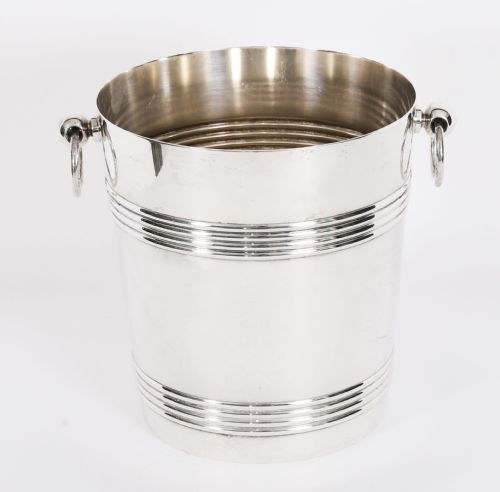
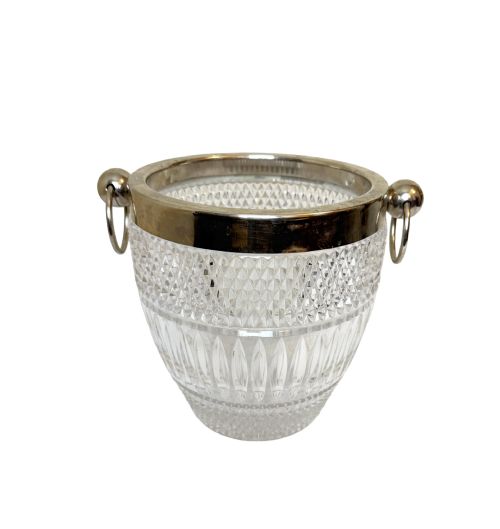


French Silver Champagne Cooler
A french silver champagne cooler brings weight and gleam to a table, serving as both a functional vessel and a sculptural centrepiece.
French Silver Champagne Cooler
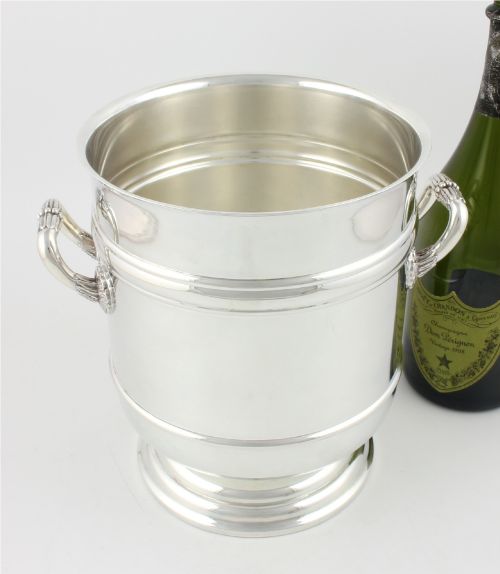
When you search for a french silver champagne cooler, you encounter substantial metal and silver-plate vessels designed for chilling bottles at the table. These objects take forms such as deep buckets, wide bowls and handled cylinders intended to hold ice and water alongside wine.
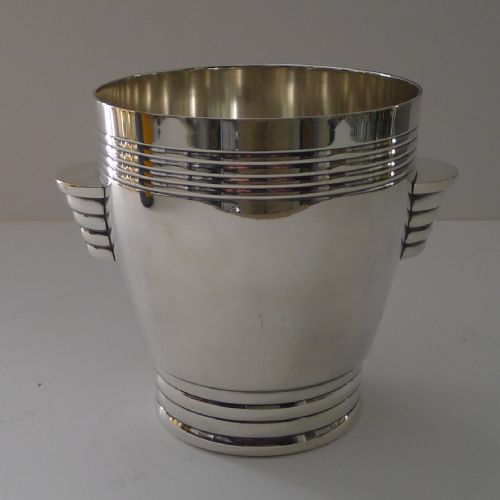
The selections span distinct decorative movements, shifting from the ornate flourishes of the Belle Epoque to the geometric precision of Art Deco and the clean lines of mid-century design. Many originate from notable Parisian houses and restaurant services, carrying the marks of intensive social use.
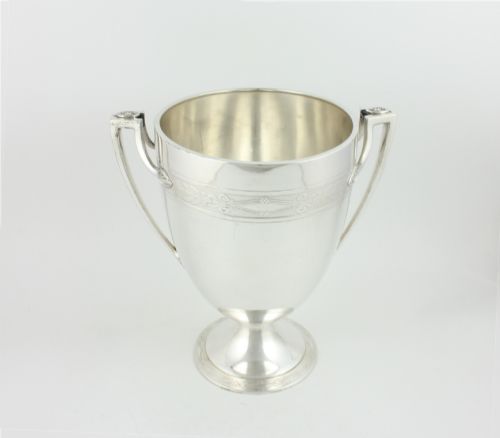
You are most likely to meet silver-plated examples produced during the early to mid-twentieth century, alongside occasional pieces incorporating cut crystal or pewter. These items range from plain utilitarian cooling vessels to heavily embossed trophy coolers.
How they were made
Maker workshops utilised base metals and pewter as foundations before applying thick layers of silver-plate to achieve a lustrous exterior finish. Artisans employed techniques such as heavy embossing, casting and spinning to shape the bodies and secure sturdy handles.
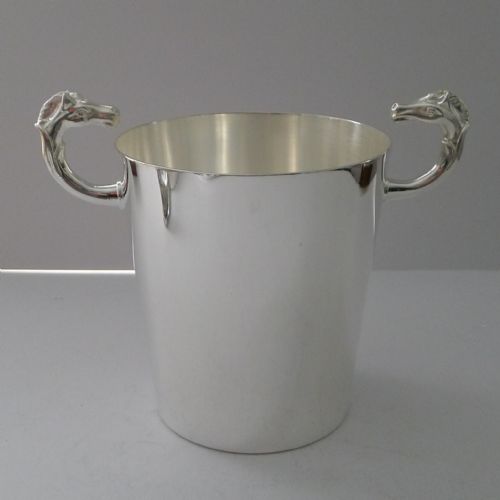
Details like ring mounts, equestrian motifs and geometric stepped tiers required precise assembly by hand. Combinations of cut crystal inserts with silver-plate frames brought contrasting textures to ice buckets and smaller wine holders.
Several heavy coolers began life serving champagne in bustling Paris restaurants before finding their way into quiet dining rooms.
What varies in quality
The calibre of a cooler rests upon the weight of the underlying metal and the thickness of the silver plating applied by the maker. Substantial gauge metal resists dents and maintains thermal efficiency far better than thin, lightweight alternatives.
Distinction also lies in the crispness of cast details, the structural integrity of applied handles, and the authority of the maker mark stamped into the base. Pieces designed by named designers or produced by premier Parisian houses display superior execution in their proportions and joints.
Christofle·Ercuis·Puiforcat·St Medard·Luc Lanel·Lino Sabatinni
The French Silver Champagne Cooler Glossary
- Silver Plate
- A manufacturing method where a thin layer of pure silver is bonded to a base metal core, such as copper or nickel silver. This technique provided the visual richness of solid silver at a more accessible cost for domestic and hospitality use.
- Art Deco
- A design movement spanning the 1920s and 1930s characterised by symmetry, geometric lines and stylised motifs. Coolers from this period often feature stepped tiers, clean cylinders and striking handle designs.
- Belle Epoque
- A period of optimistic cultural life in France lasting from the late nineteenth century until the First World War. Objects from this era typically display ornate embossing, floral elements and generous curves.
- Pewter
- A malleable alloy composed principally of tin, often used for utilitarian vessels in French bistros and restaurants. It offers a soft, grey patina that differs entirely from the bright reflectivity of silver.
- Gallia
- A high-grade silver-plate alloy developed and utilised by the Christofle firm during the twentieth century. Pieces bearing this designation indicate superior manufacturing standards from a prominent Parisian maker.
French Silver Champagne Cooler: Frequently Asked Questions
How do I clean a silver plated cooler?
Wash the vessel gently using warm soapy water and a soft cloth to remove dust and residue. Avoid abrasive scouring pads that can wear through the silver plate over time.
Polish the surface periodically with a dedicated silver cream, working in gentle motions. Rinse thoroughly and dry with a soft cloth to maintain the reflective shine.
Can these coolers hold ice for long periods?
These metal vessels conduct temperature rapidly, making them effective for chilling wine when filled with ice and water. Their primary historical function was table service during meals rather than long-term refrigeration.
Lining the interior with ice and a little cold water ensures bottles chill evenly. Empty and dry the vessel completely after use to protect the interior lining.
How do I identify an Art Deco cooler?
Art Deco examples feature straight lines, geometric patterns and stepped profiles rather than ornate floral flourishes. Look for streamlined cylinders, heavy ring handles and stark functional simplicity.
Many pieces from this aesthetic date from the 1920s and 1930s, often produced by Parisian ateliers embracing modernist design principles.
What is the difference between a wine cooler and an ice bucket?
Wine coolers and champagne buckets are generally taller and deeper to accommodate a standard wine bottle alongside a substantial volume of ice. They are shaped to keep the liquid level high against the glass.
Ice buckets tend to be squatter, wider, or fitted with lids and swing handles specifically for gathering and serving ice cubes at a home bar.