


French Second Empire Sconce
A French Second Empire sconce brings rich gilding and classical metalwork to a wall, offering a striking focal point for a formal interior.
French Second Empire Sconce
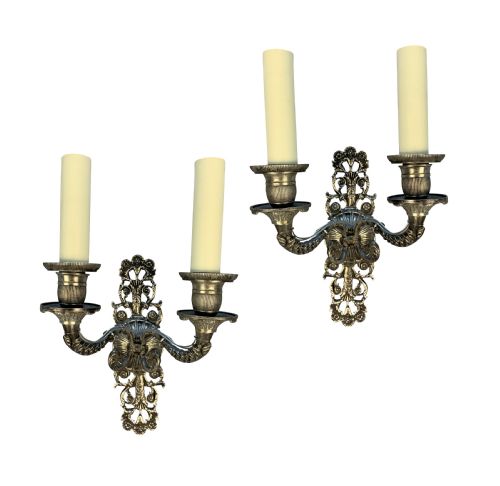
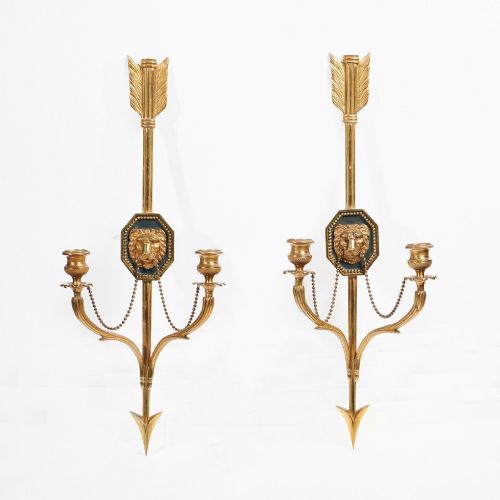
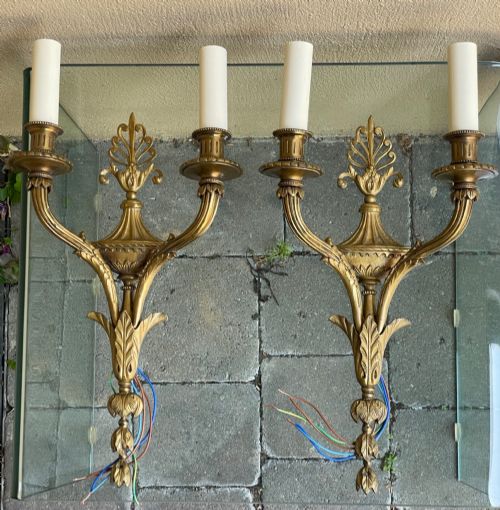
A French Second Empire sconce combines the grandeur of nineteenth-century design with functional wall lighting, appearing in forms such as pairs of wall lights, girandoles, and candelabra. These pieces typically take inspiration from earlier French Empire and Louis styles, utilising classical motifs suited for grand interiors.
The aesthetic leans heavily on French Neoclassical and Napoleon III traditions, offering symmetrical arrangements and ornate metalwork. These fixtures serve as both practical illumination and decorative wall ornaments.
Materials and Construction
The construction of these sconces relies on cast metals, predominantly bronze, ormolu, and gilt bronze, which provide a heavy and durable foundation for intricate detailing. Gilded surfaces and silver plate finishes are applied to create a lustrous appearance, while patinated metal introduces textural contrast.
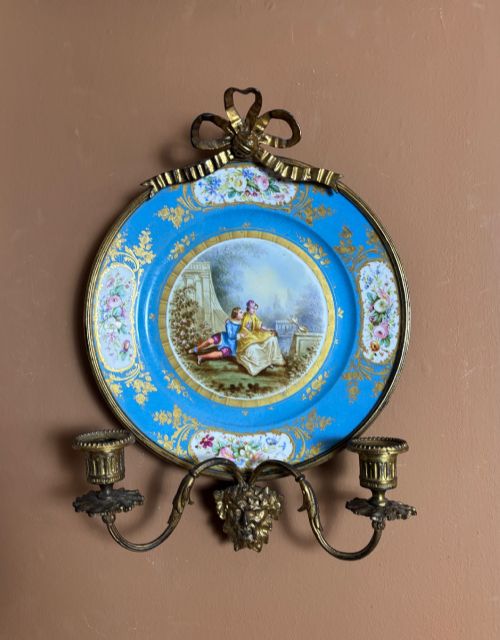
Selected pieces incorporate porcelain elements, notably Sevres porcelain mounted in bronze or ormolu, combining ceramic artistry with metal casting. Toleware also appears in specific girandoles, offering painted metal alternatives to standard bronze work.
Listings feature items from the nineteenth century alongside pieces dated to nineteen hundred, nineteen twenty, and nineteen thirty, spanning multiple decades of manufacturing.
Judging Quality
Quality in these sconces rests upon the crispness of the metal casting and the depth of the gilding, where finer examples display sharp relief in classical ornaments and smooth, even gold coverage. Heavier bronze and ormolu formations indicate superior material use compared to lighter, less substantial metal alloys.
The integration of decorative elements, such as mounted porcelain panels or complex multi-arm configurations, distinguishes standard production from more ambitious workshop output. A cohesive design that aligns with French Empire or Second Empire traditions elevates the piece.
The French Second Empire Sconce Glossary
- Ormolu
- A technique of applying finely ground high-carat gold to an object of bronze, creating a rich golden finish. This process was widely employed on luxury French metalwork.
- Girandole
- A decorative branched wall light or candelabra, often featuring reflective backplates or mirrors. These fixtures are designed to maximise the spread of candlelight.
- Toleware
- Enamelled or painted sheet metalware, frequently utilised in decorative domestic objects. It offers a colourful alternative to unpainted bronze or brass.
- Candelabra
- A branched candlestick holder designed to support multiple candles simultaneously. In wall-mounted formats, they function as substantial sconces.
French Second Empire Sconce: Frequently Asked Questions
How do I mount a sconce?
Wall sconces require secure attachment to wall studs or appropriate wall anchors due to the substantial weight of cast bronze and ormolu. Professional installation is recommended to support heavy fixtures safely.
Electrical wiring should be assessed by a qualified electrician to ensure compatibility with modern wall circuits and safety standards.
Were these originally for candles?
Many nineteenth-century examples were designed exclusively for wax candles before being adapted for electricity in later decades. The presence of drip pans or nozzles often indicates candle use.
Later twentieth-century productions may have been manufactured with electrical components integrated from the outset.
How do I clean gilt bronze?
Maintenance requires gentle dusting with a soft, dry cloth to prevent the accumulation of dirt on gilded and patinated surfaces. Avoid chemical cleaners or abrasive polishes which can strip the thin layer of gold.
Professional conservation is advised if deeper cleaning becomes necessary for tarnished or delicate metalwork.
What defines the style?
The style draws on classical French motifs, incorporating symmetrical scrollwork, floral garlands, and architectural elements inspired by earlier imperial periods. This aesthetic reflects the revival tastes of the nineteenth century.
Objects from this tradition prioritize ornate visual presence and formal balance within interior decoration.