







French Sculpture Clock
A French sculpture clock combines a precision movement with figurative bronze or marble work, bringing decorative storytelling to the mantelpiece.
French Sculpture Clock
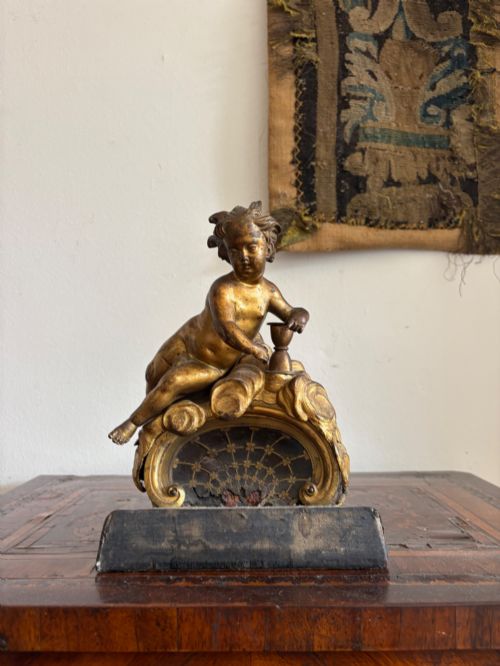
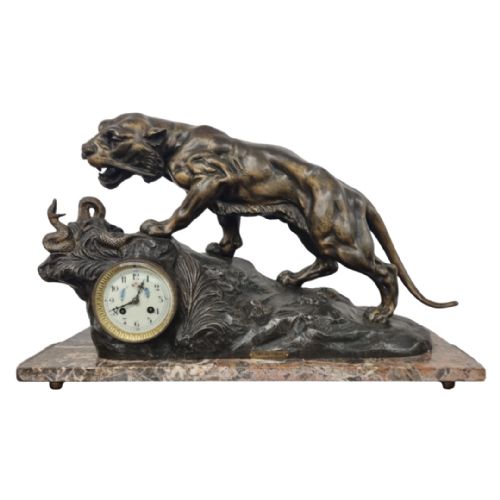
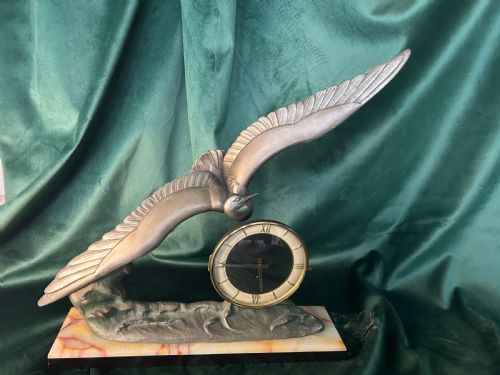
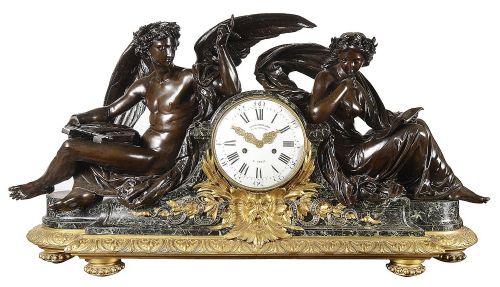
When you search for a French sculpture clock, you encounter mantel timepieces where human, animal or allegorical figures form the main architectural and artistic statement. The selection here leans heavily into nineteenth-century production, moving from neoclassical and rococo revivals through to twentieth-century art deco geometric forms.
Most examples sit on marble or onyx bases, housing enamelled dial faces while supporting sculptural subjects cast in bronze, ormolu, gilt bronze or spelter. You will regularly find them paired with matching garniture pieces or side vases to form a complete mantel set.
The sculptural subjects range from classical deities, literary figures and farm labourers to exotic animals and dynamic art deco hounds or elephants. These works merge timekeeping utility with the sculptural ambitions of French salons and workshops.
Materials and casting techniques
Foundries utilised lost-wax or sand-casting methods to shape copper alloys into detailed figures, finishing them with rich gilding, ormolu, cold painting or dark patination. Spelter served as a more accessible alternative to bronze during the later nineteenth and early twentieth centuries.
Some nineteenth-century French clocks conceal automated mechanical beam engines that visibly pump rods and turn wheels while the clock keeps time.
Assessing craftsmanship and execution
The integration between the sculpture and the clock housing dictates overall harmony. Top-range pieces use high-grade contrasting marbles fitted securely to substantial bronzes, driven by reliable movements from renowned Paris makers.
R Varnier·F Milliot·Leon Message·Jollet et Cie·Andre Guilmet·Victor Paillard·Deniere and Cailleaux·Japy Freres·Francois Moreau·Bruchon
The French Sculpture Clock Glossary
- Ormolu
- Gilded bronze produced by applying a mercury and gold amalgam to the metal surface and heating it. This technique creates a durable, warm golden finish characteristic of luxury French decorative arts.
- Spelter
- A zinc alloy used as a cheaper substitute for bronze. It takes patination well to mimic heavier metals but is softer and more brittle.
- Garniture
- A set of matching decorative objects designed to be displayed together on a mantelpiece, usually comprising a central clock flanked by two urns or matching sculptures.
- Patina
- The surface sheen and coloration developed through age and handling, or applied artificially via chemical treatments on bronze and spelter figures.
- Escapement
- The mechanical linkage inside the clock movement that controls the release of power from the mainspring to keep accurate time.
French Sculpture Clock: Frequently Asked Questions
Can these clocks still keep accurate time?
With proper cleaning and servicing by a qualified horologist, nineteenth-century French movements can run reliably for decades. Many use pendulum regulation which can be adjusted via a small square nut on the pendulum rod.
Environmental stability is important, as vibrations from modern flooring or temperature shifts in a room will cause the pendulum beat to drift off centre.
How do I tell bronze from spelter?
Bronze is heavier, colder to the touch, and magnetic only where iron pins or internal framing exist. Spelter is softer and will show a dull grey metal beneath the patination if scratched.
Casting flaws and sharper file marks under the base often point to spelter, while bronze retains crisp definition in deep crevices.
What is a clock garniture?
A garniture is a matched decorative ensemble consisting of a central clock flanked by two symmetrical side pieces such as vases, urns or matching bronze figures. They were designed to fill large nineteenth-century salon mantelpieces.
Maintaining the set together preserves the visual balance intended by the original maker or retailer.