



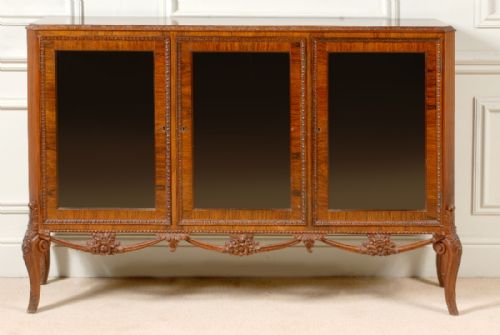


French Rosewood Sideboard
A French rosewood sideboard brings rich grain, brass mounts and marble tops to a room, offering grand storage built with continental polish.
French Rosewood Sideboard
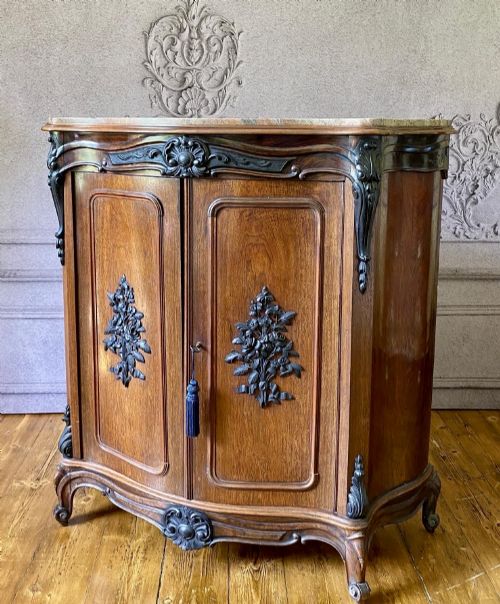
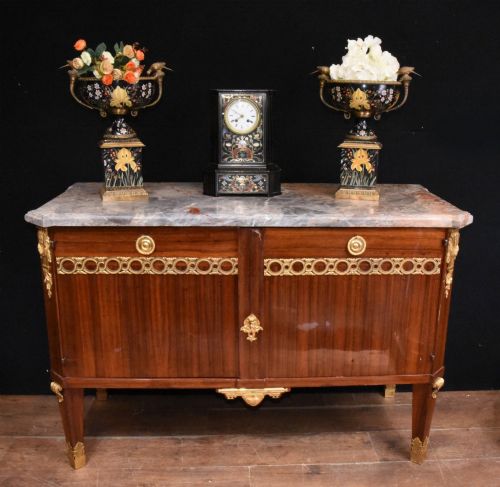
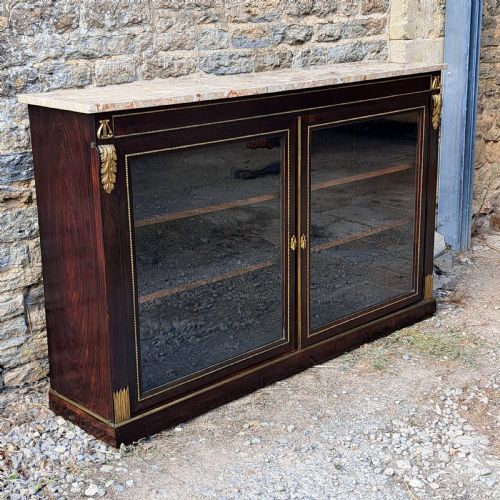
A french rosewood sideboard encompasses low side cabinets, credenzas, commodes and glazed buffets originating from continental workshops or made in British interpretations of French styles. These pieces range from Georgian and Victorian periods through to the early twentieth century, showing periods like the nineteenth century, eighteenth century, eighteen-eighty, and nineteen-thirty.
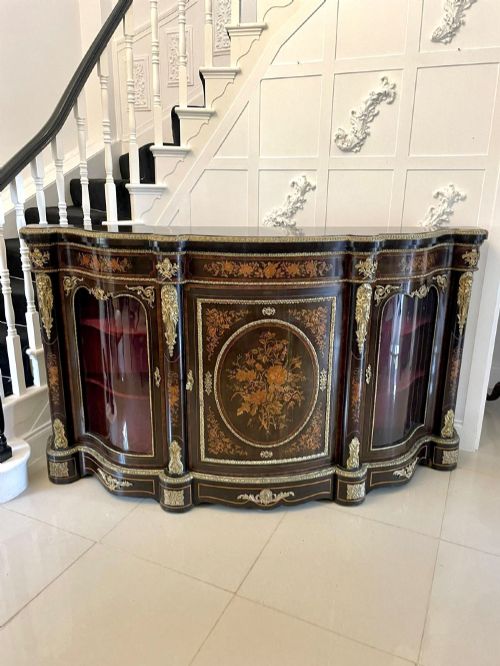
The versions most commonly met on this page are mid-nineteenth century side cabinets and commodes featuring rich rosewood veneers, often paired with marble tops and ormolu mounts. Makers and designers utilised marquetry, boullework, and ebony detail to decorate the fronts and sides of these large storage items.
How they were made
Cabinet makers constructed these pieces using solid timbers and decorative veneers of rosewood, kingwood, ebony, and walnut over robust carcases. They incorporated brass and ormolu mounts, cast and chased to frame the doors and drawers, alongside fitted glass panels for display cabinets and bookcases.
Marquetry and boullework techniques created elaborate floral and geometric patterns across the wood surfaces. Heavy marble slabs, shaped to fit serpentine or breakfront profiles, were frequently placed on top of commodes and side cabinets.
French Rosewood Sideboard Retail Price Guide 2026
Typical asking prices for french rosewood sideboard among the pieces listed under this phrase on Sellingantiques today, from the lower quarter to the upper quarter. They describe what is for sale here now, not the wider market.
Listings span the eighteenth century to the nineteen-thirties, featuring rosewood, kingwood, marble, and ormolu across multiple revival styles.
What varies in quality
The calibre of a piece rests in the crispness of the ormolu mounts and the intricacy of the marquetry work. Hand-chased brass and finely cut veneers distinguish finer examples from standard production items.
Construction methods and timber selection drive the distinction across the range. Heavy serpentine shapes, thick marble tops, and detailed boullework indicate higher craftsmanship in these continental and revival sideboards.
Mercier Frères
The French Rosewood Sideboard Glossary
- Ormolu
- Gilded bronze mounts applied to furniture for decoration. These metal elements frame doors and corners on nineteenth century sideboards.
- Marquetry
- Inlaid wood veneers forming decorative patterns or pictures. Craftsmen used various coloured timbers to create floral designs on cabinet doors.
- Boullework
- Inlay technique using tortoiseshell and brass. This ornate decoration appears on breakfront side cabinets from the nineteenth century.
- Meuble d'appui
- French term for a supporting cabinet or side cabinet. These low pieces typically stand against a wall beneath a mirror or painting.
French Rosewood Sideboard: Frequently Asked Questions
What is a french rosewood sideboard?
A french rosewood sideboard is a low storage cabinet or commode veneered in rosewood, frequently incorporating continental revival styles and decorative metal mounts.
These items served as display and storage furniture in formal rooms, often topped with marble and detailed with marquetry.
How were these sideboards used?
Original owners utilised these cabinets to store dining silver, glassware, and linens while displaying decorative objects on their upper surfaces.
The marble tops provided a durable surface for serving food or placing lamps and decorative porcelain in nineteenth century interiors.
How do I live with one?
Position your cabinet against a substantial wall in a dining room, hallway, or living space where its rich rosewood grain and brass mounts can catch the light.
Keep the timber conditioned and protect marble tops from acidic spills to maintain the polished finish over decades of daily use.
How do I tell periods apart?
Earlier pieces from the eighteenth century or early nineteenth century lean towards restrained classical lines, whereas mid to late nineteenth century items often embrace elaborate Rococo and Louis XVI revivals.
Look at the mounts, veneer patterns, and overall silhouette to connect the piece to periods like the Victorian era or Napoleon III reign.