




French Rosewood Side Tables
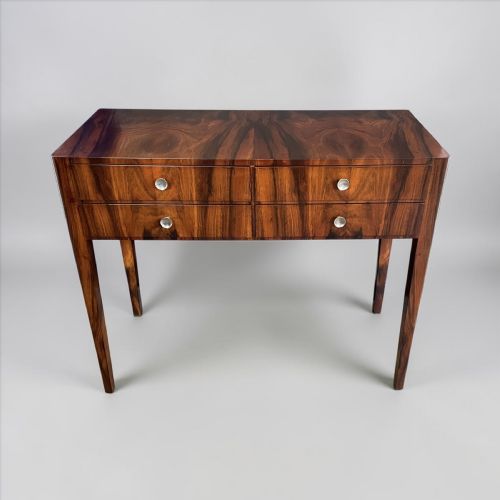
French rosewood side tables bring tactile warmth and intricate marquetry into a room, spanning nineteenth-century revival styles and early twentieth-century designs.
French Rosewood Side Tables
French rosewood side tables encompass a broad spectrum of domestic furniture, ranging from freestanding centre tables and compact bedside cabinets to occasional tables, etageres, and nests of tables. When searching for french rosewood side tables, buyers encounter pieces primarily originating from the nineteenth century through to the early twentieth century.
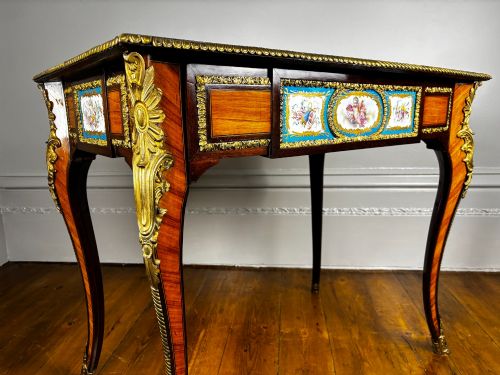
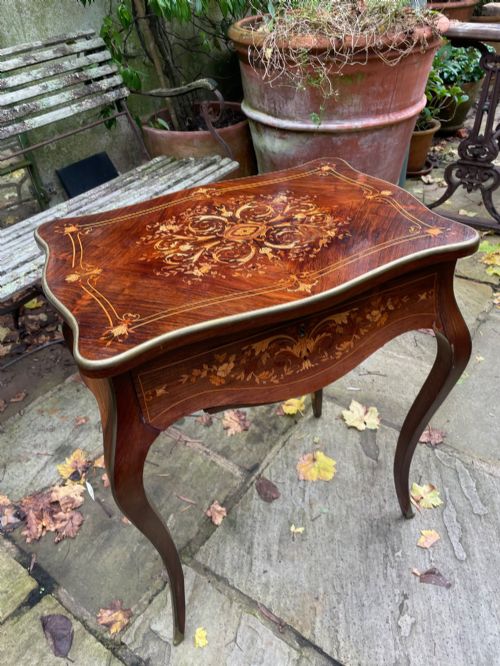
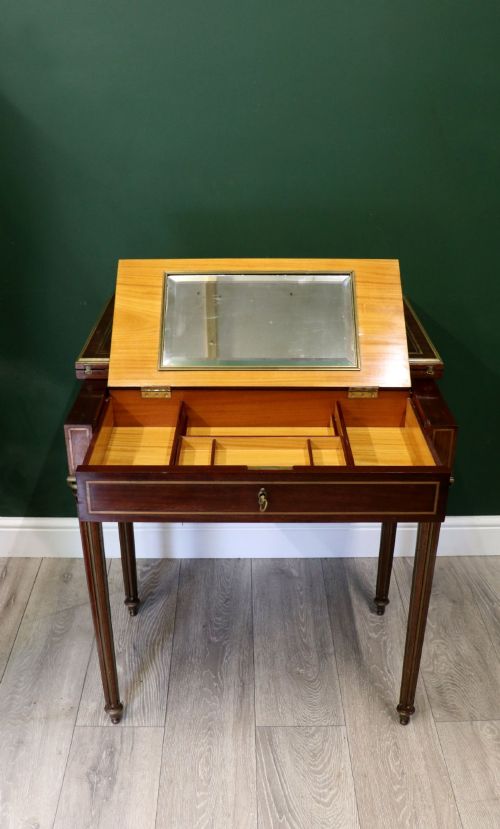
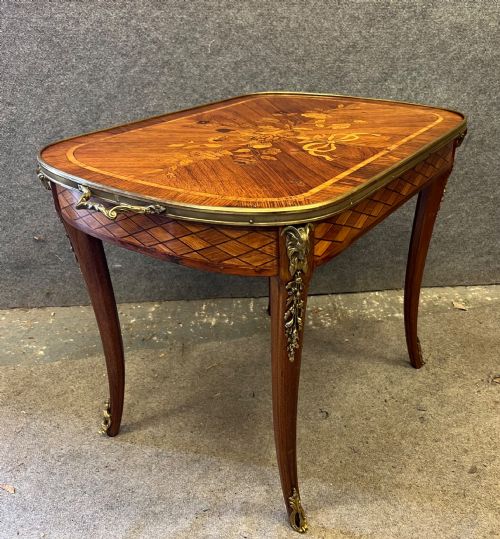
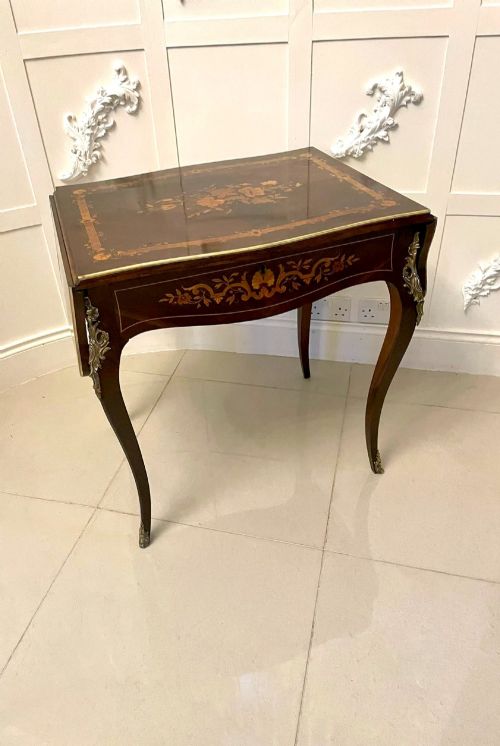
The selection frequently displays revival aesthetics, notably Louis XV and Louis XVI styles, alongside Napoleon III productions and Art Nouveau examples. Forms vary from drop-leaf occasional tables and bijouterie display cases to robust marquetry-inlaid writing tables and console tables.
Makers and workshops across France and Britain produced these items, utilising dense tropical timbers combined with contrasting veneers. The surviving inventory demonstrates how diverse these domestic forms remained across decades of changing continental taste.
Materials and construction
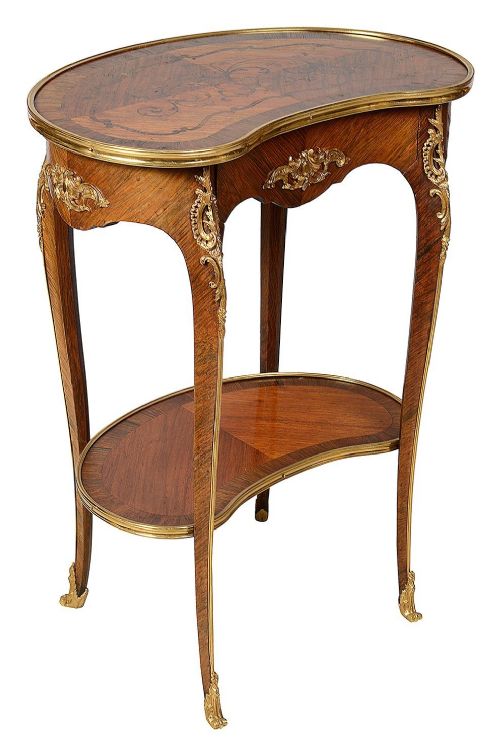
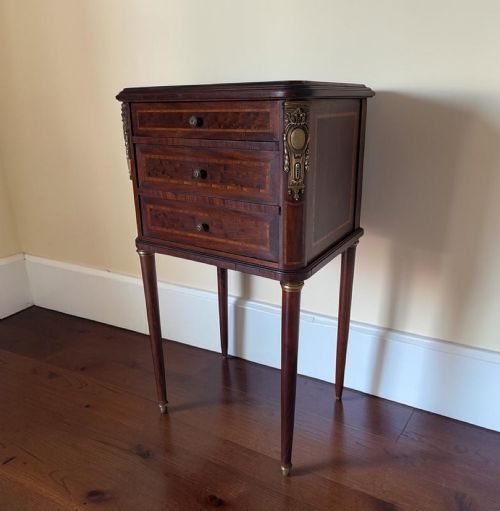
Constructed predominantly using a rosewood carcase, these tables frequently incorporate contrasting woods such as kingwood, mahogany, walnut, satinwood, and fruitwood to create detailed parquetry and floral marquetry patterns. Artisans sliced these timbers into thin veneers, arranging geometric or pictorial compositions across tabletops and drawer fronts.
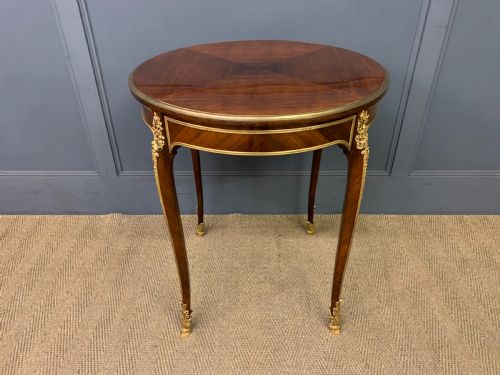
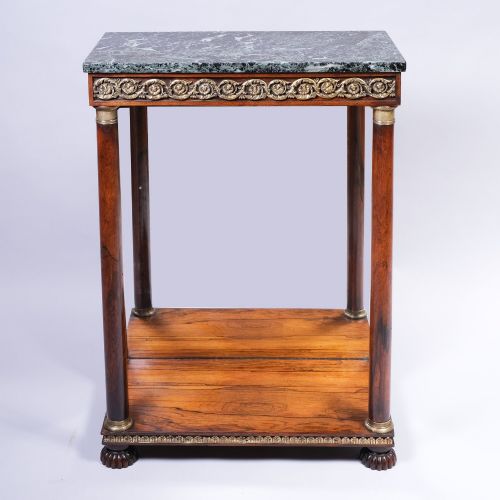
Metal enrichment forms a primary component of the construction, with cast brass and gilt-bronze ormolu mounts fitted to corners, legs, and aprons. Marble tops also appear on specific bedside and console variants, resting directly upon the wooden frames.
French Rosewood Side Tables Retail Price Guide 2026
Typical asking prices for french rosewood side tables among the pieces listed under this phrase on Sellingantiques today, from the lower quarter to the upper quarter. They describe what is for sale here now, not the wider market.
The listings on this page span the Victorian era, the Napoleon III period, and the early twentieth century up to nineteen-thirty.
Distinctions in quality
Quality rests upon the precision of the veneer work and the crispness of the cast metal mounts. Exemplary pieces display seamless marquetry where floral or geometric motifs integrate cleanly into the rosewood ground without visible gaps.
The sophistication of the bronze ormolu or brass mounts dictates the tier of the piece, with hand-chiseled detailing separating standard workshop output from exhibition-grade furniture. Structural integrity in the joints and the choice of secondary timbers further divide standard domestic items from premier commissions.
Émile Gallé·Edwards & Roberts·Haentgos Freres·Majorelle·Francois Linke·Donald Ross·Gillows
The French Rosewood Side Tables Glossary
- Marquetry
- Decorative veneer work forming pictorial or floral designs. Artisans cut various coloured woods and fitted them together into a paper-thin sheet before gluing it to the carcase.
- Ormolu
- Gilded bronze mounts applied to furniture. This technique involves coating cast bronze with a mercury and gold amalgam before heating.
- Parquetry
- Geometric wood inlay forming repeating patterns such as cubes or chequers. This method uses contrasting timbers arranged systematically across tabletops.
- Bijouterie table
- A glass-topped display table designed for small valuables and curiosities. These pieces often feature velvet-lined interiors beneath hinged or lifting lids.
French Rosewood Side Tables: Frequently Asked Questions
Where were french rosewood side tables used?
These tables served multiple domestic functions in sitting rooms, boudoirs, and bedrooms. They held lamps, writing materials, or small decorative objects.
Bedside variants accommodated nighttime necessities within cabinet interiors, while larger centre tables stood freestanding in reception rooms.
How do I date these tables?
Dating relies on observing stylistic markers, construction methods, and material choices. Nineteenth-century pieces frequently embrace Louis XV or Louis XVI revivals.
Early twentieth-century examples shift towards Art Nouveau or cleaner modernist lines while retaining rosewood surfaces.
How do I care for rosewood surfaces?
Rosewood benefits from minimal intervention, requiring only a soft, dry cloth for routine dusting. Avoid placing these tables in direct sunlight or near heat sources to prevent timber splitting.
Occasional application of appropriate wax preserves the sheen of the polish without building up residue.
What is the difference between an occasional table and a centre table?
Centre tables are designed to stand freestanding in the middle of a room, finished with decorative marquetry or parquetry across all visible sides. They typically feature heavy proportions and substantial structural framing.
Occasional tables are lighter, movable pieces intended to be placed beside seating or against walls as needed.