




French Rosewood Desk
When you search for a french rosewood desk, you encounter rich grain timbers shaped into writing tables, bureau plats, and bonheurs du jour carrying nineteenth-century revival styles.
French Rosewood Desk
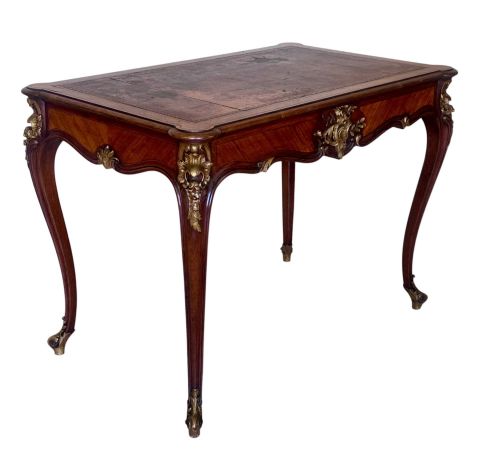
A french rosewood desk encompasses writing tables, bureau plats, and cylinder desks produced primarily during the nineteenth century under Louis XV and Napoleon III revival idioms. These pieces frequently feature shaped tops, fitted compartments, and occasional leather writing surfaces.
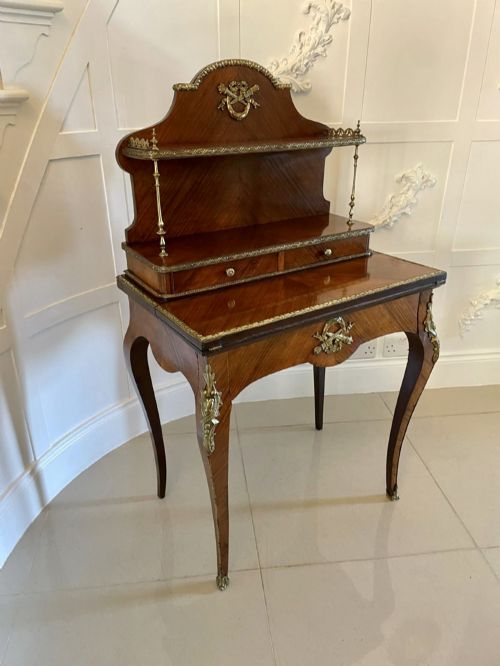
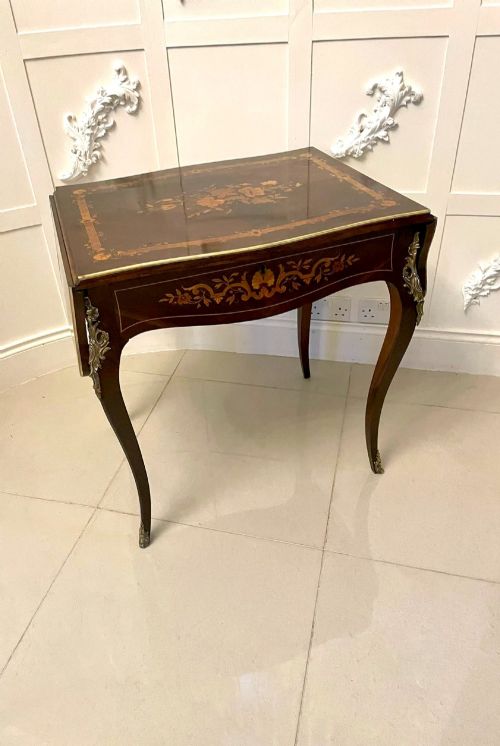
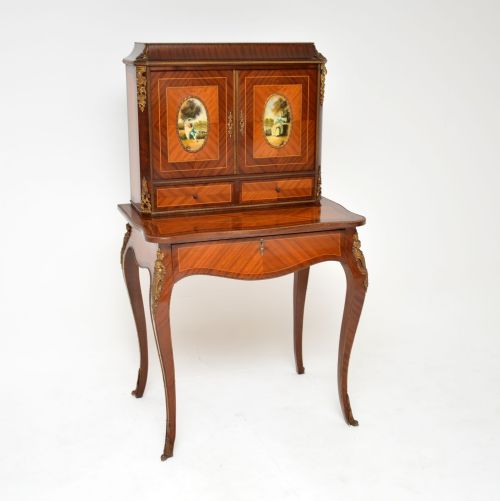
The version most commonly met on this page is the nineteenth-century bureau de dame or freestanding writing table, combining rosewood veneers with intricate marquetry and parquetry patterns. Such pieces range from compact lady's desks to larger partners and writing tables.
Makers and workshops across France utilised dense tropical timbers to construct these decorative writing surfaces, often incorporating bronze mounts and brass inlay. Their forms reflect historical French design periods adapted for nineteenth-century domestic interiors.
Materials and Technique
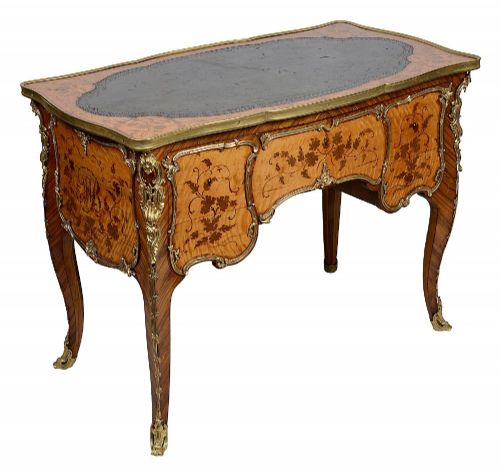
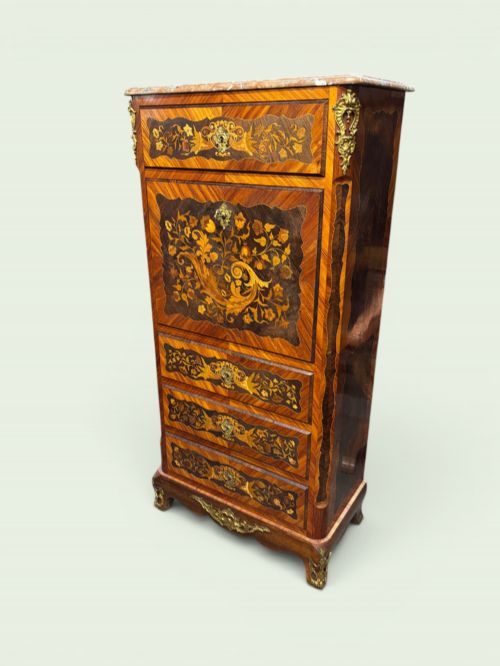
Cabinet makers constructed these desks using rosewood, kingwood, and walnut veneers laid over secondary carcasing timbers, creating geometric parquetry or pictorial marquetry designs. Artisans frequently added amboyna, satinwood, and tulipwood to achieve contrasting colour blocks within floral and scroll motifs.
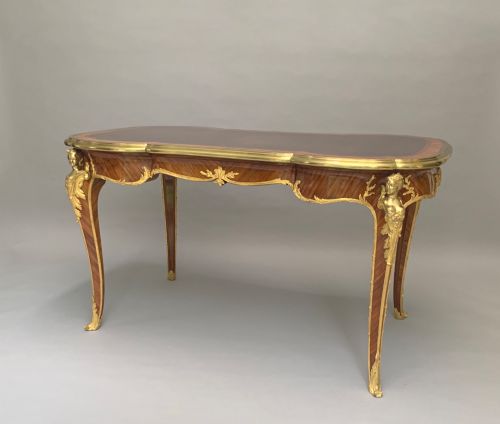
Ormolu and gilt bronze mounts, cast and chased, edge drawers, frame panels, and embellish cabriole legs on nineteenth-century examples. Leather writing inserts, sometimes gold-tooled, provide the writing surface on bureau plats and writing tables.
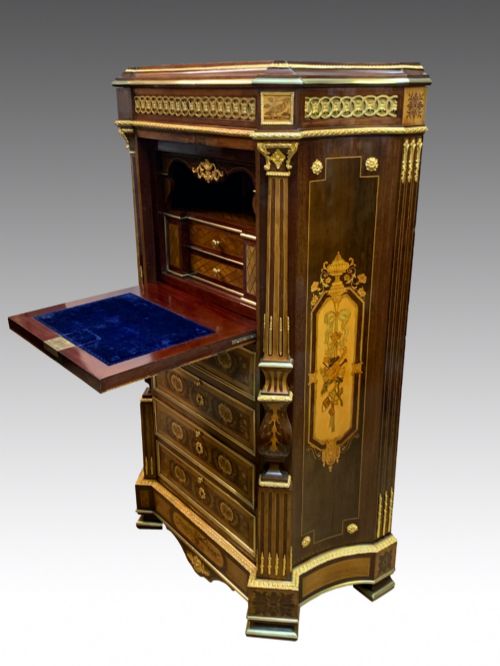
Several desks conceal secret drawers behind sliding panels, intended for letters and currency.
Distinctions in Quality
The refinement of the marquetry and the crispness of the cast ormolu mounts dictate the upper tier of these pieces. Finely detailed floral inlays executed in multiple contrasting timbers indicate superior workshop output compared to simpler geometric parquetry.
Structural integrity and the retention of original mounts, marble tops, and fitted interior drawers distinguish exceptional examples. The depth of the rosewood grain and the subtlety of the colour shading across the veneered surfaces further separate standard production from masterwork execution.
Francois Linke·Maison Krieger·CH Jeanselme and Co·Donald Ross·Henry Marc·Maurice Dufrene
The French Rosewood Desk Glossary
- Bureau Plat
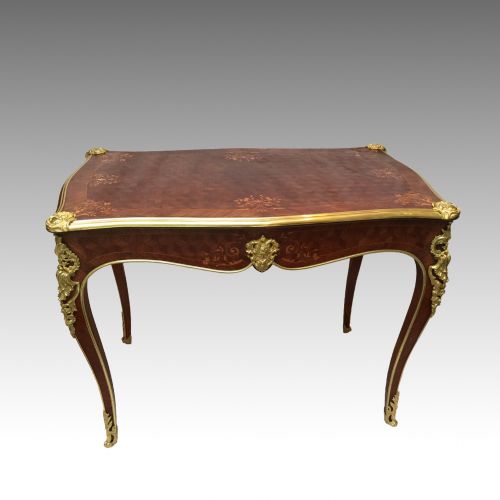
- A freestanding writing table fitted with drawers across the frieze. These tables typically feature leather-inlaid tops and ormolu mounts.
- Bonheur Du Jour
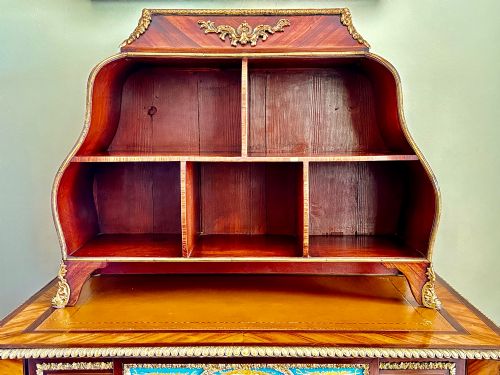
- A light lady's writing desk featuring a small cabinet or set of drawers superstructure above the writing surface. These pieces emerged during the Louis XV period and remained popular in nineteenth-century revivals.
- Marquetry
- The art of applying veneer pieces in wood, metal, or shell to form decorative patterns and pictorial scenes. Artisans cut these elements precisely to fit flush across desk surfaces.
- Ormolu
- Gilded bronze mounts applied to furniture edges, corners, and legs. This decorative technique characterises much of nineteenth-century French cabinet making.
- Parquetry
- Geometric wood inlay forming repeating patterns such as cubes or checkers. This technique adorns the tops and drawer fronts of writing tables.
French Rosewood Desk: Frequently Asked Questions
What is a bureau de dame?
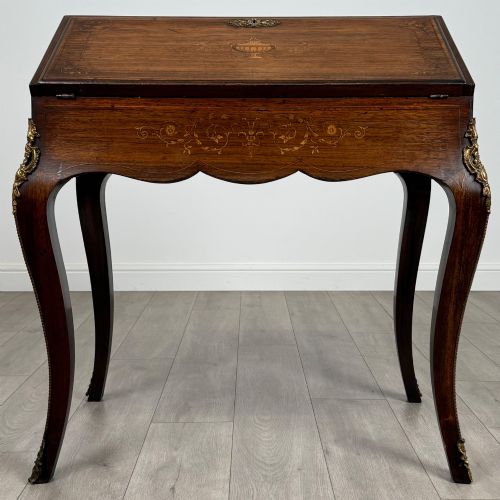
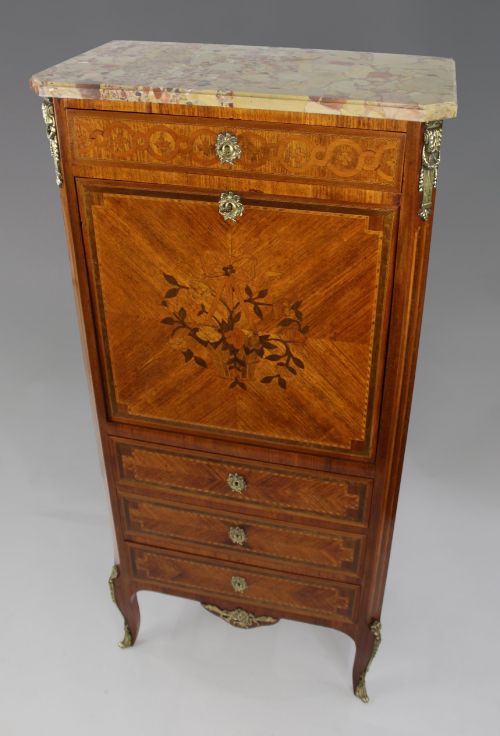
A bureau de dame is a small decorative writing desk designed for ladies, often equipped with a fall front or a fitted interior with small drawers and pigeonholes.
These compact writing surfaces frequently display elaborate marquetry work and delicate ormolu mounts, typical of nineteenth-century French revival pieces.
How do I identify a bureau plat?
A bureau plat is a rectangular table with a finished back that allows it to stand away from a wall, featuring frieze drawers and a leather writing panel.
Such desks served as formal office tables in nineteenth-century French interiors and often incorporate gilt bronze mounts along the legs and apron.
Where should I place a freestanding centre table?
A freestanding centre table is finished on all sides to sit in the middle of a room rather than against a wall.
These tables function well in libraries or large living spaces where their marquetry tops and ormolu mounts remain visible from any angle.