



French Rococo Side Cabinet
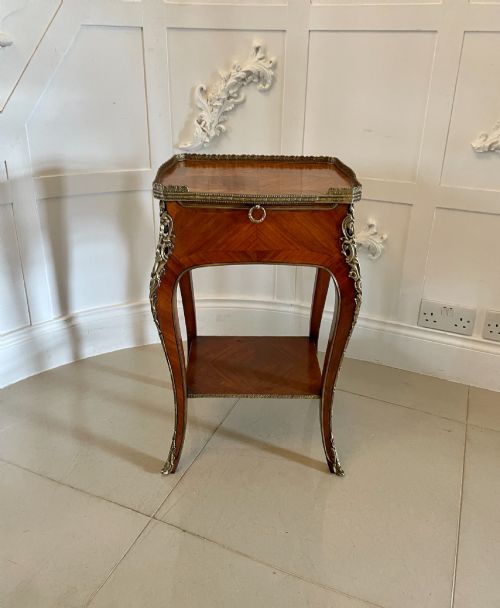
A french rococo side cabinet brings the exuberant curves and decorative flourishes of the eighteenth century into a room through walnut, kingwood, and ormolu.
French Rococo Side Cabinet
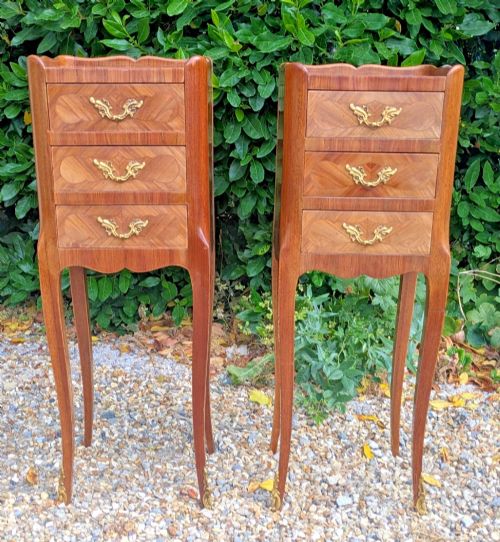
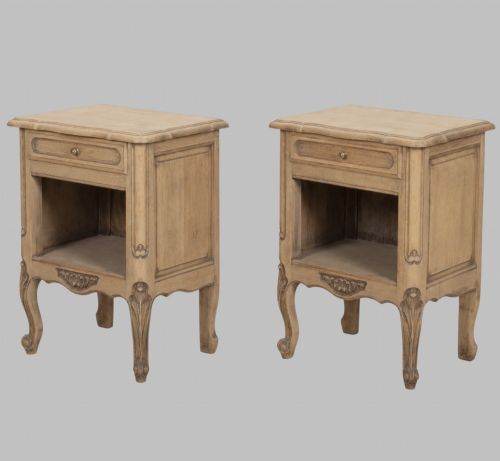
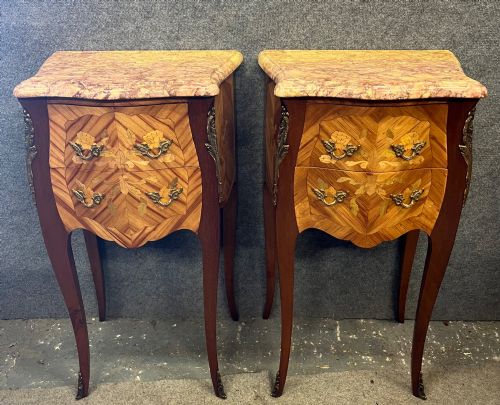
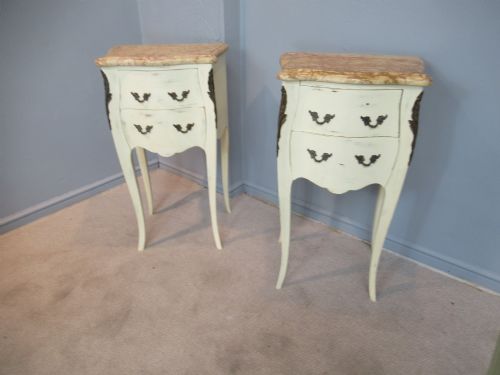
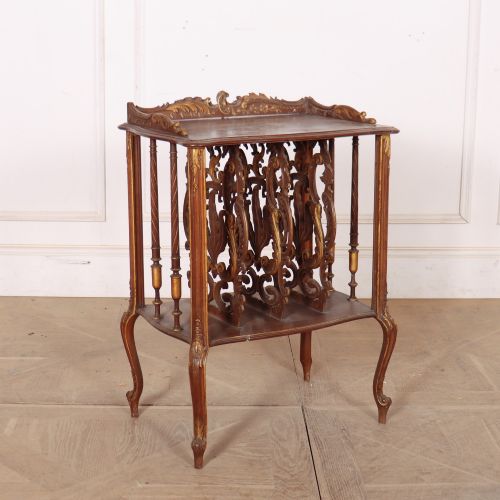
A french rococo side cabinet encompasses a variety of forms designed for storage and display, most frequently appearing as bedside cabinets, commodes, and lamp tables. These pieces emerge from periods spanning the eighteenth century through to the early twentieth century, drawing heavily upon Louis XV revival aesthetics.
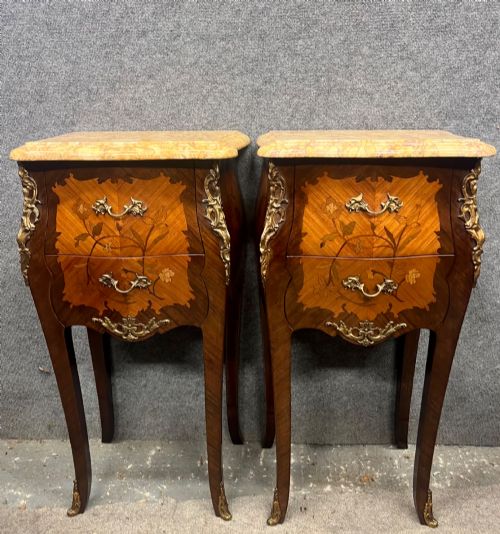
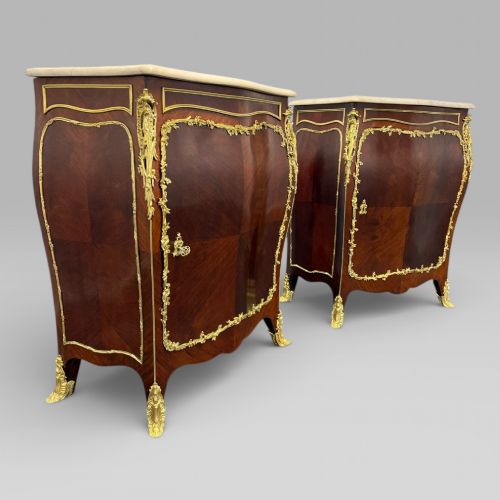
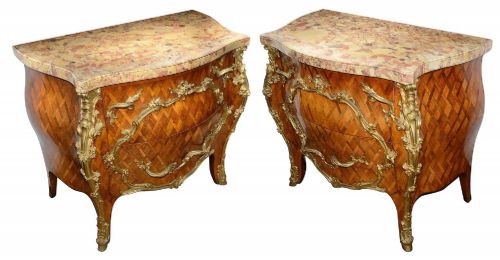
The buyer meets many matched pairs alongside single items, utilising forms such as bombe shapes, bow fronts, and slender stands. Materials include figured walnut, kingwood, and rosewood, frequently topped with marble and mounted with brass or gilt bronze.
Origins trace principally to French workshops of the nineteenth and early twentieth centuries, alongside occasional Italian examples sharing the same rococo vocabulary. Forms range from compact bedside chests to larger two-door cupboards and display cabinets.
How they were made
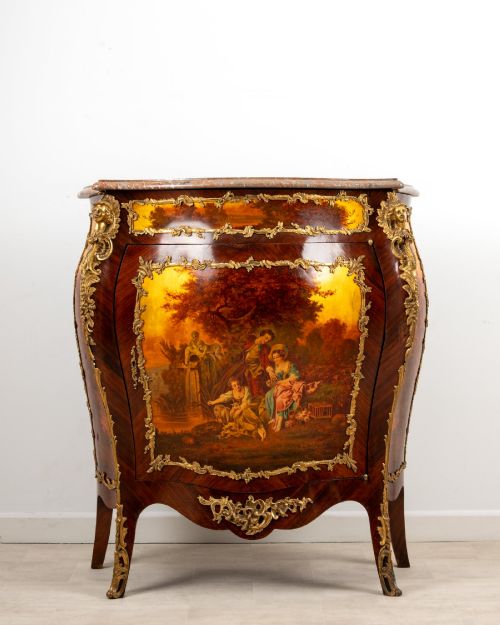
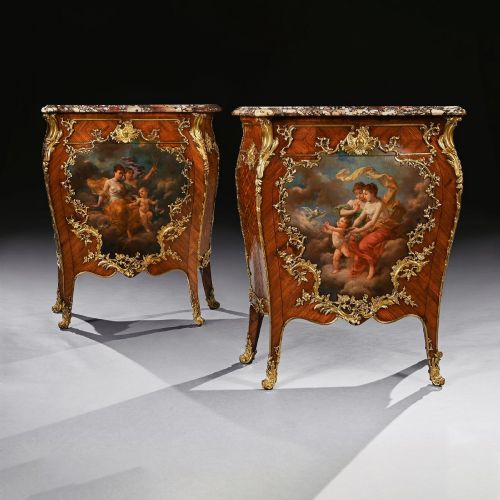
Construction relies upon solid timber carcases overlaid with decorative veneers such as kingwood, rosewood, and walnut, frequently arranged in intricate marquetry patterns. Vernis Martin painted panels appear across cabinets and commodes, introducing pictorial decoration alongside floral inlay.
Mounts of ormolu, gilt bronze, and brass accent the contours of drawers and corners, cast and chased to complement the swelling serpentine lines of the woodwork. Marble slabs, cut to fit the exact profile of the top surface, provide a durable and decorative finish.
Several bedside cabinets feature diminutive proportions originally tailored for nineteenth-century chambers where space was at a premium.
What varies in quality
The refinement of the ormolu and gilt bronze mounts separates standard production from exceptional examples, dictating the depth of chasing and the crispness of the cast. Heavier, finely detailed mounts reflect superior workmanship compared to simpler brass elements.
The intricacy of the marquetry and the selection of figured veneers establish the visual hierarchy of the piece, where complex floral patterns and matched grain demonstrate superior cabinetmaking skill.
E. Kahn
The French Rococo Side Cabinet Glossary
- Ormolu
- Gilt bronze applied as mounts and decorative accents on furniture. This technique involves gilding a bronze base with finely ground gold amalgam.
- Marquetry
- Inlaid woodwork arranged in patterns or pictures using various coloured veneers. Craftsmen cut these pieces to fit precisely within the timber surface.
- Bombé
- A swelling, outward-curved contour characteristic of rococo case furniture. This shape requires advanced mastery of veneer shaping and carcase construction.
- Vernis Martin
- A type of simulated Japanese lacquer developed in France during the eighteenth century. It employs successive layers of varnish to achieve a lustrous, decorative finish.
- Commode
- A low chest of drawers standing on legs, originating in France. These pieces function as decorative storage units within principal rooms.
French Rococo Side Cabinet: Frequently Asked Questions
What rooms suit a french rococo side cabinet?
These cabinets serve well beside a bed or as accent pieces in a drawing room or hallway. Their compact proportions allow them to fit narrow spaces while providing surface area and enclosed storage.
Marble tops make them practical for supporting lamps and objects, whilst the decorative veneers complement both traditional and eclectic interiors.
How do I distinguish revival pieces from eighteenth-century originals?
Nineteenth and twentieth-century revival pieces display machine-sawn timber marks, standardised fixings, and construction methods characteristic of later workshops. Eighteenth-century examples reveal hand-cut joinery and timber movement consistent with age.
Stylistic proportions and secondary woods also provide clear indicators of the exact period of manufacture.
Are marble tops original to these cabinets?
Most cabinets from the nineteenth century onwards retain their fitted marble tops, shaped to follow the serpentine or bombe contours of the wood. These slabs are generally original to the piece, resting within a dedicated rebate.
Replacement marble appears occasionally, identifiable by clean edges and lack of historical wear.
How should I care for kingwood and marquetry surfaces?
Polished wood surfaces require protection from direct sunlight and excessive humidity to prevent veneer lifting and fading. Dusting with a dry, soft cloth preserves the polish without introducing moisture.
Occasional application of appropriate wax feeds the timber and maintains the lustre of the French polished finish.