


French Rococo Marble Drawers
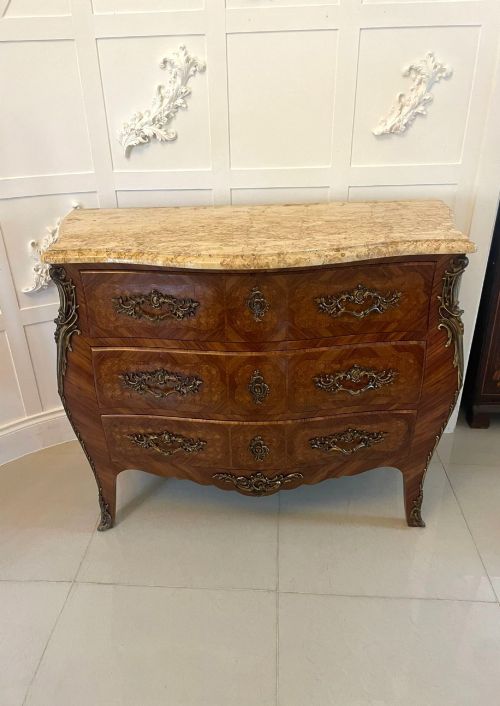
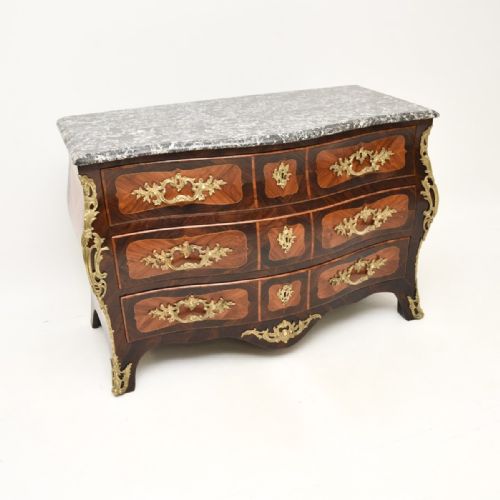
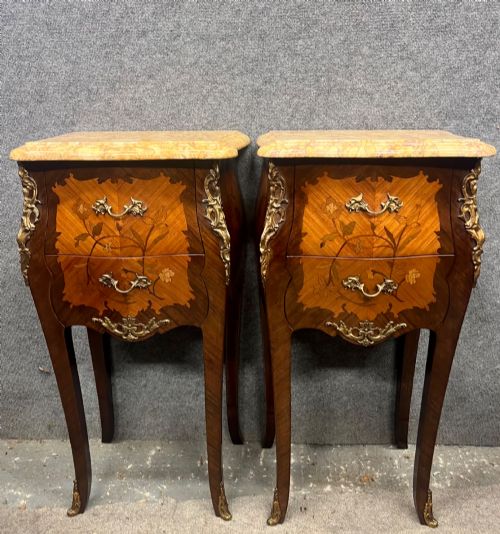
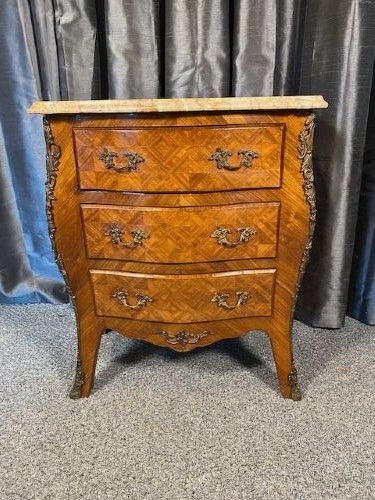
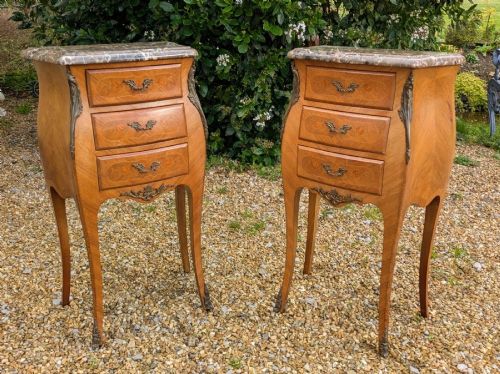
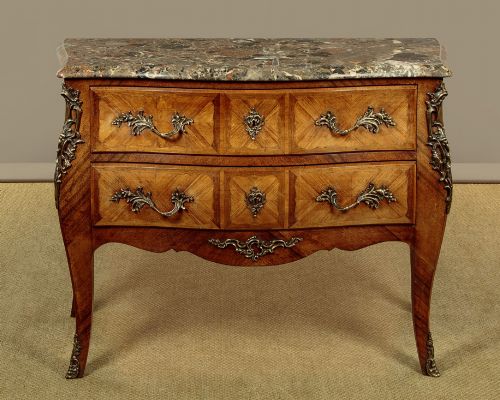
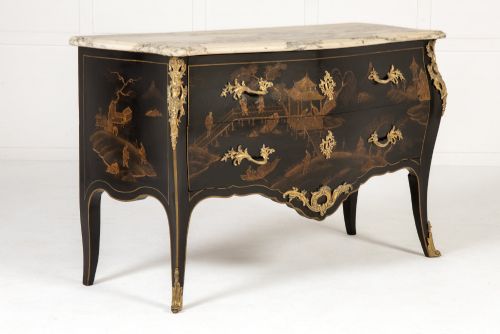
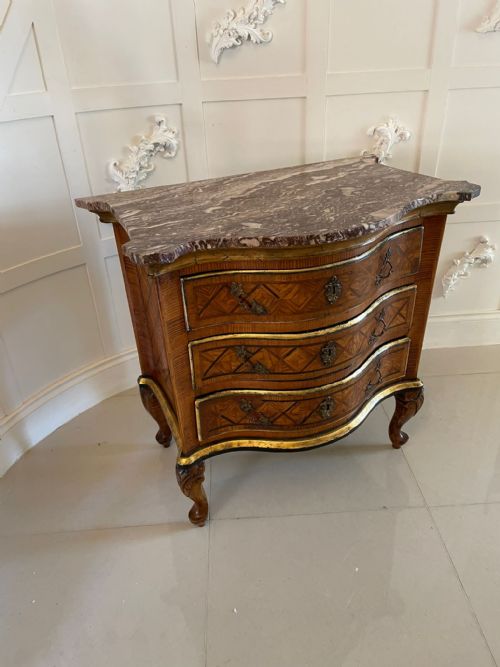
French rococo marble drawers bring together serpentine forms, rich veneers, and stone tops that define classical continental luxury.
French Rococo Marble Drawers
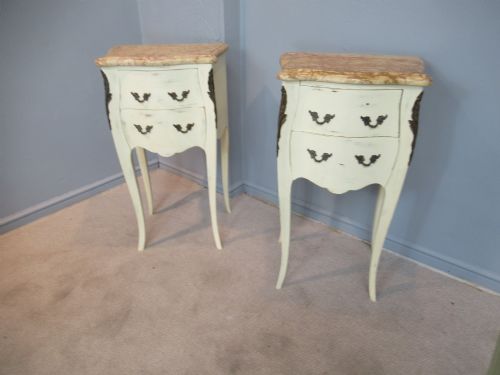
Buyers seeking french rococo marble drawers encounter sophisticated storage furniture designed primarily as commodes, bedside cabinets, and dressing tables. These pieces emerge from eighteenth-century origins through later revival periods spanning the nineteenth and early twentieth centuries.
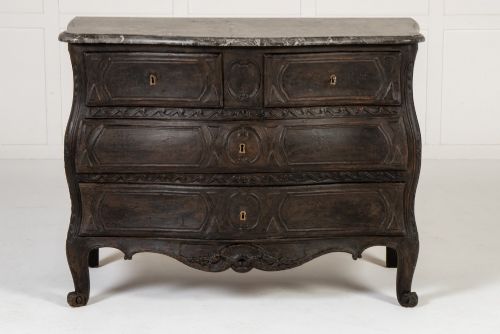
The dominant forms display characteristic serpentine and bombe profiles paired with fitted stone tops. Examples range from compact walnut bedside tables to grand walnut, kingwood, and mahogany chests.
Originating within distinct historical eras such as the Louis XV reign and subsequent revival movements, these items combine practical storage with decorative presence. Walnut, kingwood, and mahogany form the structural foundations for intricate marquetry and parquetry patterns.
Materials and Construction Techniques
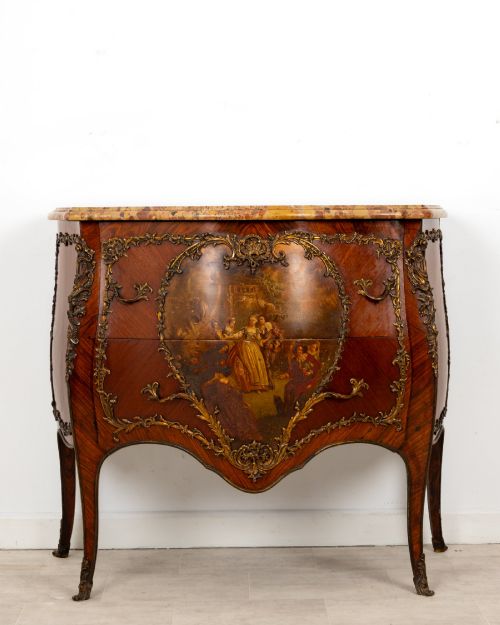
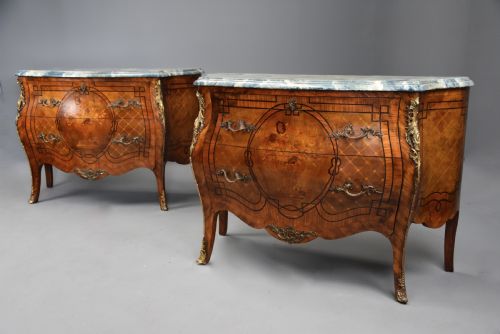
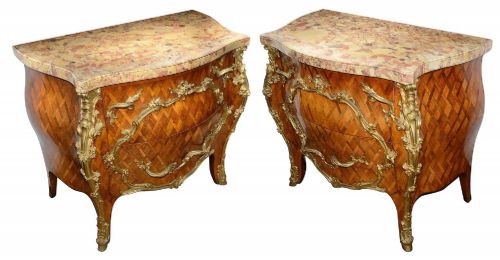
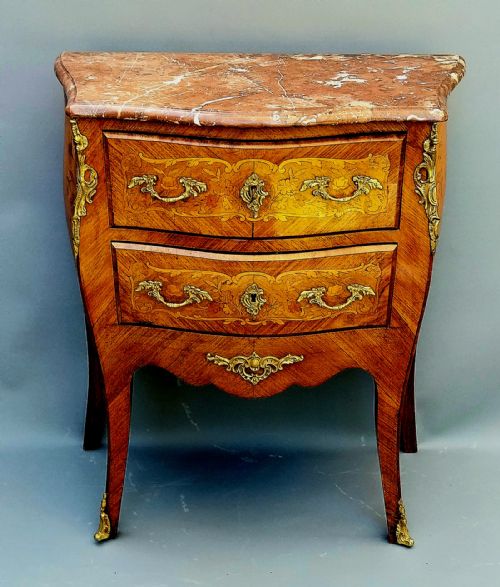
Craftsmen built carcass frames from dense timbers including walnut, mahogany, and kingwood, applying delicate veneers in geometric parquetry or floral marquetry designs. Selected pieces feature japanned lacquer and painted wood surfaces finished with varnish.
Ornate cast metal mounts in ormolu, gilt bronze, brass, and bronze accent the corners, handles, and aprons of the cabinetry. Heavy marble slabs, shaped to follow the serpentine and bow front contours, sit neatly upon the upper surfaces.
Certain secretaire cabinets hide secret drawers designed to outsmart curious guests.
Markers of Superior Quality
Distinctions in quality rest upon the fluidity of the serpentine timber shaping and the precision of the veneer work. Superior examples display seamless integration between the wooden carcass and the heavy contoured marble top.
Finer pieces utilise crisply cast ormolu and gilt bronze mounts that articulate the rococo curves without stiffness. The depth of the marquetry inlay and the fidelity of the period revival style determine the standing of each cabinet.
Jacques Bircklé
The French Rococo Marble Drawers Glossary
- Bombe
- A swelling, outward-curving chest profile that expands toward the base. This distinctive shape requires advanced veneer shaping techniques.
- Ormolu
- Gilt bronze mounts applied to furniture edges and handles. The material adds metallic brilliance against dark wood veneers.
- Marquetry
- Decorative veneer patterns assembled from various coloured woods to create pictorial designs. Artisans cut these thin wood sections with extreme precision.
- Serpentine
- A gently undulating furniture front featuring a central convex curve flanked by concave sections. This contour defines classical commode design.
- Parquetry
- Geometric wood inlay patterns arranged in repeating shapes like cubes or chevrons. This technique showcases the natural grain variations of kingwood and walnut.
French Rococo Marble Drawers: Frequently Asked Questions
What rooms suit these cabinets?
These serpentine pieces function effectively as bedside tables, lamp chests, or statement commodes in principal bedrooms and living spaces. Their compact proportions allow them to integrate into contemporary and traditional interiors alike.
Positioning them away from direct heat sources protects the polished wood veneers and decorative stone tops from environmental stress.
How do I care for the stone top?
Marble surfaces require simple wiping with a damp cloth and neutral soap to prevent staining from liquids or cosmetics. Avoid acidic cleaners that etch the polished stone finish.
Routine dusting preserves the lustre of the surrounding timber and gilt bronze mounts without disturbing the vintage patina.
How do I distinguish eighteenth-century pieces from revivals?
Eighteenth-century examples display construction methods, timber shrinkage, and hand-cut joinery consistent with early workshop production. Revival pieces from the nineteenth and twentieth centuries often incorporate standardised fixings and machine-cut elements.
Examining the underside, drawer linings, and backboards reveals the tool marks and ageing patterns unique to each period of manufacture.