



French Revival Work Table
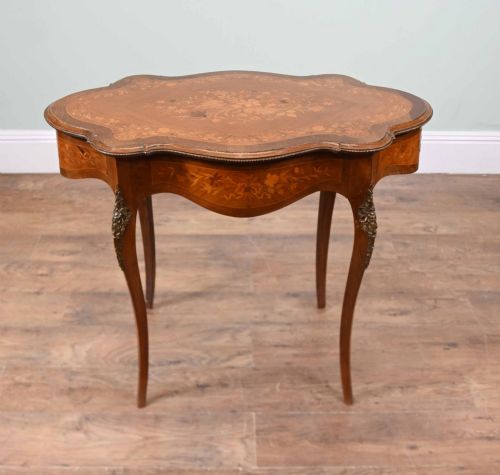
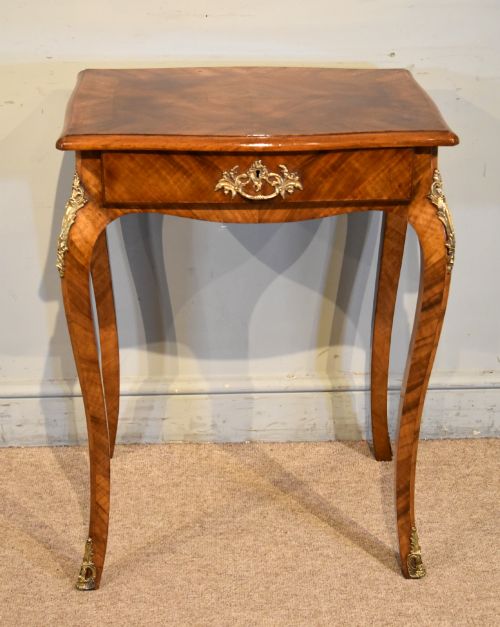
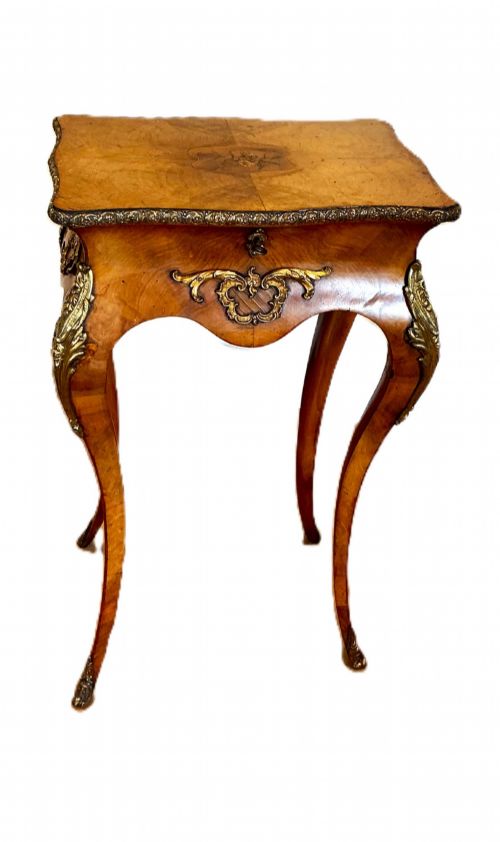
A french revival work table brings 19th-century continental elegance into a room with intricate marquetry and polished ormolu mounts.
French Revival Work Table
A french revival work table combines ornamental wood veneers with functional drawers and compartments designed for needlework or correspondence. These pieces emerge predominantly from the nineteenth century, drawing inspiration from earlier Louis styles.
The versions encountered on this page typically feature rosewood, kingwood, or walnut surfaces embellished with brass or ormolu details. Forms range from kidney-shaped occasional tables to oval tables en chiffoniere with fitted interiors.
Makers of the period adopted French Rococo and Louis XVI revivals to satisfy Victorian tastes for continental opulence. The resulting furniture serves both as a decorative centrepiece and a practical surface.
Materials and Construction
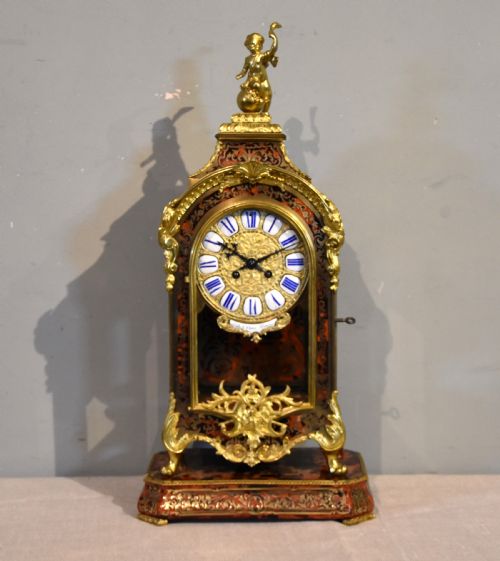
Cabinet makers utilised exotic hardwoods such as kingwood and rosewood over solid carcase timbers, applying precise marquetry and parquetry geometric patterns. Tortoiseshell and brass inlay, known as Boulle work, frequently accentuates the primary surfaces.
Gilded bronze ormolu mounts frame the edges, drawers, and cabriole legs to highlight the structural contours. Interior compartments often include fitted wells and small drawers constructed with traditional dovetail joints.
French Revival Work Table Retail Price Guide 2026
Typical asking prices for french revival work table among the pieces listed under this phrase on Sellingantiques today, from the lower quarter to the upper quarter. They describe what is for sale here now, not the wider market.
Some work tables hide tiny compartments originally intended for secret love letters and elusive thimbles.
Assessing Quality and Craftsmanship
The distinction between tiers of work rests upon the crispness of the bronze ormolu cast and the precision of the wood veneer cuts. Finer examples display meticulous grain matching and tightly fitted marquetry without gaps in the inlay.
Structural integrity of the legs and the smooth operation of the internal drawer mechanism reveal the underlying skill of the cabinet maker. Superior pieces maintain original mounts and retain the depth of tone in the polished timbers.
Charles Topino·Payne London
The French Revival Work Table Glossary
- Ormolu
- Gilded bronze mounts applied to furniture. This technique provides decorative metallic highlights along table edges and legs.
- Marquetry
- Decorative veneer patterns assembled from various woods. Artisans cut thin slices of timber to create pictorial or floral designs.
- Boulle
- Inlay work combining tortoiseshell and brass. Developed in France, this technique creates high-contrast metallic and dark shell patterns.
- Parquetry
- Geometric wood inlay patterns. Carpenters arrange small wood blocks to form repeating triangular or square motifs.
- Table en chiffoniere
- A small French occasional table with drawers. These pieces were traditionally used for sewing and small writing tasks.
French Revival Work Table: Frequently Asked Questions
What is a french revival work table?
A french revival work table is a nineteenth-century decorative piece featuring marquetry, ormolu mounts, and an internal compartment for sewing materials.
These tables reflect historic continental designs adapted for Victorian and Edwardian interiors.
How were these tables used originally?
They served as decorative furniture where women could keep sewing supplies, letters, or small personal items inside integrated drawers.
Their finished backs and polished surfaces allowed them to sit away from walls in the middle of a room.
How do I care for antique wood surfaces?
Keep wooden tables away from direct sunlight and sudden temperature changes to protect the delicate veneers and brass inlays.
Apply traditional wax polish occasionally and buff gently with a soft cloth to maintain the lustre.
How do I identify Louis XVI style features?
Louis XVI style pieces typically show straighter lines, fluted legs, and symmetrical neoclassical geometric patterns compared to earlier curved Rococo designs.
Ormolu mounts on these tables often incorporate ribbon bows, urns, and classical leaf motifs.