



French Revival Commode
A french revival commode brings unmistakable continental presence into a room, offering grand proportions and decorative mastery.
French Revival Commode
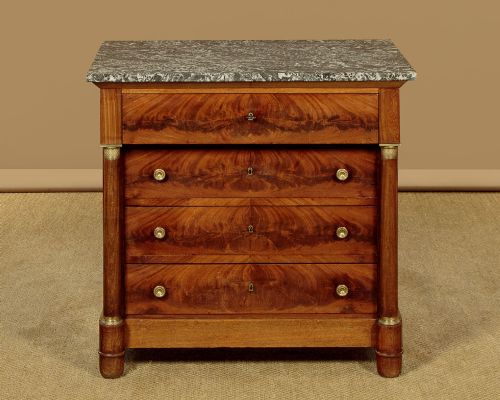
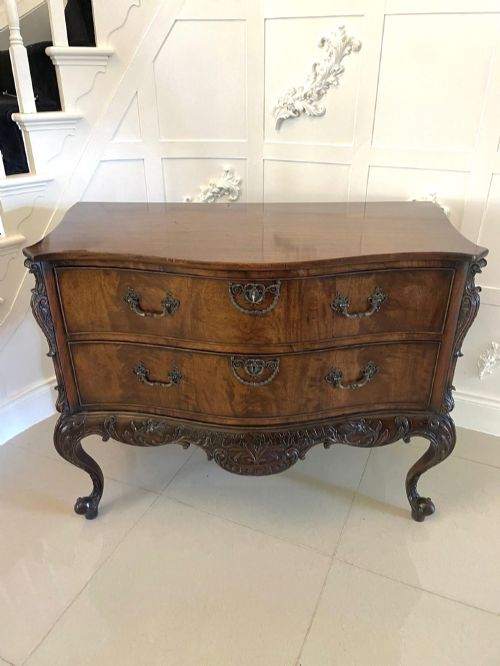
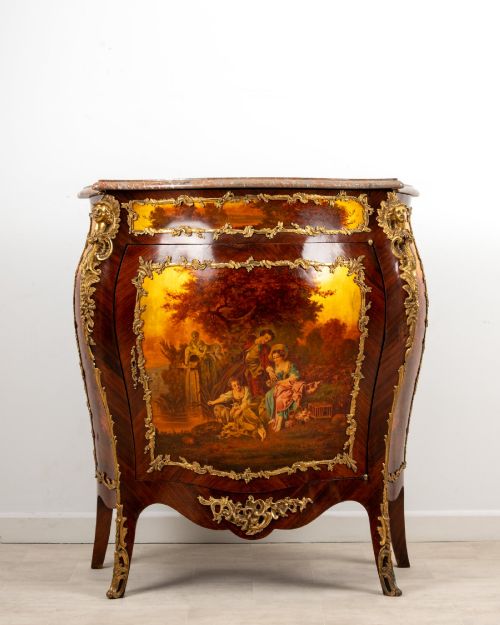
A french revival commode is a decorative storage piece drawing on historical continental designs, primarily originating from the nineteenth and early twentieth centuries. These items take the form of serpentine chests of drawers, bombe cabinets, and petit commodes designed for formal living spaces.
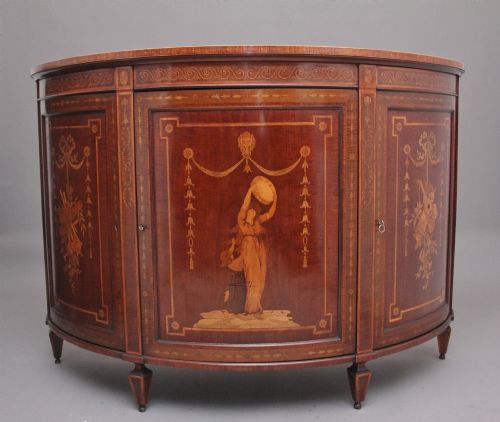
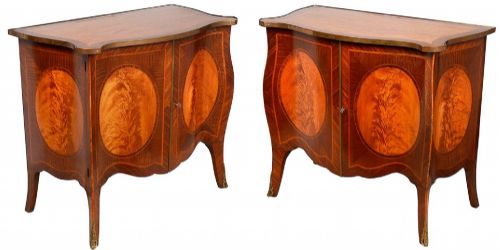
The selections available here lean heavily into Louis XV and Louis XVI revival styles, alongside Victorian interpretations and Sheraton revival variations. Buyers will frequently encounter pieces featuring characteristic serpentine shaping, bombé profiles, and dedicated bedside or side table formats.
Origins stretch across nineteenth-century workshops and early twentieth-century makers, incorporating varied forms such as side cabinets, dressing tables, and chiffoniers. The typical piece combines substantial cabinet work with ornamental mounts and decorative timber surfaces.
How they were made
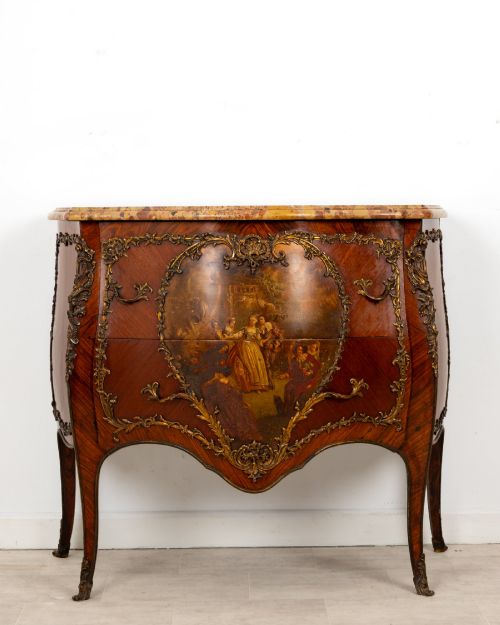
Cabinet makers utilised choice hardwoods including kingwood, mahogany, walnut, satinwood, and rosewood as foundational timber for these commodes. Marquetry and delicate inlay work frequently decorated the exterior surfaces alongside painted Vernis Martin panels.
Mounts cast in ormolu and gilt bronze provided structural enrichment and decorative borders around drawers and corners. Heavy marble slabs, often cut with serpentine edges, were fitted to the tops of these cabinets to finish the silhouette.
French Revival Commode Retail Price Guide 2026
Typical asking prices for french revival commode among the pieces listed under this phrase on Sellingantiques today, from the lower quarter to the upper quarter. They describe what is for sale here now, not the wider market.
Several pieces double as music cabinets, proving that nineteenth-century artisans believed even a grand commode should know how to carry a tune.
What varies in quality
The standard of a french revival commode rests upon the crispness of its gilt bronze and ormolu mounts and the complexity of its marquetry. Finer examples display deeply chased metalwork and meticulously matched timber grains across serpentine drawer fronts.
Construction methods distinguish finer workshop output from simpler production, particularly in the internal drawer framing and the thickness of the fitted marble tops. The integration of painted panels and the precision of the cabinet joinery dictate the overall execution.
Epstein·Paul Sormani
The French Revival Commode Glossary
- Ormolu
- Gilded bronze applied as decorative mounts to furniture edges, feet, and key escutcheons. This technique was widely utilised during the nineteenth century to emulate solid gold ornamentation.
- Marquetry
- The art of applying small pieces of veneer to a structure to form decorative patterns and pictorial scenes. Craftsmen used various exotic timbers to achieve tonal contrast.
- Bombé
- A swelling, bulging outward profile characteristic of continental case furniture. This curved shape requires advanced woodworking skill to maintain structural integrity.
- Vernis Martin
- A type of simulated Japanese lacquer developed in France during the eighteenth century and imitated in later revival pieces. It involves multiple layers of varnish applied to painted surfaces.
- Serpentine
- A furniture front or top curving inward at the centre and outward at the ends. This undulating contour defines many classic revival commode designs.
French Revival Commode: Frequently Asked Questions
What is a french revival commode?
A french revival commode is a decorative chest of drawers or cabinet inspired by historical French court furniture styles, notably Louis XV and Louis XVI aesthetics. These pieces were predominantly manufactured during the nineteenth and early twentieth centuries.
They serve as focal points in a room, combining practical storage with elaborate marquetry, ormolu mounts, and marble tops.
How were these commodes used?
Historically, these items functioned as principal storage pieces for domestic chambers, drawing rooms, and formal hallways. Their flat or serpentine marble surfaces also provided a convenient platform for displaying ornamental objects, clocks, and candelabra.
Today, they are utilised in similar residential settings to introduce texture, warmth, and historical character to modern or traditional interiors.
Where should I place one?
These commodes suit living rooms, hallways, and principal bedrooms where their decorative surfaces and decorative mounts can be appreciated. Petit commodes and bedside versions fit well in smaller spaces or alongside larger upholstery.
Ensure the room has adequate floor clearance to accommodate the curved or serpentine profiles characteristic of bombe and revival designs.
How do I identify the period?
Dating relies on examining the underlying timbers, construction methods, and stylistic cues within the revival movement. Nineteenth-century pieces often feature heavier brass or gilt-bronze mounts and traditional hand-cut joinery, while twentieth-century examples may show different secondary woods.
Matching the stylistic markers, such as specific Louis revival motifs or Sheraton influences, helps narrow down the manufacturing decade.