





French Revival Candlesticks
French revival candlesticks bring grand architectural presence and ornate figurative detail to a room, drawing on centuries of classical and Gothic motifs.
French Revival Candlesticks
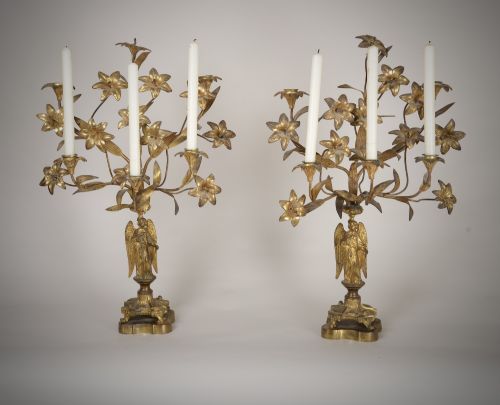
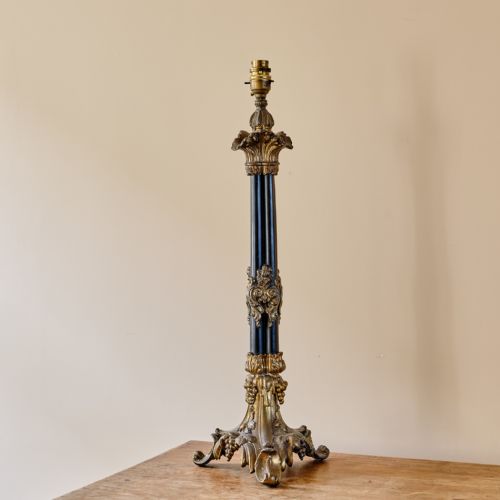
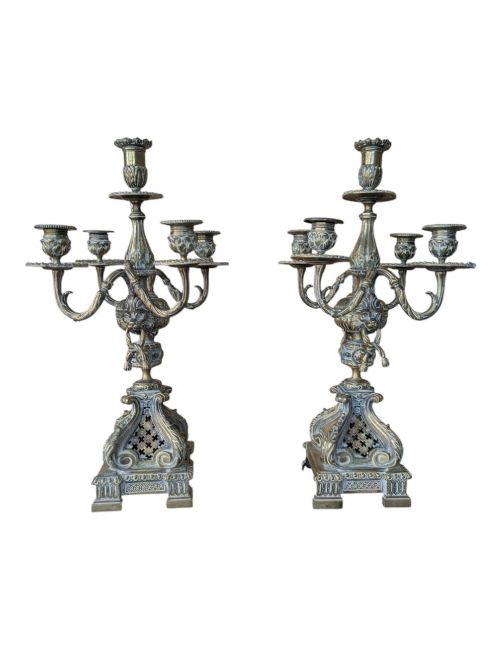
French revival candlesticks encompass elaborate lighting pieces produced primarily across the nineteenth century, drawing inspiration from earlier historic eras like the Regency, Gothic, and Empire periods. When searching for french revival candlesticks, buyers encounter pairs formed as table lamps, multi-branch candelabra, and single candleholders designed to elevate domestic interiors.
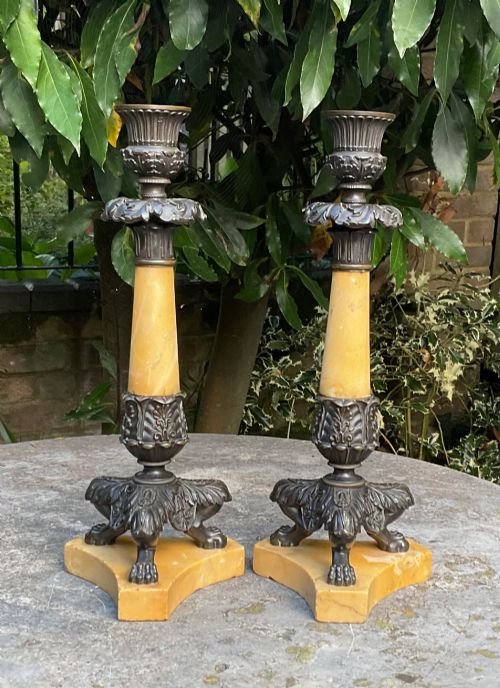
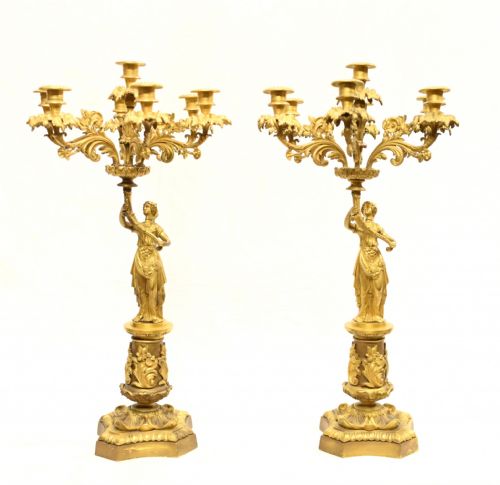
The selection ranges from robust architectural brass and bronze columns to decorative figurative works featuring cherubs, soldiers, and classical maidens. Many examples incorporate contrasting mineral bases, pairing cast metalwork with marble, onyx, or stone to add weight and colour contrast.
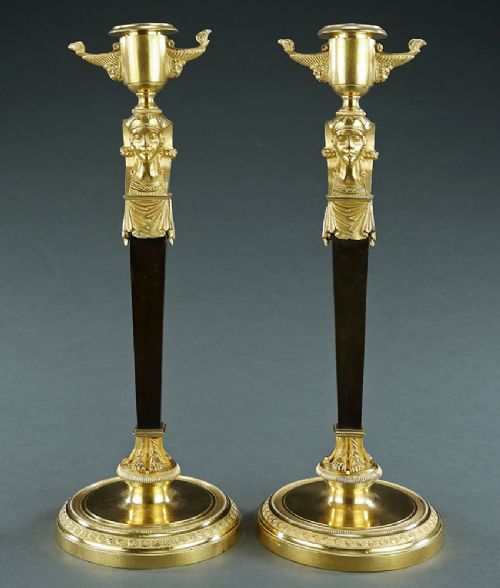
Makers and manufacturers during this time looked back to Renaissance, Egyptian, and Rococo vocabularies, adapting them to suit Victorian drawing rooms and grand salons. These objects frequently survive as balanced pairs, highly valued for their symmetrical presence on mantelpieces and sideboards.
Materials and construction methods
Foundry workers utilised traditional casting techniques to shape bronze, brass, and spelter into intricate sculptural forms, often finishing surfaces with patination or fire gilding known as ormolu. Metal components were cast in sections, then chased and assembled by hand to ensure tight joints and crisp surface detail.
French Revival Candlesticks Retail Price Guide 2026
Typical asking prices for french revival candlesticks among the pieces listed under this phrase on Sellingantiques today, from the lower quarter to the upper quarter. They describe what is for sale here now, not the wider market.
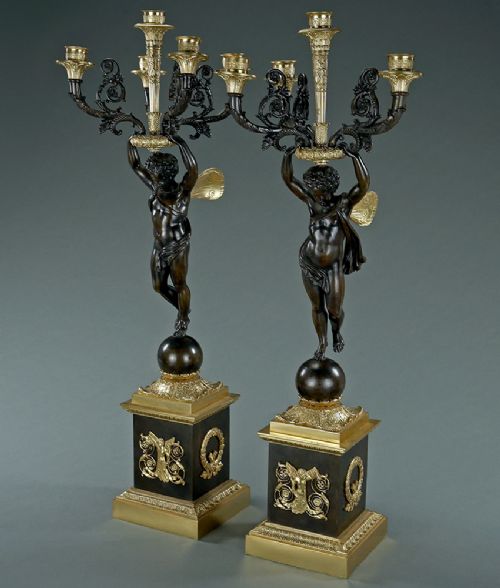
Cherubs feature prominently as candle-bearing companions, occasionally appearing to struggle under the unexpected weight of heavy multi-branch fittings.
Evaluating craftsmanship and finish
Quality rests principally in the crispness of the chasing and the weight of the cast metal, distinguishing sharp sculptural definition from softer, worn production moulds. Superior pairs display meticulous finishing on all sides, with tight fitting components and substantial marble or onyx plinths.
The choice of materials dictates the upper tier of the range, where heavy fire-gilded ormolu and deep patinated bronze command attention over lighter base metals like spelter. Retaining original surface treatments without modern over-cleaning preserves the historic character and visual depth of the piece.
The French Revival Candlesticks Glossary
- Ormolu
- Finely ground gold applied to a bronze base through a mercury amalgamation process, or simply used to describe bright gilt bronze mounts. This finish provides a warm, enduring lustre characteristic of high-status French decorative arts.
- Candelabra
- A branched candlestick holding multiple candles or configured for electrical wiring. These fixtures offer greater visual volume than single sticks.
- Patinated bronze
- Metal treated with chemical solutions to create a dark or aged surface tone. This process highlights sculpted details by contrasting shadowed recesses with polished highlights.
- Champlevé
- An enamelling technique where troughs are dug into a metal surface and filled with vitreous paste before firing. It creates vibrant coloured patterns across the body of the object.
- Spelter
- A zinc-based alloy commonly utilised as a less costly alternative to bronze during the nineteenth century. It frequently received a bronze-coloured finish to mimic heavier metals.
French Revival Candlesticks: Frequently Asked Questions
Were these candlesticks converted to lamps?
Many nineteenth-century pieces were adapted for electricity during the twentieth century to suit modern domestic lighting needs. Some conversions retain the original socket configuration without drilling the main body.
Collectors weigh the convenience of a functioning table lamp against the purity of an unaltered candle socket. Reversible wiring methods help preserve the underlying structure.
What is the difference between ormolu and gilt brass?
Ormolu specifically denotes genuine gold applied to a bronze substrate, creating a deep and lasting golden radiance. Gilt brass uses a less costly base metal with various plating techniques.
Close inspection of the surface wear and metal weight reveals the distinction between heavy cast bronze and lighter brass construction.
How can I identify the period of a pair?
Stylistic clues such as Retour d'Egypte motifs, Gothic tracery, or Rococo asymmetry point towards specific revival movements within the nineteenth century. Construction marks and assembly screws also offer clues to the decade of manufacture.
Comparing the casting sharpness with dated examples helps narrow down the production window.