


French Repeating Timepiece
A french repeating timepiece combines mechanical complexity with portability, offering the rich sound of striking hours and quarters on demand.
French Repeating Timepiece
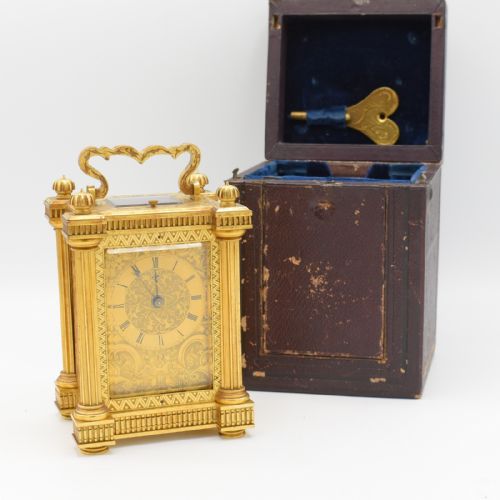
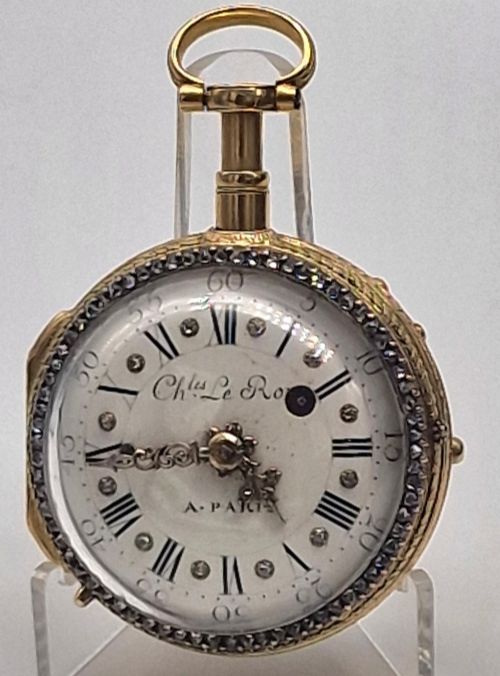
A french repeating timepiece is primarily represented on this page by carriage clocks and pocket watches originating from the nineteenth century.
Makers housed these intricate movements within brass, gilt bronze, or silver gilt cases, often featuring glass panels to display the inner workings.
Examples span periods from the eighteen-fifties through to the early twentieth century, including styles influenced by the Victorian era and French Second Empire.
Materials and Construction
Brass and gilt bronze form the structural frames for the majority of these housings, paired with glass panels and white enamel dials.
The complex internal mechanisms rely on steel components alongside gold and silver gilding techniques applied to the metal surfaces.
Leather travel cases frequently accompany these objects, protecting the delicate metalwork and bevelled glass during transit.
Listings feature nineteenth-century French carriage clocks constructed from brass, gilt bronze, and glass with enamel dials.
Assessing Quality and Execution
The refinement of the repeating mechanism, ranging from simple hour repeaters to grand sonnerie and petite sonnerie complications, dictates the mechanical standard.
Case execution separates standard models from exceptional pieces, particularly where hand-engraving, enamel paintings, or distinct case shapes such as the gorge style are present.
The preservation of original gilding and the clarity of painted enamel dials significantly influence the overall integrity of the object.
Charles Le Roy·Drocourt·Henry Jacot·Henri Jacot·Howell And James London·J W Benson
The French Repeating Timepiece Glossary
- Repeater
- A mechanical complication that strikes the hours and past quarters when a plunger or pendant is depressed. This function allows the user to check the time audibly in the dark.
- Carriage clock
- A portable spring-driven timepiece designed for travel during the nineteenth century. These clocks typically feature a rectangular brass case with a handle on top and glass viewing panels.
- Grand Sonnerie
- A complex striking system that automatically chimes the hours and the current quarter-hour with every passing quarter. It represents a higher tier of horological craftsmanship.
- Gorge case
- A distinct rectangular carriage clock case style characterised by stepped mouldings around the top and bottom. This architectural form is frequently found on nineteenth-century French examples.
- Enamel
- A glassy substance fused to a metal substrate through firing, utilised for the dial faces and decorative panel paintings. It provides a smooth, durable surface for numerals and artwork.
French Repeating Timepiece: Frequently Asked Questions
How do I operate the repeater?
Press the plunger on the top of the case or push the pendant on a pocket watch to activate the mechanism.
The internal gongs will sound the last hour and the appropriate number of quarters.
What is a gorge case?
A gorge case is a specific architectural housing style featuring stepped mouldings on the upper and lower framing.
This design appears frequently on nineteenth-century French carriage clocks.
How should I wind the clock?
Use the appropriate winding key on the backplate squares to tension the mainsprings for time, strike, and alarm functions.
Take care not to overwind the mechanism to preserve the vintage components.
What is a grand sonnerie?
A grand sonnerie movement automatically sounds the hour and quarters as time progresses without user intervention.
This complication requires precise gear train construction.