



French Renaissance Revival Sideboard
A french renaissance revival sideboard brings heavy architectural presence and deep historical carving into a room.
French Renaissance Revival Sideboard
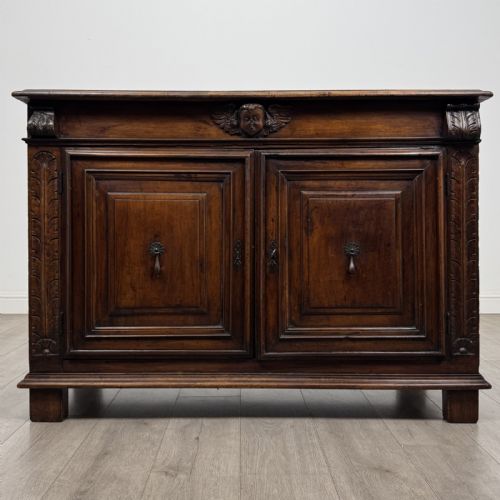
A french renaissance revival sideboard encompasses grand timber buffets, cabinets, and enfilades dating from the nineteenth century. These heavy storage pieces draw upon sixteenth-century architectural motifs, featuring bold proportions and imposing silhouettes designed for dining rooms and grand halls.
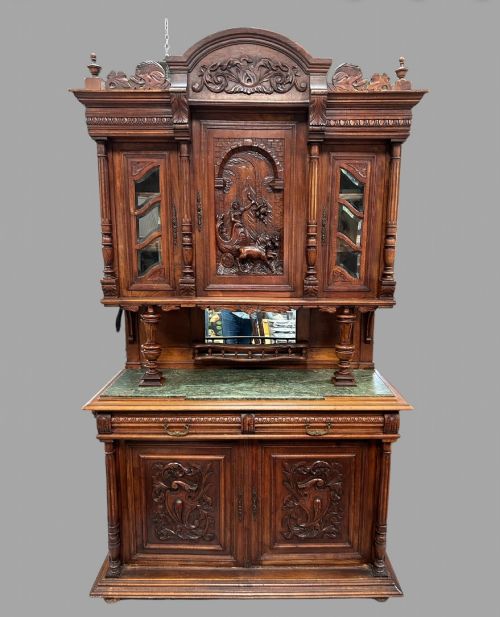
The versions most commonly met on this page belong to the nineteenth century, including specific Victorian interpretations and pieces executed in the Henri II style or Louis XIII revival manner. They function primarily as substantial storage cupboards and display surfaces, often combining lower cabinet doors with upper tiers or marble slabs.
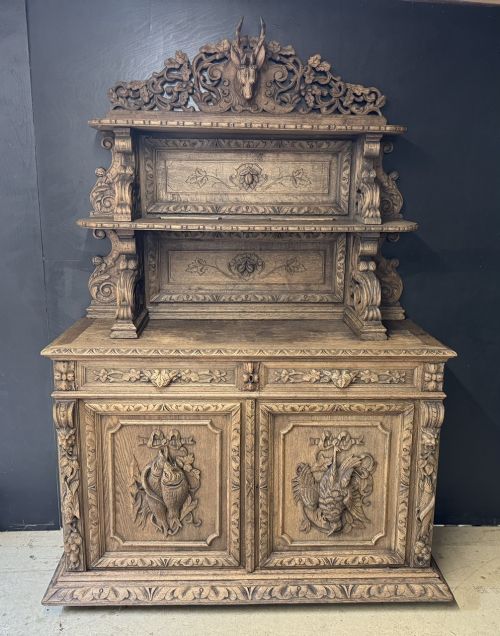
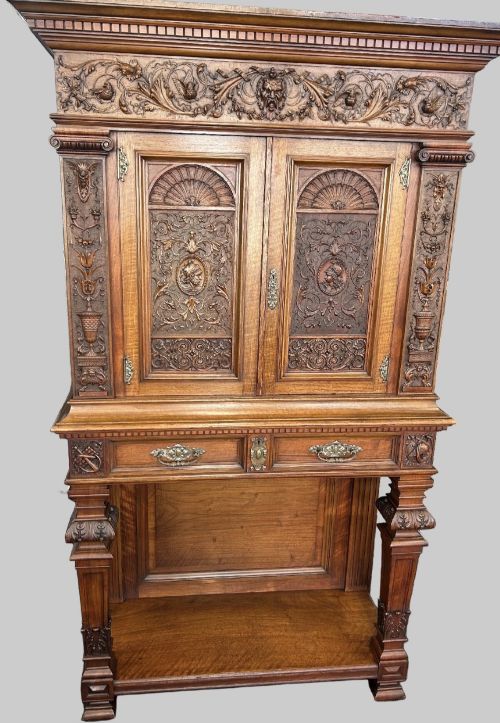
Makers and regional workshops utilised distinct cabinetry formats, ranging from long oak enfilades to tall walnut game cupboards and buffet de corps forms. Each variation maintains the characteristic heavily carved panels and structural presence associated with French revival cabinet making.
Materials and construction
Construction relies heavily on solid oak and walnut timbers, selected for their strength and capacity to support deep, high-relief carving. Cabinet makers joined these heavy woods using traditional framing and panel techniques to ensure structural stability across large sideboards and buffets.
Surfaces frequently incorporate inset marble tops alongside brass, iron, and metal hardware fittings such as decorative hinges and key escutcheons. Glazed doors appear in select cabinet configurations, integrating glass panels with heavy timber framing.
Carving defines the decorative technique, executed directly into the oak or walnut structure to create pilasters, figures, and floral panels. Workshops applied these sculptural elements to doors, cornices, and drawer fronts to emulate sixteenth-century precedents.
Current listings record nineteenth-century pieces spanning the Victorian era, utilising oak, walnut, and marble.
Distinctions in execution
Quality separates pieces through the depth, crispness, and ambition of the carved decoration applied to the timber. Superior cabinets display sharp relief work with carefully articulated figures and foliage, whereas simpler examples rely on shallow or mechanical stamping.
Material selection dictates the upper tier of the range, particularly the weight and figuring of the walnut or oak and the thickness of the fitted marble slabs. The integration of original brass and iron hardware further distinguishes standard production from exceptional workshops.
Gillows
The French Renaissance Revival Sideboard Glossary
- Enfilade
- A long cabinet or sideboard featuring a continuous sequence of doors along the front facade. This form provides extensive storage and typically incorporates a marble top.
- Buffet de Corps
- A large two-part cupboard or sideboard structure comprising a lower cabinet base and an upper section. It serves as a principal dining room storage piece.
- Henri II Style
- A nineteenth-century revival aesthetic drawing on French sixteenth-century design. It utilises architectural columns, strapwork, and robust carved ornamentation.
- Louis XIII Revival
- A nineteenth-century style referencing earlier seventeenth-century French furniture characteristics. It emphasises strong vertical lines, paneling, and substantial turned supports.
- Pot Cupboard
- A compact bedside or small cabinet form occasionally referenced in revival groupings. It provides enclosed shelving behind a single door.
French Renaissance Revival Sideboard: Frequently Asked Questions
What is a french renaissance revival sideboard?
A french renaissance revival sideboard is a nineteenth-century storage piece inspired by sixteenth-century French architecture. These large items combine heavy timber construction with deep relief carvings, function as buffets or cabinets, and often feature marble tops.
They were built to anchor formal dining rooms and large halls, providing substantial enclosed storage alongside a broad serving surface. The heavy proportions and architectural detailing reflect historicist tastes of the Victorian era.
How were these sideboards used originally?
Originally, these pieces served practical functions in dining rooms and grand halls for storing tableware, serving food, and displaying silver or ceramics. The enclosed cupboards kept linens and provisions secure, while the top surface acted as a buffet during meals.
Game cupboards and enfilades within this category also accommodated specialised storage needs for country houses. Their robust construction allowed them to carry heavy loads of porcelain and metalware.
How do I style a large antique buffet at home?
Living with a heavy nineteenth-century sideboard requires balancing its dark timber tones and imposing scale within a room. Placing it against a substantial wall allows the architectural carving and marble top to function as a primary focal point without overcrowding the space.
Keep surrounding furniture simple to let the historic proportions stand out. The top surface accommodates lamps, ceramics, or mirrors that complement the walnut or oak woodwork.
How do I tell Henri II style from Louis XIII revival?
Henri II style pieces typically incorporate architectural elements such as columns, pilasters, and classical figural carving derived from the French Renaissance. They lean toward busy, sculptural surface ornamentation across the entire facade.
Louis XIII revival pieces generally emphasise earlier seventeenth-century vocabulary, featuring pronounced paneling, geometric mouldings, and heavy turned supports. The structural form often relies on clean rectangular lines rather than complex classical orders.
What woods were used in these cabinets?
The listings show that these cabinets and sideboards were constructed primarily from oak and walnut. These dense hardwoods provided the structural integrity necessary for large furniture and accepted deep-relief carving.
Complementary materials included marble for serving tops, alongside brass, iron, and metal for hardware fittings and hinges. Glass also appeared in doors designed for display purposes.